Category Archives: Astronomy

May the great stars of the night, Shining Fire-Star, heroic Irra, Bow-star, Yoke-star, Sitaddaru, Mushussu-star, Wagon, Goat-star, Goatfish-star, Serpent-star, stand by and put a propitious sign on the entrails of the lamb I am blessing now.
(Old Babylonian prayer, from Ancient Astrology by Tasmyn Barton)

Outside: in space

Chris Hadfield‘s recent year in space was a major media event here in Canada. I don’t know how much attention anyone else paid to it, but the Canadian media loved him. He tweeted pictures of the view from the space station, filmed videos of life in zero gravity and explained the science of space in an accessible, low-key way.

We are proud of our spacemen and women, though. One of them, Marc Garneau, is a member of Parliament and is considered an important member of the Liberal Party. (The LIberals also have my favourite hockey player, Ken Dryden.)

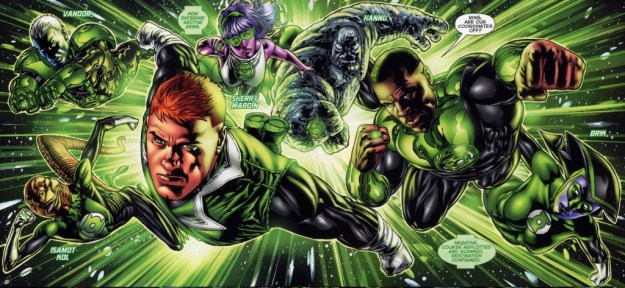
Despite this, I know how I want to go into space. I knew it the first time I saw a Green Lantern comic. (Don’t judge by the lame movie – they managed to miss everything cool about the comic.) One minute you’re just an ordinary person, the next you’re a member of a galaxy-wide organization with a ring that protects you in space and manifests your will as a three-dimensional “construct”.

At a time when it seems that space travel is going to be another perk for plutocrats, it’s nice to think that you could become a space-traveller through sheer hard work and merit – or magic.

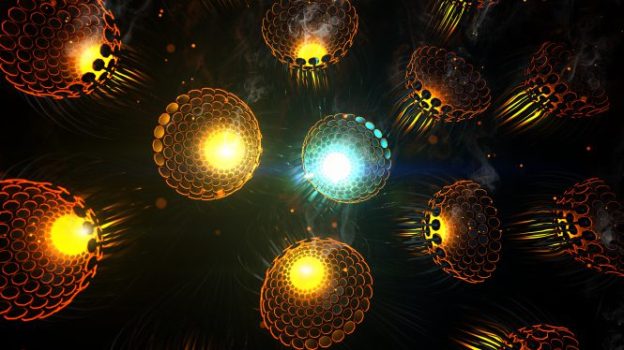
(Thrusters wallpaper by Easterhands at Imgur.)
GreenLanternCorps2-1024x473

Save

Uranus: the mould-breaker

(excerpted from my book, Sun, Moon and Stars)

The seventh planet dealt a serious blow to old ideas about the universe. From the beginning, Uranus lived up to its association with innovation and technology. When William Herschel found Uranus in 1781, he used an exciting new technology, the telescope.

Galileo had built an early telescope himself, with which he saw the moons of Jupiter in 1610, but by the 1700s the telescope was in use not only in astronomy but also in the shipping industry and the military.

Continue reading

Mani, keeper of time

We are used to thinking of the moon and sun as opposites, a fallacy that even pervades astronomy, as Space.com points out. For a single instant in a lunar month (29.5 days) the sun is opposite the moon in the sky. This is the exact moment of the full moon. Apart from this, the two may be anything from 180 to 0 degrees apart, and are often seen in the sky together.

This may explain why Völuspá refers to the moon-god Mani as the sun’s companion or escort. (Depending on translation.) Also, when the two appear in the sky for the first time, their routes are not yet established, so it makes sense that they would be together.

Continue reading

Spite and the Morning Star

The Iroquois Confederacy had a number of stories about the morning star, which they called Gendenwitha, It Brings the Day.

One story is about the beautiful woman named Gendenwitha. It began with a hunter who was captured by the dawn after he chased the Sky Elk into the heavens. She set him to guard her lodge and help the sky hunters.

He saw Gendenwitha, then a mortal, and fell in love. While the dawn was bringing in the day, he was singing to his love, as a bluebird in spring, then as a blackbird in summer, and as a hawk in fall.

Finally he went to earth in the form of a hawk, and took her up to the sky. The dawn was angry, and turned Gendenwitha into a star, which she placed above her door, out of reach of the hunter. And so Gendenwitha became the morning star.

If you like the image at the top, click here.

Save

immortality

Earth the most great and Heaven on high!
Father is he to man and god
And she, who taketh to her sod,
The cloud-flung rivers of the Sky.

And beareth offspring, men and grass,
and beasts in all their kinds, indeed,
Mother of All. And every seed
Earth-gendered back to Earth shall pass,
And back to Heaven the seeds of sky:
Seeing all things into all may range
And sundering, show new shapes of change,
But never that which is shall die.

(Euripides, fragment, trans. Gilbert Murray)

PS – I thought this was a totally obscure quote, which Timothy Findley uses as an epigraph in The Wars. But someone else likes it enough to name their blog for it.

If you like the image at the top, click here.

Save

It’s Just A Fiery Ball of Metal! The Impiety of Being Right Too Soon

Sometimes it’s not good to be first. The ancient Greek philosopher Anaxagoras certainly found that to be true, after he was charged with impiety for teaching that the heavenly bodies were rocky balls whirling in the ether, fiery (and visible) because of their rapid rotation. He also held that the sun was a fiery metal ball, and the moon shone by reflection.

Continue reading