Shakespeare: “Not from the stars”

Sonnet #14

Not from the stars do I my judgment pluck;
And yet methinks I have astronomy,
But not to tell of good or evil luck,
Of plagues, of dearths, or seasons’ quality;
Nor can I fortune to brief minutes tell,
Pointing to each his thunder, rain and wind,
Or say with princes if it shall go well,
By oft predict that I in heaven find:
But from thine eyes my knowledge I derive,
And, constant stars, in them I read such art
As truth and beauty shall together thrive,
If from thyself to store thou wouldst convert;
Or else of thee this I prognosticate:
Thy end is truth’s and beauty’s doom and date.

William Shakepeare

(For the image at the top, click here.)

Save

Fensalir and Frigg’s foresight

Fensalir, Frigga’s home, has sad associations. Its only mention in Eddic poetry is a verse in Völuspá, which tells us that she weeps at Fensalir after her son Baldr dies. Snorri Sturluson expands on this – he says that it was at Frigg’s home that Loki tricked her into revealing Baldr’s weakness.

Continue reading

Link

Alexander Chee's avatarKoreanish

About once a month, I get asked by a colleague or friend for the syllabus I used to teach my seminar on the Graphic Novel at Amherst. Included below is a list of the texts that I used to teach students. In that seminar I allowed optional creative exercises and finals, and that led to me teaching tutorials in the making of comics, which led to me advising two graphic novel theses to summa honors. I’m very proud of those students, who were both also awarded the English Department’s prize for best thesis. Amherst’s English department was very generous and supportive in the teaching I did there throughout, and I’m incredibly grateful for the hard work of all of my students.

I taught the class as an experiment, even an expedition of a kind, and so it was never the same every time. I began teaching it because more graphic novels…

View original post 1,736 more words

Blackbird

Blackbird

Its eye a dark pool
in which Sirius glitters
and never goes out.
Its melody husky
as though with suppressed tears.
Its bill is the gold
one quarries for amid
evening shadows. Do not despair
at the stars’ distance. Listening
to blackbird music is
to bridge in a moment
chasms of space-time, is to know
that beyond the silence
which terrified Pascal
there is a presence whose language
is not our language, but who has chosen
with peculiar clarity the feathered
creatures to convey the austerity
of his thought in song.

R. S. Thomas
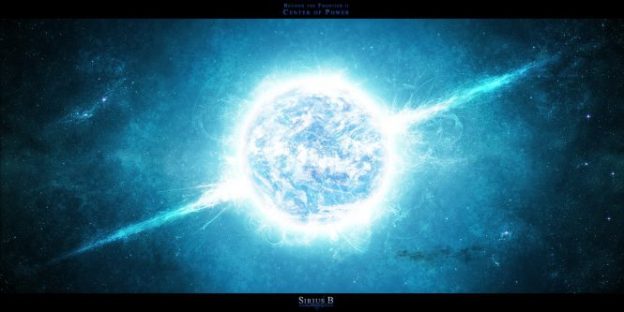
(from The Poem and the Journey: 60 Poems for the Journey of Life, ed. Ruth Padel, image  Sirius B by Apoxile on deviantart.com)

The image at the top is Sirius B by Apoxile on deviantart.com.

Save

Poetry Mondays

One assignment in the Blogging 201 course was to set up a regular, recurring feature. The content and form was left up to us. I was a bit baffled at first – especially since someone on the mythology reddit has already grabbed Monster Mondays. (Check it out!)

I have deliberately skipped several assignments in this course, because they didn’t apply to what I want to do with this blog. This one seemed to fit, however. I briefly considered a seven days, seven planets thing, and I might well do it yet, when I have more time. For now however, it’s poetry on Mondays.

Very early in the life of this blog, I was out stargazing and saw the huge shape of Orion overhead, and that reminded me of the Adrienne Rich poem, which I have always loved. My first pass at a menu included a page I called The Stars My Inspiration, which was essentially this poem and an image that suited it.

Since then I have included some other poems that resonated with the theme of this blog. Poetry Mondays will be the formal version of this. In the beginning, I merely searched Poem Hunter for anything with the word “star”. I also included a few old favourites.

Now, I need to find my Norton Anthology

(The image at the top is Take Cover by Jamal, on deviantart.)

Save

Sunna’s Stead

In my post on Mani the Norse moon-god I tried to work out what powers he might have, based on the few references to him in the Eddic poems, and especially in Völuspá. This time around I will look at his sister, Sol the sun-goddess.

Continue reading

The Falling Star

The Falling Star

I saw a star slide down the sky,
Blinding the north as it went by,
Too burning and too quick to hold,
Too lovely to be bought or sold,
Good only to make wishes on
And then forever to be gone.

Sara Teasdale

For the image at the top, click here.

Save

Mani, keeper of time

We are used to thinking of the moon and sun as opposites, a fallacy that even pervades astronomy, as Space.com points out. For a single instant in a lunar month (29.5 days) the sun is opposite the moon in the sky. This is the exact moment of the full moon. Apart from this, the two may be anything from 180 to 0 degrees apart, and are often seen in the sky together.

This may explain why Völuspá refers to the moon-god Mani as the sun’s companion or escort. (Depending on translation.) Also, when the two appear in the sky for the first time, their routes are not yet established, so it makes sense that they would be together.

Continue reading

Turning the Heavens: Mundilfare

We all know that Yggdrasil is the World Tree of Norse myth, and that it holds together the nine worlds. However, the Norse, like the Finns and the Hindus of India, seem to have had some notion of a world mill (or churn) as well, which turned the heavens and could grind out various products. This cosmic mill shows through the confused myths about the sun and moon.

Continue reading