Category Archives: Greek

Astraios: Father of the Stars

Astraios was one of the Greek Titans, the older gods who ruled before Zeus and the Olympians. His name means “Of the Stars”, and he was the father of the stars and winds. Astrology was one of his specialties, but he was also connected to the seasons and possibly navigation.

Continue reading

White Ravens and Apollo

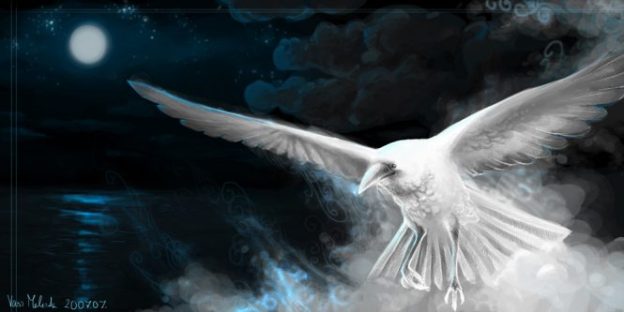
Two stories about Apollo, one well-known and one obscure, focus on white ravens. Odin sent out ravens to learn what was going on in the world, but Apollo’s white ravens also brought messages to humans, as servants of the god of oracles. The one occasion when a raven brought him news ended very badly indeed. Continue reading

Midwives of Light: Eileithyia and Juno Lucina

Before Christmas I wrote about Holda, Berchta and Perchta, who led the wild hunt and perhaps received children in the afterlife. For the new year, I want to look at another trio of goddesses, who oversaw birth, and the infant’s journey into the light of life.

Continue reading

Medusa, Rhiannon, Macha: the horse-goddess and her twins

The imagery of the Greek Gorgon can be traced back to Persian and Near Eastern art, but the myth of the beautiful Medusa seems to come from a different source. A story found in various forms in Greece, India, Ireland and Wales tells of a woman who either becomes a horse or has a strong equine connection, gives birth to twins and suffers greatly.

However, Demeter, Saranyu, Macha and Rhiannon are goddesses, while Medusa is considered a monster. Still, her story is so similar to these others that it obviously descends from the same Indo-European myth.

Continue reading

Athena, Medusa and the Sun-Goddess

During my research for my post on Medusa and the Gorgon, I  constantly ran into the idea that the Gorgon was a faint echo of an early Mycenean sun-goddess, depicted face-front with radiating (snaky) hair. I could see how that idea might arise, but Athena as sun-goddess struck me as a bit of a reach. After all, Athena wears the Gorgon on her breast as a symbol of the triumph of cunning (metis) over elemental powers. (Deacy: 47)

It must be tempting, though, to invert the Greek beliefs that shaped patriarchal culture, with its binary of sun/reason/male vs. night/emotion/female. Especially in the form of its most complicit goddess, Athena, who upheld father-right against the Furies’s desire to avenge a matricide. (Although kicking Bachofen and his followers comes about 150 years too late.) Feminizing the Greek sun, and connecting it to those elemental powers, may feel like sweet revenge.

Continue reading

The Former Gods

Human rulers die, and the next generation takes over. Sometimes the older generation gets “helped” off the throne, either by assassination or war. So it’s not surprising that mythology has many versions of this succession story, which rarely involve peaceful inheritance.

Continue reading

Boreas: Horses, Hyperborea and the North Wind

In Greek myth, the North wind had a home: a cave on Mount Haemus in Thrace. From there he sent the cold winds, and to emphasize this artists painted him with his hair and beard spiky with ice. As its name suggests, the land of Hyperborea lay beyond Boreas’ realm, where cold, along with old age and want, was unknown.

Continue reading

Medusa and the Gorgon

I was originally going to call this piece Poseidon’s Scary Girlfriends, with Demeter the Furious and an unnamed Harpy joining Medusa. But when I began researching Medusa I found so many layers of interpretation that it seemed worth going back to the original sources and seeing what went into the myth.

In fact, it seems like there are almost two different myths, one involving a headless demon that terrified all who saw it, and another about the mortal Medusa, who either was a snaky-headed monster or became one.

Continue reading

Poseidon: Horse God

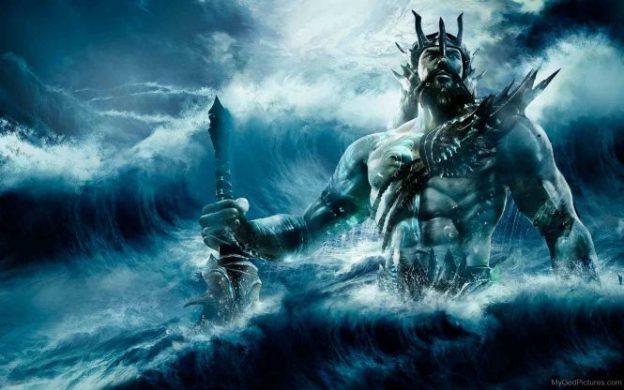
Poseidon has three main aspects: sea-god, earth-shaker, and giver of horses. As sea-god he could stir up the waves or calm them, while as the earth-shaker his power was terrifying. Only as the god of horses was Poseidon a clear friend to humans.

Continue reading

Poseidon: top god?

There was a discussion recently on the Mythology Stack Exchange about whether Poseidon had been the first head of the Greek pantheon. It’s an interesting question….

You can argue this one in a number of ways. While the name Zeus is clearly Indo-European (one of the very few that is), the name Poseidon, along with his title Earth-Shaker, appears in Mycenean texts from very early times. On the Messenian coast, at least, he seems to have kept his status, and like Zeus he is the father of kings and heroes. (Indeed, the number of his offspring is second only to Zeus’.)

Continue reading