Woman vs. Woman: More Insults

There are many stories in which a heroic character penetrates the otherworld and is challenged by some sort of ogre or other strange being. This challenger may question the hero’s worthiness or ability.

Norse myth has two examples of a female quester who faces a challenge to her fitness and an attempt to thwart her in her aims. In Hyndluljod Freyja has to convince the far-from-agreeable Hyndla to help her protegé win a lawsuit, while in the poem Helreid Brynhildar Brynhild is challenged on her way to Hel by a giantess who questions her ethics and actions.


Continue reading

So Breaks the Sun

So breaks the sun earth’s rugged chains,
Wherein rude winter bound her veins;
So grows both stream and source of price,
That lately fettered were with ice.
So naked trees get crisped heads,
And colored coats the roughest meads,
And all get vigor, youth, and sprite,
That are but looked on by his light.

Ben Jonson

Save

Insulting Women: Flyting in Old Norse Literature

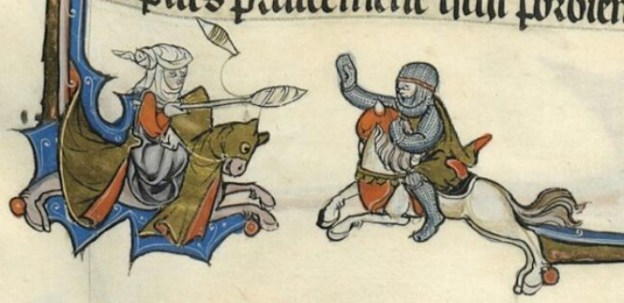
Verbal duelling is a major part of the sagas and Eddas, as a substitute for other kinds of violence. Mostly it happens between two men, who accuse each other of cowardice, effeminacy, and general unmanliness.

However, there are incidents of male – female flyting as well, with men and women trading insults, usually much the same insults. The two best-known examples of male – female flyting in the Eddas are the quarrel between Skadi and Loki in Lokasenna, a poem which is essentially Loki’s verbal duel with each god and goddess in turn, and the heroic poem Helgakviða Hjörvarðssonar, which features a bout between the hero and a giantess.

Continue reading

The Angel of History

Paul Klee’s Angelus Novus, now in the Israel Museum.

A Klee drawing named “Angelus Novus” shows an angel looking as though he is about to move away from something he is fixedly contemplating. His eyes are staring, his mouth is open, his wings are spread. This is how one pictures the angel of history. His face is turned toward the past. Where we perceive a chain of events, he sees one single catastrophe that keeps piling ruin upon ruin and hurls it in front of his feet. The angel would like to stay, awaken the dead, and make whole what has been smashed. But a storm is blowing from Paradise; it has got caught in his wings with such violence that the angel can no longer close them. The storm irresistibly propels him into the future to which his back is turned, while the pile of debris before him grows skyward. This storm is what we call progress.

Walter Benjamin, Ninth Thesis on the Philosophy of History

Continue reading

Link

li-vikings-2-20130607

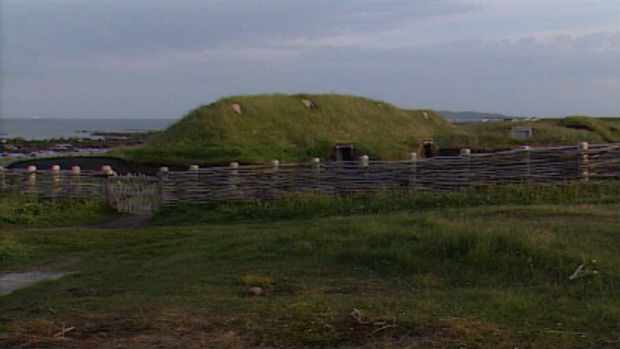
As part of a new documentary, a team of archeologists has found some evidence of a second Viking settlement in Newfoundland.

Source: Second potential Viking site found in Newfoundland – Newfoundland & Labrador – CBC News

The Giver of Stars

Hold your soul open for my welcoming.
Let the quiet of your spirit bathe me
With its clear and rippled coolness,
That, loose-limbed and weary, I find rest,
Outstretched upon your peace, as on a bed of ivory.

Let the flickering flame of your soul play all about me,
That into my limbs may come the keenness of fire,
The life and joy of tongues of flame,
And, going out from you, tightly strung and in tune,
I may rouse the blear-eyed world,
And pour into it the beauty which you have begotten.

Amy Lowell

Save

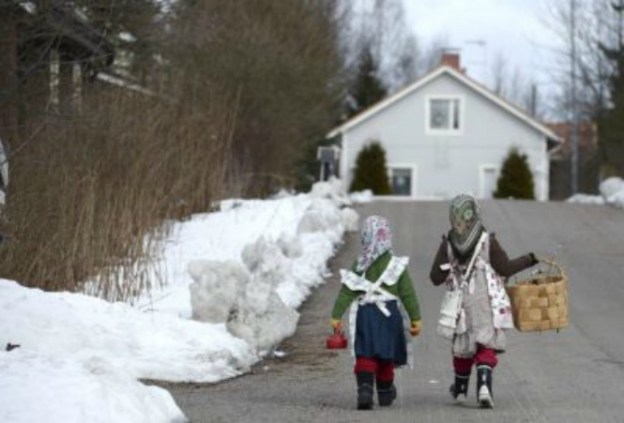
Little witches in Finland cast good spells before Easter | Daily Mail Online

Source: Little witches in Finland cast good spells before Easter | Daily Mail Online

Save

Fury and Intoxication: Dea Vercana and Meduna

In my post on a possible birch goddess, I mentioned Dea Vercana. Since this goddess and her companion, Meduna, are so neglected, it seems mean not to pass on what I’ve learned about her.

Unfortunately, that’s not much. While it seems likely that she had a cult, even if only locally, all we know about her comes from the fountain bowl and altar inscribed with her name. The altar also mentions Meduna, who is as little-known as her companion.

Continue reading

Who is the Birch Goddess?

Berkana, or Birch, the 18th rune, is often said to be named after the birch goddess. I think however the “goddess” part is modern mythology. Before I go any further I want to say that there’s nothing wrong with that – that’s how mythology gets made. It is interesting to see how ideas get put together and grow into something new.

Continue reading