Sol, Beiwe and Saule: Northern Sun-Goddesses

The Norse sun-goddess is not alone in her splendour – among her neighbours are the Finnish and Baltic sun-goddesses, Beiwe and Saule. Last week I wrote a post comparing Sol with two major Indo-European sun-gods, Helios of the Greeks and Surya of the Indians, but this time I want to see how much the three goddesses have in common.

Comparing her to other sun-goddesses brings out more feminine aspects of her character; for example, spinning was the ultimate in women’s work, so it’s no surprise that the sun-goddesses have to spin their sunbeams. Their daughters, the sun-maidens, do not escape without their share of the work. And all three are nurturing figures, who provide food for animals and people.

Continue reading

Constellations

After bedtime the child climbed on her dresser
and peeled phosphorescent stars off the sloped
gable-wall, dimming the night vault of her ceiling
like a haze or the interfering glow
of a great city, small hands anticipating
eons as they raided the playful patterns
her father had mapped for her—black holes now
where the raised thumb-stubs and ears of the Bat
had been, the feet of the Turtle, wakeful
eyes of the Mourning Dove. She stuck those paper
stars on herself. One on each foot, the backs
of her hands, navel, tip of nose and so on,
then turned on the lamp by her bed and stood close
like a child chilled after a winter bath
pressed up to an air duct or a radiator
until those paper stars absorbed more light
than they could hold. Then turned off the lamp,
walked out into the dark hallway and called.

Her father came up. He heard her breathing
as he clomped upstairs preoccupied, wrenched
out of a rented film just now taking grip
on him and the child’s mother, his day-end
bottle of beer set carefully on the stairs,
marking the trail back down into that evening
adult world—he could hear her breathing (or
really, more an anxious, breathy giggle) but
couldn’t see her, then in the hallway stopped,
mind spinning to sort the apparition
of fireflies hovering ahead, till he sensed
his daughter and heard in her breathing
the pent, grave concentration of her pose,
mapped onto the star-chart of the darkness,
arms stretched high, head back, one foot slightly raised—
the Dancer, he supposed, and all his love
spun to centre with crushing force, to find her
momentarily fixed, as unchanging
as he and her mother must seem to her,
and the way the stars are; as if the stars are.

Steven Heighton

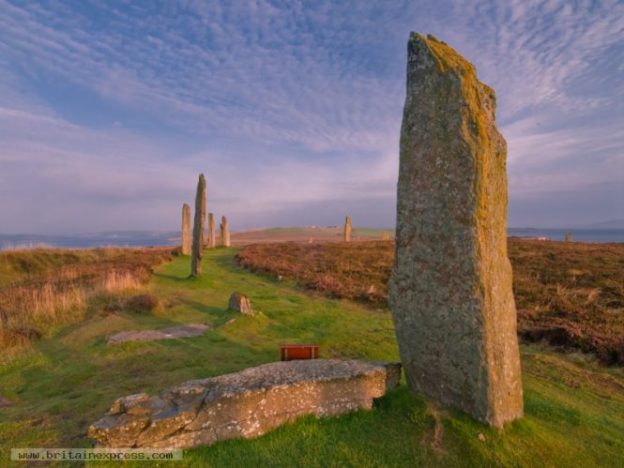
(For the image above, click here.)

Save
Milestone Achieved: 10 000 visitors!

Thank you to all my readers. 10 000 vistors, and +15 000 visits! Keep coming back!

Stars

Stars, I have seen them fall,
But when they drop and die
No star is lost at all
From all the star-sown sky.
The toil of all that be
Helps not the primal fault;
It rains into the sea,
And still the sea is salt.

A. E. Housman

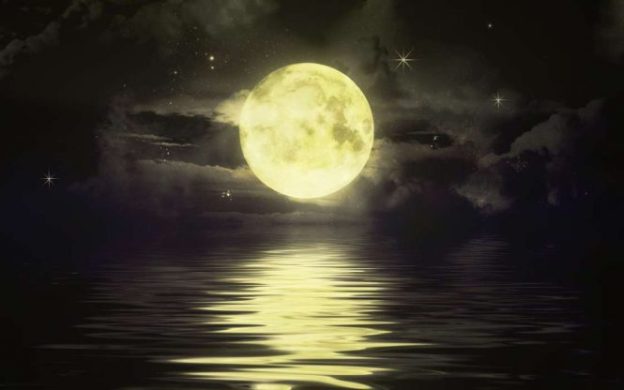
(For the image above, click here.)

Descent from the Giants: the sons of Fornjotr

One advantage of being a pagan king is that you could trace your family tree back to some pagan god or other. In Sweden, the Ynglings claimed descent from the god Freyr, and several other Scandinavian ruling families traced themselves back to Odin. Both the Ynglings and the Norwegian earls of Hlaðir claimed descent from a god and a giantess: Freyr and Gerdr, and the Hlaðir Odin and the giantess Skadi, perhaps wishing to join the strength of the giants to their line.

The earls of Orkney went one better than the Hlaðir, however, and combined the power of the giant with the authority of a male ancestor, claiming to be descended from a male giant named Fornjótr. (No mention of a mate – perhaps he generated his children alone, the way the primal giant Ymir did.)

Continue reading

Link

The ‘horrifying and never before heard’ news of 300 female werewolves (lycanthropes), who terrorised the Duchy of Jülich after making a pact with the devil was published in a sensational broadsheet by Georg Kress in 1591 in Augsburg (now in Germany). These lycanthropic women attacked men, boys and cattle, adopting lupine form and slaughtering their victims until 85 of them were apprehended and burnt at the stake in Ostmilich on May 6th, 1591.

Source: The She-Wolves of Jülich | History Today

Stars – Katherine Mansfield

Most merciful God
Look kindly upon
An impudent child
Who wants sitting on.
This evening late
I went to the door
And then to the gate
There were more stars–more
Than I could have expected,
Even I!
I was amazed,
Almighty, August!
I was utterly dazed,
Omnipotent! Just
In a word I was floored,
Good God of Hosts–Lord!
That at this time of day
They should still blaze away,
That thou hadst not rejected
Or at least circumspected
Their white silver beauty–
Was it spite? Was it duty?

Katherine Mansfield

(For the image above, click here.)

Save
The Norse sun-goddess: a comparison

The Norse sun-goddess, far from being some sort of Northern aberration, is very similar to other Indo-European sun deities. This shouldn’t come as a surprise, since “basic” deities like the sky, earth and rivers tend to keep their characteristics across a very wide swathe of Europe and Asia.

Continue reading

Hymn to Diana

Queen and huntress, chaste and fair
Now the sun is laid to sleep,
Seated in thy silver chair,
State in wonted manner keep:
Hesperus entreats thy light,
Goddess excellently bright.

Earth, let not thy envious shade
Dare itself to interpose;
Cynthia’s shining orb was made
Heaven to clear when day did close:
Bless us then with wishèd sight
Goddess excellently bright.

Lay thy bow of pearl apart,
And thy crystal-shining quiver;
Give unto the flying hart
Space to breathe, how short soever;
Thou that mak’st a day of night,
Goddess excellently bright.

Ben Jonson

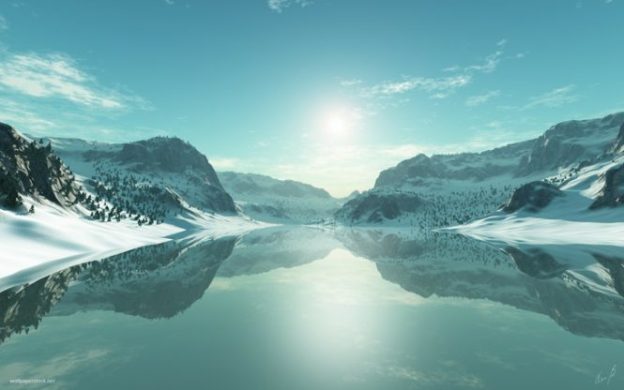
(For the image at the top, click here.)

Save