Perchta, Holda and the Wild Hunt
When we think of the Wild Hunt, we think of Odin, or his Germanic counterpart Woden. However, he was not the Hunt’s only leader. In this post I want to look at Perchta and Holda, and the specially feminine spin they gave their midwinter rout.

Adsalluta and Savus
This post exists because of a mistake. When I was researching my post on Sulis, I came across references to a goddess Adsullata, who seemed similar. She was from Central Europe, and I was a bit excited at the thought that maybe Sulis wasn’t alone after all.
Unfortunately, it turned out that Adsullata was Adsalluta. She and her partner, Savus, are unusual in that they are a divine couple who retained their native names, with no Roman overlay. (The Epigraph Databank has eight entries for Adsalluta, seven for Savus, but none for Adsullata.)

Sulis: the eye, the sun, the well

Medusa, Rhiannon, Macha: the horse-goddess and her twins
The imagery of the Greek Gorgon can be traced back to Persian and Near Eastern art, but the myth of the beautiful Medusa seems to come from a different source. A story found in various forms in Greece, India, Ireland and Wales tells of a woman who either becomes a horse or has a strong equine connection, gives birth to twins and suffers greatly.
However, Demeter, Saranyu, Macha and Rhiannon are goddesses, while Medusa is considered a monster. Still, her story is so similar to these others that it obviously descends from the same Indo-European myth.
Athena, Medusa and the Sun-Goddess
During my research for my post on Medusa and the Gorgon, I constantly ran into the idea that the Gorgon was a faint echo of an early Mycenean sun-goddess, depicted face-front with radiating (snaky) hair. I could see how that idea might arise, but Athena as sun-goddess struck me as a bit of a reach. After all, Athena wears the Gorgon on her breast as a symbol of the triumph of cunning (metis) over elemental powers. (Deacy: 47)
It must be tempting, though, to invert the Greek beliefs that shaped patriarchal culture, with its binary of sun/reason/male vs. night/emotion/female. Especially in the form of its most complicit goddess, Athena, who upheld father-right against the Furies’s desire to avenge a matricide. (Although kicking Bachofen and his followers comes about 150 years too late.) Feminizing the Greek sun, and connecting it to those elemental powers, may feel like sweet revenge.

The Former Gods
Human rulers die, and the next generation takes over. Sometimes the older generation gets “helped” off the throne, either by assassination or war. So it’s not surprising that mythology has many versions of this succession story, which rarely involve peaceful inheritance.

60 000 views!
and counting….

Njord and Skadi: the Divine Divorce
This is an extremely condensed look at the myth of Njord and Skadi. For a much more detailed study, see my book Njord and Skadi: a Myth Explored.
The myth of Njord and Skadi could also be called the Divine Divorce. Usually, even unhappily married deities stay together, but these two bucked the trend. Skadi married Njord as part of a settlement after the gods killed her father, but the marriage didn’t last.
Popular sources describe this story as a nature-myth, with the sea-god and the mountain-goddess being unable to find common ground. This myth, however, has multiple meanings, and goes to the heart of Norse myth and the god-giant conflict that will bring destruction.
Boreas: Horses, Hyperborea and the North Wind
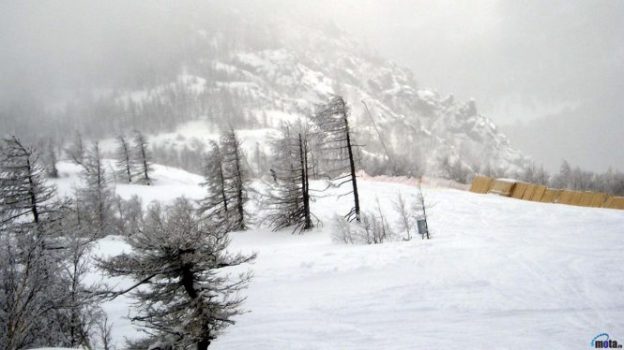
In Greek myth, the North wind had a home: a cave on Mount Haemus in Thrace. From there he sent the cold winds, and to emphasize this artists painted him with his hair and beard spiky with ice. As its name suggests, the land of Hyperborea lay beyond Boreas’ realm, where cold, along with old age and want, was unknown.
 We Are Star Stuff