Tag Archives: Odin

The Politics of Myth: Snorri Sturluson

(This post was inspired by one written by Nancy Marie Brown at God of Wednesday: A Viking Fairy Tale. She in turn was inspired by a question from a reader, and a paper by Takahiro Narikawa. And on it goes.)

Long before I began this blog, just plain long ago in fact, I did a degree in Medieval Studies, with a specialty in English. This taught me how to dig into a text for its meaning, but we rarely considered the political or historical aspects of the texts. In some cases it would have been difficult to do so.

Who wrote Beowulf? We can guess at his (probably his) politics, and what was happening around him while he was writing, but we know very little about him. Even much later texts have similar problems, such as Gawain and the Green Knight. The poet Simon Armitage hypothesized that the author was from northern England, based on some of the words used, but we don’t know for sure.
Continue reading

Manannan mac Lir (and some Norse connections)

Manannán is in many ways like a more benign version of Oðin. Like the Norse god, he is the patron of many heroes, is skilled in both battle and magic, moves easily between the worlds and has many lovers as well as a wife. On a more fantastic level, both have horses that can travel over land and sea, and a boar or pigs that renew themselves after being eaten.

He seems to have been one of the old gods, rather than the Tuatha de Danann. Unlike them, however, he seems to have made his peace with the new order, as he appears in their adventures. (He was close enough to them to be foster-father to the young god Lugh.) When the Milesians (humans) came, and the TDD went into the hollow hills, Manannán divided up the otherworld into parts for each.

Continue reading

Odin’s Eyes: Sun and Moon?

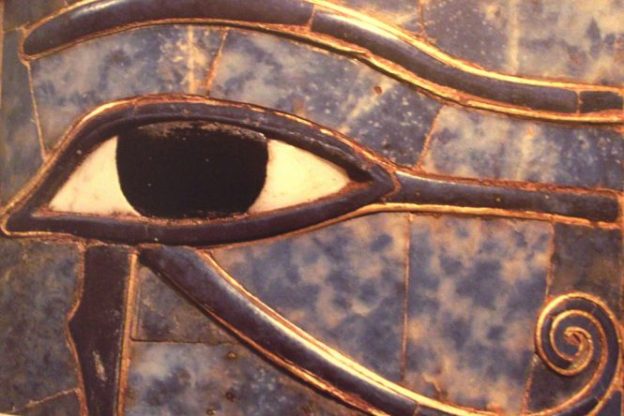
What do the Egyptian god Horus and the Norse god Odin have in common? Both of them are said to have the sun and moon as their eyes. The difference is that this belief about Horus dates back to very early Egyptian religion. As far as I can tell, the same statement about Odin comes from some 19th and 20th century writers.

Continue reading

Blood-Brothers: Loki and Odin

In his fickleness and imagination he even gave pleasure to Odin, who with his well-sipping and auto-asphyxiation knew too much ever to be otherwise amused …the reason why Odin had taken the great, foredoomed step of making Loki his blood brother – for the pleasure, pure and simple, of his company. (Chabon: 53)

Odin and Loki are blood-brothers, and we have to wonder what each saw in the other that led to such an unusual partnership. After all, the two are on entirely different trajectories. Odin is trying to get as far as he can from his giant ancestry, to the extent of murdering his own grandfather to make the world. Loki, on the other hand, is constantly pulled back and forth, but usually ending up with the gods, until he chooses the giants for good.

Continue reading

Apollo, Odin and Lugh

These Greek, Nordic and Celtic gods may not seem to have much in common at first glance, but they resemble each other in several ways, all of which illuminate aspects of their characters. All three are intellectual, associated with the arts, and have magical or oracular powers in addition to an unforgiving nature.

Continue reading

The Cider of Immortality

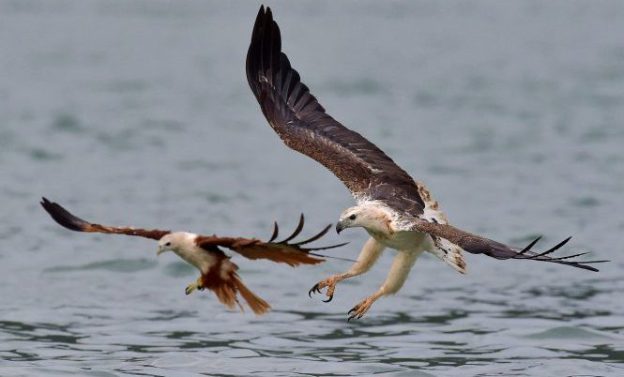
In Norse myth we have two stories involving the theft of a substance that confers a magical benefit to the user. Both involve the thief taking the form of an eagle. Both involve a pursuit with a god and a giant. Of course, the two myths have very different results, although in both cases the final score is Aesir 1, Jotunar 0.

One is the myth of the giant Þiazi kidnapping Iðunn to get the apples of immortality, the other is the story of how Oðin stole the mead of poetry from the giant Suttungr.

Continue reading

2. Metaphorical Wolves: Werewolves, Warriors and Outlaws

The ambiguity of wolves comes through again in the two groups of humans identified with them: warriors and outlaws. What both groups have in common is bloodshed; the difference is between legitimate and illegitimate violence. (The difference, so to speak, between Oðin’s pet wolves and Fenrir.)

Continue reading

1. Mythological Wolves: Garm, Fenrir, and Loki

Wolves occupied a very ambiguous place in Norse myth and thought. The best of dogs is said to be Garm, but everywhere else Garm is a wolf, and a dangerous one at that. Garm is the wolf that kills Tyr at Ragnarök, (Gylf. 51) and the similarly named Mánagarm devours the moon (and presumably Máni the moon-god):

Continue reading

Wolves in Norse Mythology: a three-part series (intro)

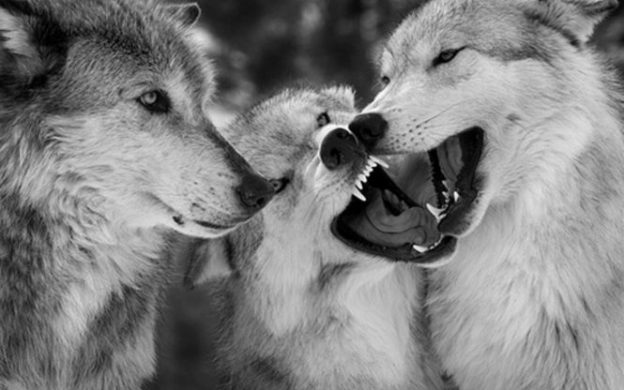
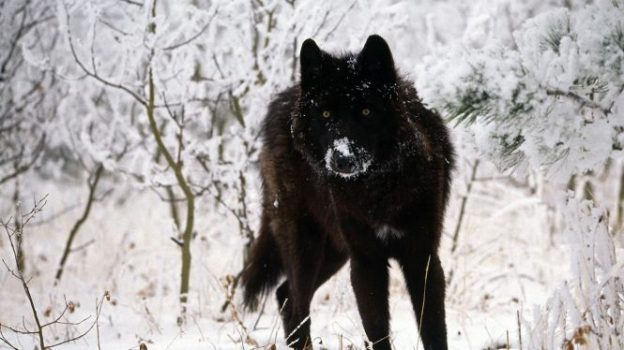
Wolves, as predatory animals and carrion-eaters, had a somewhat grim reputation among the Norse. There was the Fenris Wolf, who would devour Oðin at Ragnarok, and on a more human level, outlaws were called vargr, wolves.

At the same time, though, Oðin had two as pets, and in one Eddic poem he praises the killer wolf Garm as the “best of hounds”. Warriors gave themselves wolf-names, and in addition to the well-known berserker, Úlfhéðnar were men imbued with the ferocity of wolves.

In my next three posts, I will be taking a closer look at the ambivalent mythology surrounding wolves in Norse myth. In particular, I want to look at three aspects of the wolf-mythos:

  1. Mythological wolves, such as Fenrir and Garm, and their relation to Loki.
  2. Metaphorical wolves, such as outlaws and warriors.
  3. Magical wolves, associated with giantesses and witches.

The image of the wolf goes to the heart of the Eddic story of creation and eventual doom, and exposes some of the fractures at the heart of the society the Æsir created. I hope you will enjoy reading these posts. If you find them interesting, please feel free to comment or like them.

If you liked the image at the top, click here.

Save

Gods in Dresses, Women in Armour

When you think of gender-bending in Norse myth, the trickster-god Loki springs to mind. Would you be surprised to know that Odin and Thor have also dragged up, albeit not very successfully in Thor’s case? (One of the areas they did not compete in during the flyting in Hárbarðsljóð; imagine how that would have gone.)

Continue reading