In my post on Mani the Norse moon-god I tried to work out what powers he might have, based on the few references to him in the Eddic poems, and especially in Völuspá. This time around I will look at his sister, Sol the sun-goddess.

In my post on Mani the Norse moon-god I tried to work out what powers he might have, based on the few references to him in the Eddic poems, and especially in Völuspá. This time around I will look at his sister, Sol the sun-goddess.

We are used to thinking of the moon and sun as opposites, a fallacy that even pervades astronomy, as Space.com points out. For a single instant in a lunar month (29.5 days) the sun is opposite the moon in the sky. This is the exact moment of the full moon. Apart from this, the two may be anything from 180 to 0 degrees apart, and are often seen in the sky together.
This may explain why Völuspá refers to the moon-god Mani as the sun’s companion or escort. (Depending on translation.) Also, when the two appear in the sky for the first time, their routes are not yet established, so it makes sense that they would be together.
We all know that Yggdrasil is the World Tree of Norse myth, and that it holds together the nine worlds. However, the Norse, like the Finns and the Hindus of India, seem to have had some notion of a world mill (or churn) as well, which turned the heavens and could grind out various products. This cosmic mill shows through the confused myths about the sun and moon.

In my post on the enigmatic Norse god Hœnir, I mentioned two goddesses, Frigga and Saga. I argued that Hœnir personified poetic memory and inspired speech. His partner, Mimir, was the god of memory, without whom he couldn’t speak at all. Like our gods, Frigga and Saga have access to the knowledge of fate and of history. And like our two gods, one of them tells about it, the other doesn’t.
Earth the most great and Heaven on high!
Father is he to man and god
And she, who taketh to her sod,
The cloud-flung rivers of the Sky.
And beareth offspring, men and grass,
and beasts in all their kinds, indeed,
Mother of All. And every seed
Earth-gendered back to Earth shall pass,
And back to Heaven the seeds of sky:
Seeing all things into all may range
And sundering, show new shapes of change,
But never that which is shall die.
(Euripides, fragment, trans. Gilbert Murray)
PS – I thought this was a totally obscure quote, which Timothy Findley uses as an epigraph in The Wars. But someone else likes it enough to name their blog for it.
If you like the image at the top, click here.
Although Hoenir was a companion to Odin and Loki, two well-publicized Norse gods, very little has survived about him, and he does not seem to have had cult places or worshippers.
Which is surprising in a way, because in Völuspá he is the one performing the old rites after the world is reborn, so you automatically think “priestly god”. Several scholars have decided that his role was in fact a priestly or vatic one, based on this.

My brother, who was something of a comics nut (still is, actually), had a bedspread made up of panels that were reproductions of the first issues of Action Comics, Detective, etc. We could recognize Superman, Batman, Wonder Woman and Green Lantern, but one guy had us puzzled.
Who was the guy in red with the white cape? He seemed kinda like Superman, in a fancier outfit. (Unfortunately, we were not the only ones to think this. But let’s keep things in order.) Both he and Superman were doing anti-social things to cars; the man on the cover of Whiz! comics had pitched it into a far-off wall, and seemed pleased about it. Continue reading
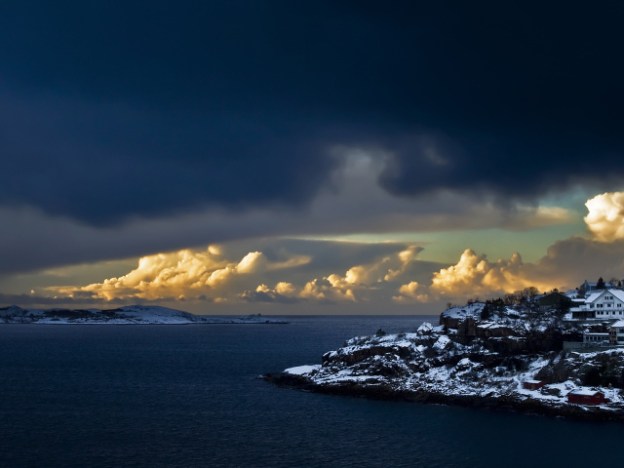
(This post was inspired by one written by Nancy Marie Brown at God of Wednesday: A Viking Fairy Tale. She in turn was inspired by a question from a reader, and a paper by Takahiro Narikawa. And on it goes.)
Long before I began this blog, just plain long ago in fact, I did a degree in Medieval Studies, with a specialty in English. This taught me how to dig into a text for its meaning, but we rarely considered the political or historical aspects of the texts. In some cases it would have been difficult to do so.
Who wrote Beowulf? We can guess at his (probably his) politics, and what was happening around him while he was writing, but we know very little about him. Even much later texts have similar problems, such as Gawain and the Green Knight. The poet Simon Armitage hypothesized that the author was from northern England, based on some of the words used, but we don’t know for sure.
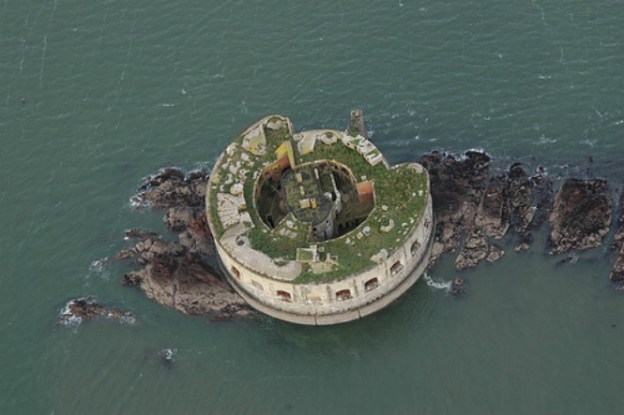
Women in power in the Middle Ages had a problem. Women weren’t supposed to rule (remember Eve? and St. Paul?). If they did take the throne, they were expected to marry, and their husband would then exercise power. So the choice was simple: marry and lose power, or stay single and keep it, but rule alone and die childless.
The meykongr, or maiden king, romance was born out of this dilemma.
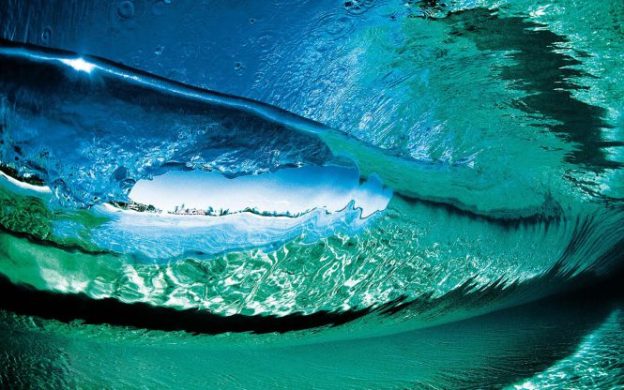
I don’t normally like “list posts”. Those neat lists of deities and powers are certainly easy to remember, and good for beginners, but I find that now I want more context and explanation. (Or it could be a warning sign of old age. Who knows.)
Just this once, however, I have broken down and made a list of Irish sea-gods. When I was writing my posts on Donn and Tethra, I took a lot of notes trying to get all these gods straight in my head. This post is for anyone who shared my confusion.
 We Are Star Stuff