Geography made the Scandinavians a marine people, and not surprisingly ships of various kinds played an important part in their lives. It’s not surprising that they turn up in myth and art as well.
Geography made the Scandinavians a marine people, and not surprisingly ships of various kinds played an important part in their lives. It’s not surprising that they turn up in myth and art as well.
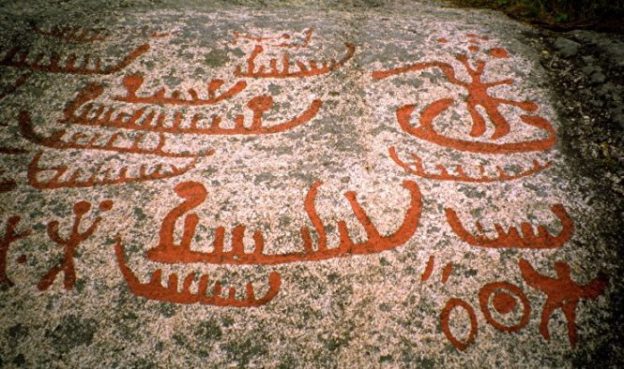
Ships played an important part in Scandinavian life, so it’s not surprising that they are also prominent in mythology and art. In these next two posts I will be discussing the cult of the Vanir and the role that ships play their myths, and then how those myths and associations also link up to death and the afterworld. The ship, like the Vanir, were associated both with wealth and prosperity, and also death and what lay after. Once again this a rather long piece, so I have split it into two posts:
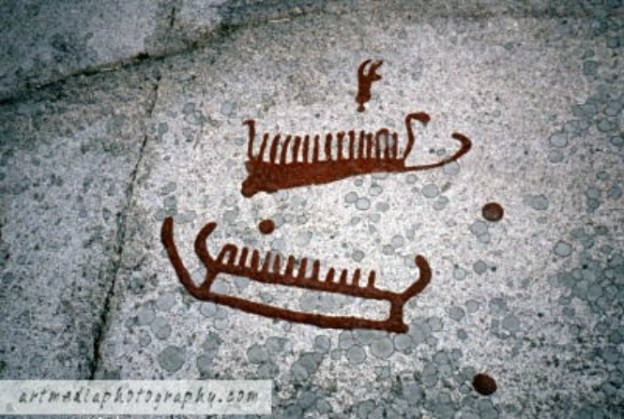
Image at top: Solberg – Rock Art in Norway. Photo by greywether.
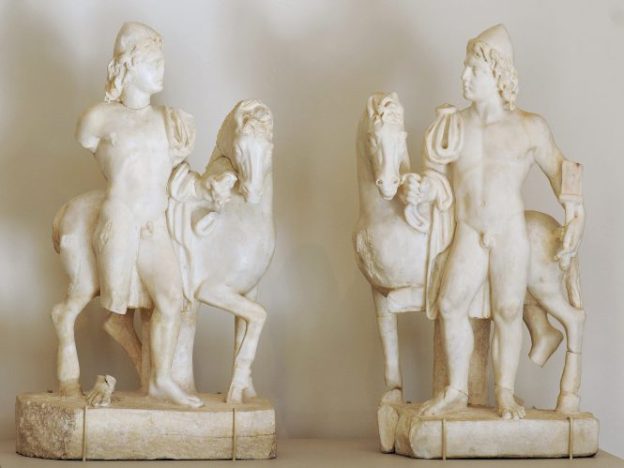
These two stars are a case of the myths fitting the reality, since Pollux is the brighter (17th brightest) while Castor languishes at 23rd. Since many versions of the Classical story of the Heavenly Twins made Castor the mortal one, it seems fitting that his star is slightly dimmer.

(Note: this is a slightly rewritten excerpt from my second book Sun, Moon and Stars. I hope that isn’t out of line, but I still like the piece as it is.)
In the same year so bright a light illumined a wide spread of lands in the middle of the night that you would have thought that it was high noon. On a number of occasions fiery globes were also seen traversing the sky at night-time, so that they seemed to light up the whole earth. (The History of the Franks IX.4)
The Northern Lights are a more personal topic than many in this blog. I grew up in Labrador, which is in the sub-Arctic of Canada, and we did get some good displays. (For the best, you go further north, above the tree line.) Apart from the great colour show you can get, the thing I most remember about them is the hush – people would stop and look, and no one made any noise, just watched the pink and green bands undulate across the sky. It wasn’t hard to see why the Innu and Inuit were in awe of them. Continue reading

The god Ullr is another of Norse myth’s enigmatic gods, along with Heimdall. Both seem to have faded in importance by the time that the myths were being written down, although people in Sweden and Norway worshipped Ullr, and we know that invoked him when they swore oaths. He is clearly a god of winter and winter pursuits, which has led to a rebirth of sorts in the Ullr Fest held in Colorado each winter.
This post is a bit of a swizz – the name Rigantona is actually a hypothesis, a reconstruction by linguists of the origins of the name Rhiannon. There are no images, inscriptions or literary references to Rigantona.
There are, however, a few inscriptions to a goddess Rigana (whose name would be cognate to Latin Regina). Sometimes these goddesses are associated with Juno or Minerva (Jufer & Lughinbuhl: 13), other times they appear on their own.
Since the goddess Rosmerta often (not always) appears with the Roman god Mercury in both inscriptions and art, it is generally assumed that she is his consort, and the images that show her with his attributes indicate that he was the more powerful partner. There is a strong case to be made, however, for reading it the other way around.
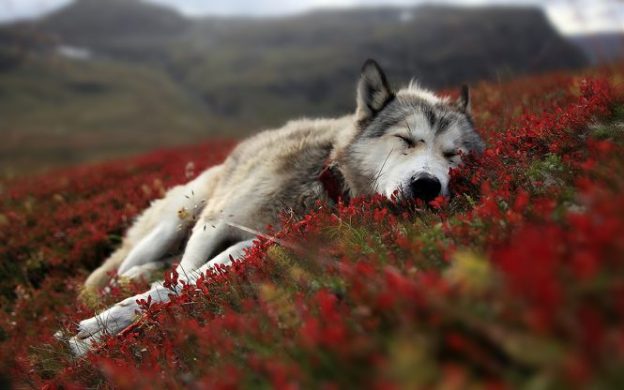
Both giantesses and witches used wolves as their steeds; a sign of their ability to control wild and dangerous forces. The wolf-riding woman could do what others could not.
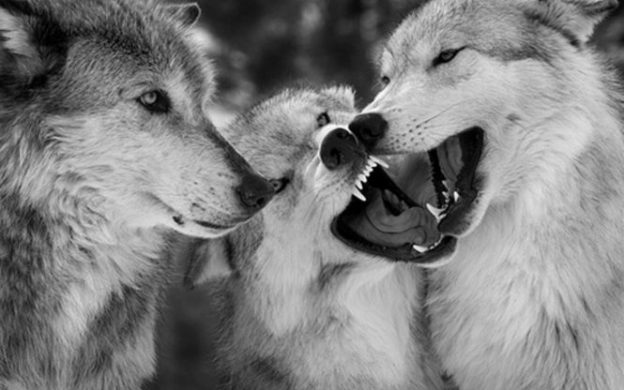
The ambiguity of wolves comes through again in the two groups of humans identified with them: warriors and outlaws. What both groups have in common is bloodshed; the difference is between legitimate and illegitimate violence. (The difference, so to speak, between Oðin’s pet wolves and Fenrir.)
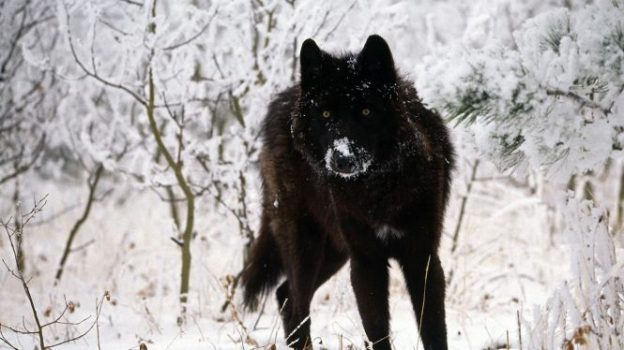
Wolves occupied a very ambiguous place in Norse myth and thought. The best of dogs is said to be Garm, but everywhere else Garm is a wolf, and a dangerous one at that. Garm is the wolf that kills Tyr at Ragnarök, (Gylf. 51) and the similarly named Mánagarm devours the moon (and presumably Máni the moon-god):
 We Are Star Stuff