Ceres: asteroid to dwarf planet

Status is a funny thing. When Pluto was relisted as a dwarf planet, it was definitely a demotion. For the former asteroid Ceres, however, it was a step up. What had been an unusually large asteroid has moved into a whole new league. This was a bit unfortunate for astrologers, as they had taken the four largest asteroids, all named for Classical goddesses, as a balancing-act for the male-dominated planets.

Continue reading

The Battle of Magenta

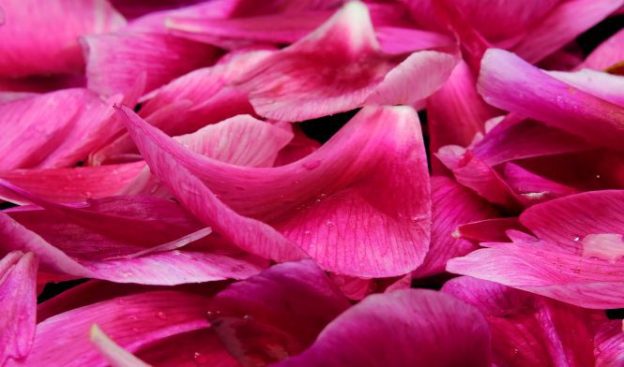
Everyone is familiar with Gertrude Jekyll’s dislike of magenta – “malignant magenta”, as she called it. Many other writers of her period were equally dismissive, such as Alice Morse Earle, who said that as she glanced back through her writing on the subject, she felt the word “made the black and white look cheap.” (Kellaway: 93-5)

Continue reading

Rigantona – the Theoretical Goddess

This post is a bit of a swizz – the name Rigantona is actually a hypothesis, a reconstruction by linguists of the origins of the name Rhiannon. There are no images, inscriptions or literary references to Rigantona.

There are, however, a few inscriptions to a goddess Rigana (whose name would be cognate to Latin Regina). Sometimes these goddesses are associated with Juno or Minerva (Jufer & Lughinbuhl: 13), other times they appear on their own.

Continue reading

Indigo: Seventh Colour or Odd One Out?

Seven planets, seven notes in the Western major scale, so of course seven colours in the rainbow. Isaac Newton even felt that there were similar intervals between colours and notes. (You can hear the tones and see their associated colours on YouTube.) Presumably indigo fitted in well between blue and purple, but most modern scientists who study light consider the spectrum to consist of six colours, the primaries and their complementary colours.

Continue reading

Rosmerta: not just a consort goddess.

Since the goddess Rosmerta often (not always) appears with the Roman god Mercury in both inscriptions and art, it is generally assumed that she is his consort, and the images that show her with his attributes indicate that he was the more powerful partner. There is a strong case to be made, however, for reading it the other way around.

Continue reading

Capella: the little goat

In the next few months I plan to have an occasional series on the 20 brightest stars in the sky. Originally I was planning to start at 1 and work down, but I thought it made more sense to deal with them when they were most visible. So this month I’ll be writing about Capella, Sirius, Procyon, and Rigel.

Capella is the sixth brightest star in the sky, and third brightest in the northern hemisphere. It belongs to the constellation of Auriga, the Charioteer. As the title of this post indicates, the Charioteer is often shown cradling a goat in his arm, with the kids (or a whip). He also seems to have lost his chariot, which isn’t part of the constellation.

Continue reading

Rigel: the blue star from the galactic giant.

Rigel is basically Orion’s ankle. You can find it if you look for the three stars of his belt, then down the belt to the bright white star below it. The name comes from Rijl Jauzah al Yusra, the Left Leg of the Jauzah (Jauzah was the Arabic title for Orion).

Fun fact: Rigel was mentioned in several Star Trek episodes, in the form of its planet, Rigel VII. Captain Pike had landed there and been attacked, and this history, as well as more current events, were mentioned in episodes of New Generation and Deep Space Nine.

Continue reading

Batgirl: lighten up, Gotham!

Don’t get me wrong, I like Batman and all, but I don’t see why every DC comic has to be equally grim and dark. Surely each should have its own feel? (The same should be true for the movies, by the way. I remember describing Man of Steel to a friend as “Superman Batmanned”.)

So thank goodness for Barbara Gordon, whose Batgirl takes a completely different route. This isn’t to say that she doesn’t have difficulties, or face challenges. She just handles them differently.

Continue reading

3. Magical Wolves: Giantesses and Witches

Both giantesses and witches used wolves as their steeds; a sign of their ability to control wild and dangerous forces. The wolf-riding woman could do what others could not.

Continue reading