Monthly Archives: September 2016

Ilmr: Elm Goddess?

Back in the spring I was inspired by Adam Hyllested’s ideas about the Hyldemoer to write my own post about the Elder Mother. This led on to two other posts, on rowan and birch. I assumed that I had exhausted the subject of feminine powers associated with trees, but I was wrong.

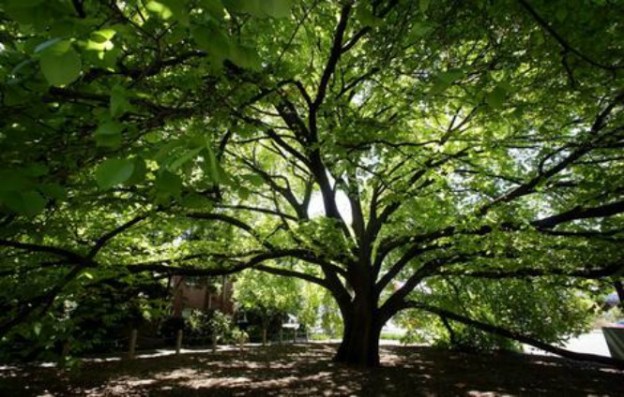
A week ago Neorxnawang passed on a link to a paper on the mysterious goddess Ilmr. She appears in a list of goddesses and another of kennings for “woman” in the Prose Edda. Her name also appears in poetry, mostly as – you guessed it – part of a kenning for “woman”. The paper, by Joseph Hopkins, suggests that Ilmr may be an elm goddess, connecting her name to the word almr, elm.
Continue reading

To the Evening Star

Hesper! Sweet Aphrodite’s golden light!
Hesper! Bright ornament of swarthy Night,
Inferior to the Moon’s clear sheen as far,
As thou outshinest every other star;
Dear Hesper, hail! And give thy light to me,
Leading the festive shepherd company.
For her new course today began the moon,
And is already set–O much too soon!
‘Tis not for impious theft abroad I stir,
Nor to way-lay the nightly traveller.
I love; and thou, bright star of love! shouldst lend
The lover light–his helper and his friend.

Bion of Smyrna, 2nd to 1st century AD

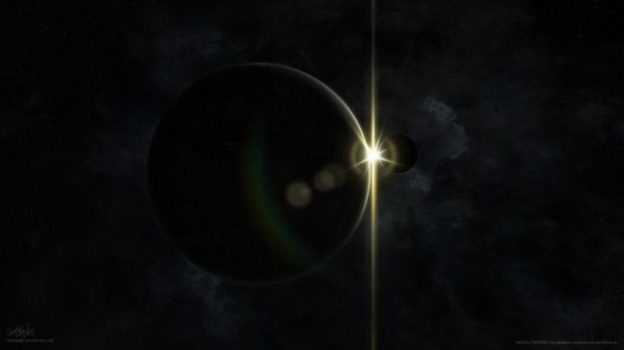
(Image is Rising Star by Traemore on DeviantArt)

Save

Gefjun: goddess or giant?

My last post on Gefjun touched on the question of her status. She is counted among the goddesses, but so are Skadi, Gerdr and Jord, all of whom are giantesses by birth. John Lindow has argued that she was obviously a giant or other primal being, although others have seen her as an earth goddess. So is she a goddess, a giantess, or both?

Continue reading

Jacques Bonhomme Complains of the Useless Stars

I see on high the Milky Way,
But here’s a rougher road.
The Sacred Oxen shining stand;
They do not draw our load.

The Sieve is sparkling in the South,
But good and ill come through.
The Ladle opens wide its mouth,
And pours out naught for you.

At dawn the Weaving Sisters sleep,
At dusk they rise again;
But though their Shining Shuttle flies,
They weave no robe for men.

Translated from Chinese by Helen Waddell

Save

Gefjun: outside the boundaries

Gefjun will be forever be famous as the goddess who gave Zealand to Denmark. The Danes immortalized her feat with a fountain in Copenhagen harbour, showing her and her oxen ploughing out the land.

She has many similiarities to Odin, as a goddess who travels between worlds, tricks mortals, and straddles moral and sexual boundaries. Far from being an earth and ploughing goddess, Gefjun is a magical and complex figure.

Continue reading

Quick Black Hole Spin-Change

I don’t like it–

two massive Black Holes
each twirling at the core of
two merging galaxies

get close enough
to fuse together

then quick as a wink
just as they are melting into a New Black Hole Blob

they undergo something called a “spin-flip”

they change the axes of their spins
and the fused-together Black Hole Blob
gets its own
quick as a cricket’s foot

Don’t like it at all

And then the new Black Hole Blob sometimes
bounces back and forth inside
its mergèd Galaxy

till it settles at the center

but sometimes a “newly” up-sized Black Hole
leaves its Galaxy
to sail out munchingly on its own
into the Universal It

I don’t like it

Nothing about it
in the Bhagavad Gita
the Book of Revelation
Shakespeare, Sappho, or Allen Ginsberg

Edward Sanders

Save

Odin and the Morrigan

This week’s post could easily have been called “fearsome deities“: Odin, whose name means “fury”, and the Morrigan, who steps out of the fairy realm to stir up war and slaughter. It’s not hard to see what they have in common.

Continue reading

Do you still remember: falling stars

Do you still remember: falling stars,
how they leapt slantwise through the sky
like horses over suddenly held-out hurdles
of our wishes—did we have so many?—
for stars, innumerable, leapt everywhere;
almost every gaze upward became
wedded to the swift hazard of their play,
and our heart felt like a single thing
beneath that vast disintegration of their brilliance—
and was whole, as if it would survive them!

-Rainer Maria Rilke

Save