Category Archives: Norse

What exactly is Brisingamen?

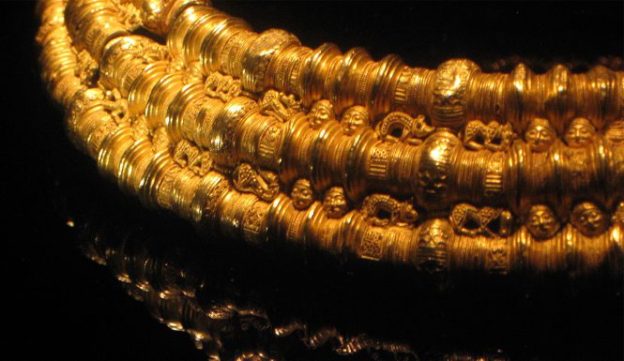
This is one of those questions with a short and a long answer. The short answer is that it is the Norse goddess Freyja’s necklace. The longer answer is that the necklace, and its owner, were intimately linked. The jewel and the goddess were linked in the same way as Thor and his hammer: an attribute that could both symbolize the deity and embody their power.

Continue reading

Heimdall v. Loki

In Skáldskaparmal Snorri gives a list of names for Loki. The last is “the wrangler with Heimdall and Skadi.” He also tells us that Loki and Heimdall will fight at Ragnarök, and kill each other.

As you can see from the picture above, Heimdall and Loki are enemies, opposed forces, order and chaos. I can see how Loki fits into this, but why Heimdall in particular? (Although considering what Loki gets up to in the Thor and Avengers movies, “mischief” seems a very mild description of his activities.)

Continue reading

Honey from an Ash

When I was young, I imagined the manna that fell from heaven as being some sort of bread, possibly akin to communion wafers. It made sense to my young, Catholic, self.

Much later in life, I had to rethink the nature of manna, because of two books. One was the Poetic Edda, and the other was The Hive by Bee Wilson (a very appropriate name). Wilson’s book talks mainly about honey from the hive, but she does mention manna or meli, as the ancient Greeks called it, which falls from ash trees.

Continue reading

Blood-Brothers: Loki and Odin

In his fickleness and imagination he even gave pleasure to Odin, who with his well-sipping and auto-asphyxiation knew too much ever to be otherwise amused …the reason why Odin had taken the great, foredoomed step of making Loki his blood brother – for the pleasure, pure and simple, of his company. (Chabon: 53)

Odin and Loki are blood-brothers, and we have to wonder what each saw in the other that led to such an unusual partnership. After all, the two are on entirely different trajectories. Odin is trying to get as far as he can from his giant ancestry, to the extent of murdering his own grandfather to make the world. Loki, on the other hand, is constantly pulled back and forth, but usually ending up with the gods, until he chooses the giants for good.

Continue reading

Apollo, Odin and Lugh

These Greek, Nordic and Celtic gods may not seem to have much in common at first glance, but they resemble each other in several ways, all of which illuminate aspects of their characters. All three are intellectual, associated with the arts, and have magical or oracular powers in addition to an unforgiving nature.

Continue reading

blacksmith sparks

Idavoll (and Idunn?)

The name Iðavöll appears twice in Völuspá, just after major cosmic events. The first, in stanza 7, follows the meeting of the Æsir where they portion out time, naming the parts of day, and the year. Stanza 6 tells us that the Æsir met at “the thrones of fate”, while 7 starts with them meeting at Iðavöll Plain, and unlike stanza 6, they physically create things, rather than just naming them.

Continue reading

Sirius: the Scorcher

Sirius is the brightest star in the night sky – its modern name comes from the Ancient Greek Seirios (“glowing” or “scorcher”). It is actually another one of those binary stars, a white star and a white dwarf. Like Procyon, its nearness to Earth makes it much brighter in the night sky than many other stars. It is brighter than our sun, but dimmer than Rigel and Canopus.

Continue reading

Procyon: Torch Bearer

Procyon suffers from an inferiority complex – even its name points to a more important star. Procyon means “before the dog”, meaning Sirius, the dog-star. (Fun fact: the racoon genus is called Procyon, because it used to be thought that raccoons evolved before dogs.)

Continue reading

The Cider of Immortality

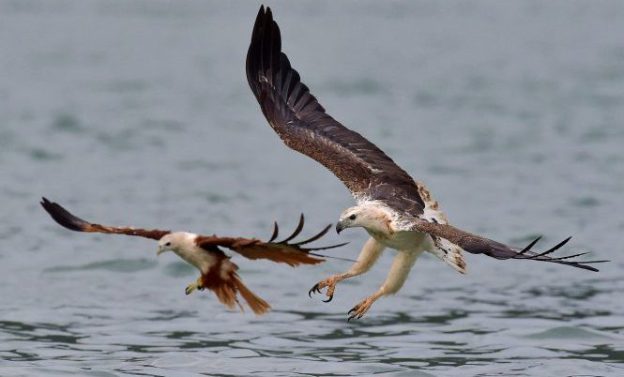
In Norse myth we have two stories involving the theft of a substance that confers a magical benefit to the user. Both involve the thief taking the form of an eagle. Both involve a pursuit with a god and a giant. Of course, the two myths have very different results, although in both cases the final score is Aesir 1, Jotunar 0.

One is the myth of the giant Þiazi kidnapping Iðunn to get the apples of immortality, the other is the story of how Oðin stole the mead of poetry from the giant Suttungr.

Continue reading

2. Ship Burials, Stone Ships and the Afterlife.

The Scandinavians believed that their gods came from two tribes: the Aesir and the Vanir. The latter, with their strong connection to water and ships, as well as the afterworld,

Continue reading