Category Archives: Mythology

it could be argued… that any myth is a neutral structure that allows paradoxical meanings to be held in a charged tension. Indeed, we might argue that this is one of the defining characteristics of a myth, in cotnrast with other sorts of narriatves (such as novels): a myth is a narrative that is tramsparent to a variety of constructions of meaning.
(Wendy Doniger, The London Review of Books, 30: 7 (10 April 2008): 27-29)

Who is the Birch Goddess?

Berkana, or Birch, the 18th rune, is often said to be named after the birch goddess. I think however the “goddess” part is modern mythology. Before I go any further I want to say that there’s nothing wrong with that – that’s how mythology gets made. It is interesting to see how ideas get put together and grow into something new.

Continue reading

Sheila vs. Patrick: March 18th and Sheila’s Brush

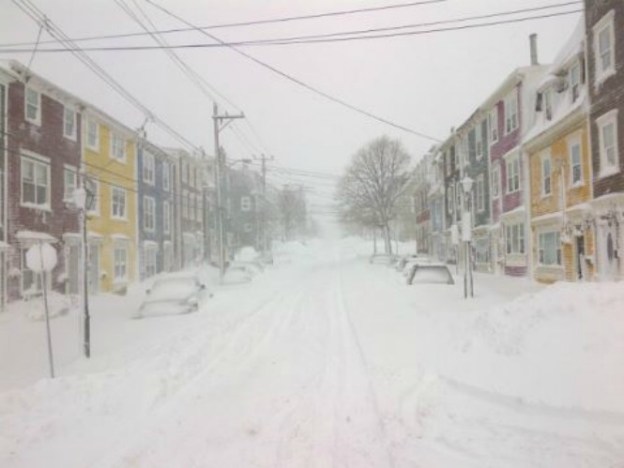
Sheila’s Brush is a Newfoundland term for a storm on or about the 18th of March. Because Sheila’s storm comes just after St. Patrick’s Day, Sheila is often described as the saint’s wife or mother. You would think that this would be an Irish tradition as well, carried to the new world by immigrants, but it appears to be a local invention.

Continue reading

Brigantia: tribal goddess

This is an extremely condensed look at the goddess Brigantia. For a much more detailed study, see my book Brigantia: Goddess of the North.

The Brigantian federation stretched over most of northern England, and their queen, Cartimandua, is one of the few female rulers known to history. But the fame of their goddess, Brigantia, comes from a Roman statue.

Continue reading

Thor’s Protection: the rowan

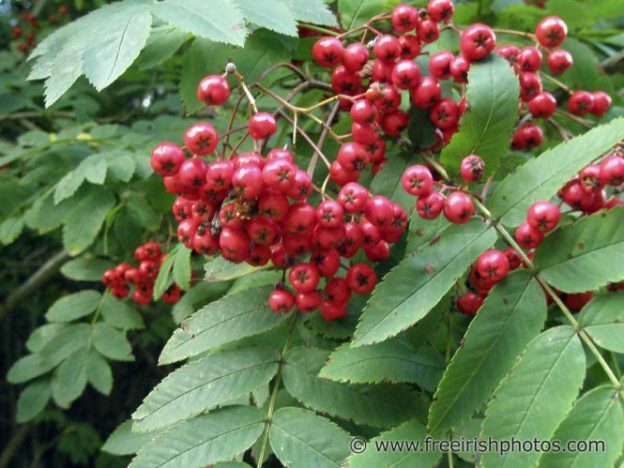
“The rowan is the salvation of Thor”, was a Icelandic proverb, and we have to wonder how this small tree could save a mighty god.

Continue reading

The Elder Mother, a mystery

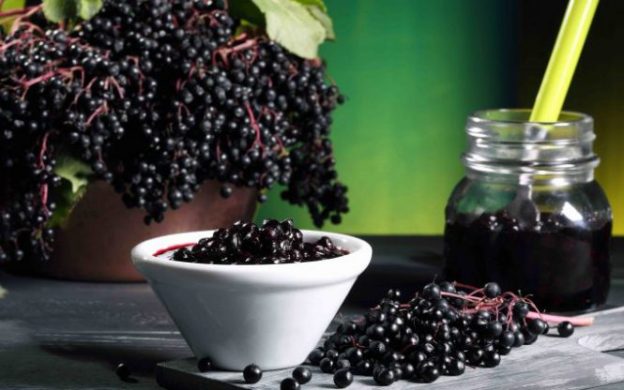
There are elder trees all over Europe and Asia, but no one has been able to trace a root word common to the Indo-European languages for it. Considering that other widespread trees like birch and oak do have names that are clearly related across the whole language family, it seems strange that a useful tree like the elder should be overlooked. (Hyllested: 119) Or was there a reason behind this refusal to name the tree?

Continue reading

Mother-Goddesses and the juno: reproductive power

The Roman idea of a genius, the divine nature inherent in a person or place, can be traced back either to the word gens, tribe, or to the Latin word “begetter”, indicating a fertility spirit.

Women seem to have had their own form of genius, called a juno. (This is a contested idea: the Wikipedia article on Juno denies it completely, while the Brittanica site and the Dictionary of Roman Religion are for it.) However, enough scholars seem to accept the idea that I’m willing to see it as valid. I’m sure even in a society as patriarchal as ancient Rome women took pride in their children and their lineage, and those feelings found their own religious expression.

Continue reading

Link

Thumb-sized figurine discovered in Denmark by amateur archaeologist is the only 3D representation of a valkyrie ever found – and will arrive at British Museum in 2014

Source: Flight of the valkyrie: the Viking figurine that’s heading for Britain | Culture | The Guardian

Link

As curator of the Celts exhibition, I got to spend a lot of time showing people wonderful Iron Age treasures. Some of my favourites were the big metal neck rings called torcs that were worn across much of Europe (and beyond) around 2000 years ago. One of the things I was asked most often is, ‘But how did you put them on?!’ It’s a very good question, seeing as they often look like solid metal rings with nowhere near enough space to squeeze your neck through.

Read more here.

Vindonnus: Healing God

Sometimes studying mythology leads you into areas of human frailty and vulnerability that bring you very close to the past. Any study of healing deities stirs the emotions, partly because we all know the fear that sickness brings, and because so many of the things they suffered from are unknown to us (at least in the prosperous world).*

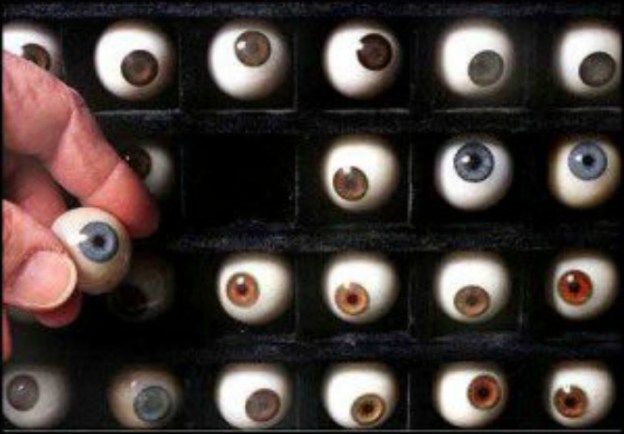
The many offerings of ex-votos, often body parts, found at healing shrines testify to the various illnesses of ancient times. These were not always rich offerings, either. At the shrine of Apollo Vindonnus archaeologists found many votives carved from oak wood or stone. Many were of body parts, but others were of hands holding offerings. (You wonder if they somehow stood for the offering itself, or promised one in return for a cure.)

Continue reading