Divine Ancestors

While it’s part of Norse myth that the gods and giants are enemies, it seems that the giantesses were a different story. Odin clearly never met one he didn’t like, and he was far from being the only one to have a fling with one. Even Thor the giant-smasher had an affair with Jarnsaxa. These romances usually resulted in the second-generation gods, such as Thor’s son Magni.

Sometimes, however, the sons of these unions were mortals, or demi-mortals anyway. The Swedish ruling dynasty called the Ynglings and the Norwegian earls of Hladir traced themselves back to the giantesses/goddesses Gerdr and Skadi, respectively.

Continue reading

Koios: famous for being obscure

I have a tag I use from time to time: “obscure deities”. The Titan Koios (or Coeus) was famous for being obscure. In the Metamorphoses, the ill-fated Niobe says of him and his daughter Leto:

Now, ask what the reason is for my pride, and then dare to prefer Latona to me, that Titaness, daughter of Coeus, whoever he is. Latona, whom the wide earth once refused even a little piece of ground to give birth on.

(Latona is the Roman name for Leto.) Even in her great access of hubris, the only thing Niobe could say of Coeus/Koios was that no one knew who he was. A quick look at online guides to Greek myth shows that Koios is by no means famous now, but there seems to be a desire to fill out his dossier.

Continue reading

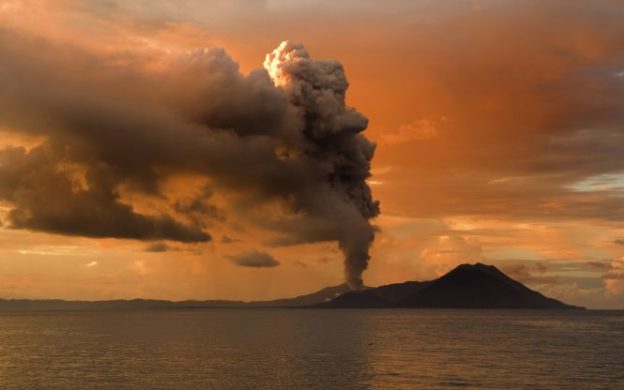
volcano wallpaper

Vulcan: the planet that never was

This blog has frequently lamented the demotion of Pluto. After being expelled from the company of planets, it now resides in the newly-named Plutoids, in the company of Eris, Sedna and other dwarf planets. Another one-time planet suffered a worse, and lonelier, fate one hundred years ago.

The planet Vulcan came into (theoretical) being as a solution to the problem of Mercury‘s orbit, which deviated from the track that Newton’s laws laid down for it. Continue reading

Altair: the Eagle

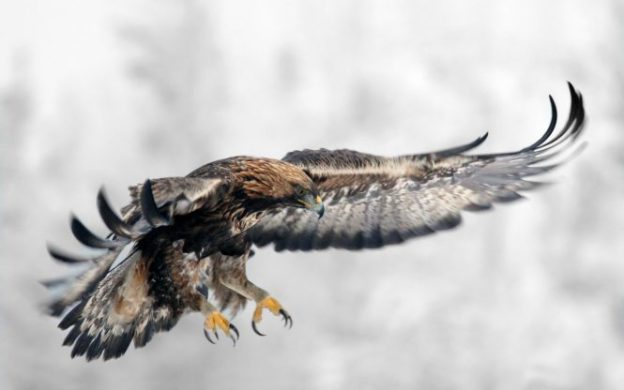
Eagles and thunder-gods often appear together, but in Greek myth the eagle was Zeus’ accomplice as well as his emblem. It stole the beautiful youth Ganymede from his fields and carried him to Olympos to be Zeus’ cupbearer. (Ganymede is also in the heavens, as the constellation Aquarius.)

The eagle also carried out Zeus’ punishment of Prometheus, who stole fire to give to the humans. Zeus had him chained to a cliff face, and the eagle came every day and tore out his liver. Hercules rescued Prometheus as part of his 11th Labour and killed the eagle. Zeus then put it in the sky to reward its faithful service.

The Eagle features among the Hercules family of constellations, by the way, which include large asterisms like Ophiuchus the Snake-Handler as well as tiny ones like Ara, the Altar.

Continue reading

What exactly was “red gold”?

If Freyja wept tears of gold, we would expect them to be the colour of the drops above, right? However, in the Prose Edda, Snorri describes them as “red gold”, rauðr gull. (Gylf. 46) Was this just poetic license, or was gold different in the Middle Ages?

Continue reading

Twelfth Song of Thunder (Navajo)

The voice that beautifies the land!
The voice above,
The voice of thunder
Within the dark cloud
Again and again it sounds,
The voice that beautifies the land.

The voice that beautifies the land!
The voice below,
The voice of the grasshopper
Among the plants
Again and again it sounds,
The voice that beautifies the land.

(Anonymous, from the Poetry Foundation website)

Source:
The Mountain Chant: A Navajo Ceremony
(Forgotten Books, 2008)

Save

Vega: the jewel in the Harp

Vega is the fifth brightest star in the sky, a brilliant blue-white star two and a half times larger than the sun. It takes turns with Polaris and Thuban as the pole star, and will be the nearest star to the celestial north pole again in 14 000 AD.

Continue reading

The Golden Age: Njord and Saturn

The Norse sea-god – if he reminded you of anyone in the Graeco-Roman pantheon, wouldn’t it be Neptune/Poseidon? And yet, when the medieval Icelanders were copying out Greek myths, they explained the god Saturn/Kronos to their readers as “Njord”. What did the two have in common, that Njord would stand for Saturn to an Icelander?

Continue reading

Foggy, Foggy Blues

There is a morning fog here
That rises from the snow
To inhabit head-tall space
In a lightless glow.
Shapes normally well known
Allow themselves to flow,
To merge, to flux. strange change
Distorts the landscape into something we don’t know.
Houses bulk and loom to presume
A fearsomeness to destroy their square
Solidity; they lean in overhangs
Precarious as if to leap from there
To here, to pounce on our fragility
With agile smokey grace on reptile legs
And crunch our bones with jagged window panes.
Dragon cars with laser eyes growl the streets
And sweep from murk to murk.
Dogs go berserk to howl and bark
At lumps that skoot around the dark
In swift retreats that leave no mark.
A garbage can gets kicked and tipped
And rolls to clang against a lamp post.
Silence picks the click of heels that tacks
A path to intersect our spot – this way comes
God knows what. Better now to retreat
Back to our well known street to sit
Windowside and wait the Sun
To burn away the haze
And disentangle streetwise maze.

Jan Sand

Save

The Eye and the Well: Odin and Brigit

Odin and Brigit may not seem like the most similar deities, but they actually do have more in common than you might think. Both are patrons of poets, both give up an eye voluntarily, and both these losses are connected with water.

Continue reading