Stars – Emily Bronte

Ah! why, because the dazzling sun
Restored our Earth to joy,
Have you departed, every one,
And left a desert sky?

All through the night, your glorious eyes
Were gazing down in mine,
And, with a full heart’s thankful sighs,
I blessed that watch divine.

I was at peace, and drank your beams
As they were life to me;
And revelled in my changeful dreams,
Like petrel on the sea.

Thought followed thought, star followed star
Through boundless regions on;
While one sweet influence, near and far,
Thrilled through, and proved us one!

Why did the morning dawn to break
So great, so pure a spell;
And scorch with fire the tranquil cheek,
Where your cool radiance fell?

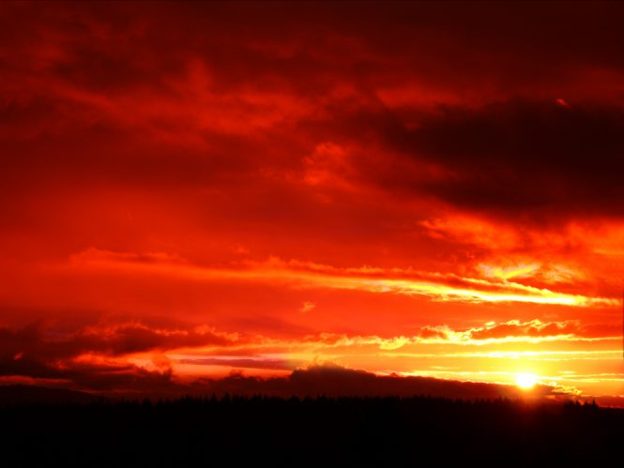
Blood-red, he rose, and arrow-straight,
His fierce beams struck my brow;
The soul of nature sprang, elate,
But mine sank sad and low.

My lids closed down, yet through their veil
I saw him, blazinig, still,
And steep in gold the misty dale,
And flash upon the hill.

I turned me to the pillow, then,
To call back night, and see
Your words of solemn light, again,
Throb with my heart, and me!

It would not do – the pillow glowed,
And glowed both roof and floor;
And birds sang loudly in the wood,
And fresh winds shook the door;

The curtains waved, the wakened flies
Were murmuring round my room,
Imprisoned there, till I should rise,
And give them leave to roam.

O stars, and dreams, and gentle night;
O night and stars, return!
And hide me from the hostile light
That does not warm, but burn;

That drains the blood of suffering men;
Drinks tears, instead of dew;
Let me sleep through his blinding reign,
And only wake with you!

(The image at the top is TheSunRisesintheEast by th3rdeye on deviantart.)

Save

Go and catch a falling star

Go and catch a falling star,
Get with child a mandrake root,
Tell me where all past years are,
Or who cleft the devil’s foot,
Teach me to hear mermaids singing,
Or to keep off envy’s stinging,
And find
What wind
Serves to advance an honest mind.

If thou be’st born to strange sights,
Things invisible to see,
Ride ten thousand days and nights,
Till age snow white hairs on thee,
Thou, when thou return’st, wilt tell me,
All strange wonders that befell thee,
And swear,
No where
Lives a woman true, and fair.

If thou find’st one, let me know,
Such a pilgrimage were sweet;
Yet do not, I would not go,
Though at next door we might meet;
Though she were true, when you met her,
And last, till you write your letter,
Yet she
Will be
False, ere I come, to two, or three.

John Donne

(If you like the image at the top, click here.)

Save

Uranus: the mould-breaker

(excerpted from my book, Sun, Moon and Stars)

The seventh planet dealt a serious blow to old ideas about the universe. From the beginning, Uranus lived up to its association with innovation and technology. When William Herschel found Uranus in 1781, he used an exciting new technology, the telescope.

Galileo had built an early telescope himself, with which he saw the moons of Jupiter in 1610, but by the 1700s the telescope was in use not only in astronomy but also in the shipping industry and the military.

Continue reading

Mercurius Rex and Odin

Mercury, the travelling god, with his hat and staff and cloak, is easily compared to Odin, the god with the wide-brimmed hat, blue cloak, and staff or spear. Both seem to be able to travel through all the worlds, both are connected to the dead, and both are tricky to deal with. Both rely on their cleverness to get them out of sticky situations.

Continue reading

The Starry Night

That does not keep me from having a terrible need of—shall I say the word—religion. Then I go out at night to paint the stars. Vincent Van Gogh in a letter to his brother

The town does not exist
except where one black-haired tree slips
up like a drowned woman into the hot sky.
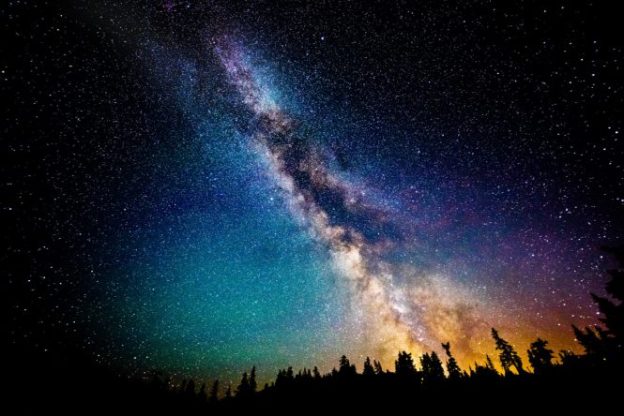
The town is silent. The night boils with eleven stars.
Oh starry starry night! This is how
I want to die.
It moves. They are all alive.
Even the moon bulges in its orange irons
to push children, like a god, from its eye.
The old unseen serpent swallows up the stars.
Oh starry starry night! This is how
I want to die:
into that rushing beast of the night,
sucked up by that great dragon, to split
from my life with no flag,
no belly,
no cry.
(For the image at the top, click here.)

Save

Hyperborea: Beyond the North Wind (links post)

Hyperborea, and the Hyperboreans, seem to have had an enduring life among the ancient Greeks and Romans, even if they couldn’t always agree on where it was. It first intrigued me because of the story that Apollo went there every winter.

Continue reading

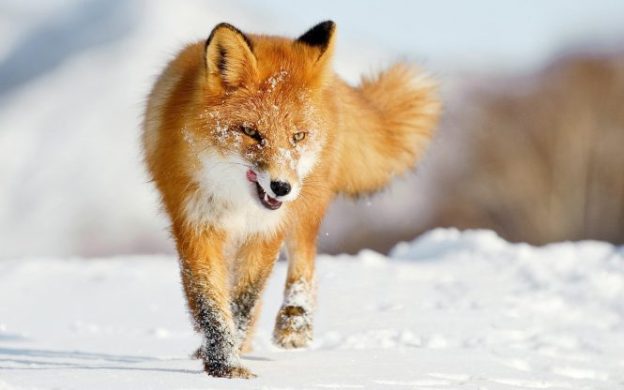
The Fox

The Fox

Standing its ground on the hill, as if it could hide
in its own stars, low down in the west of the sky.
I could hit it from here with a stone, put the torch
in the far back of its eye. It’s that close.

The next night, the dustbin sacked, the bin-bag
quartered for dog meat, biscuit and bone.
The night after that, six magpies lifting
from fox fur, smeared up ahead on the road.

Simon Armitage.

For the image at the top, click here.

Save

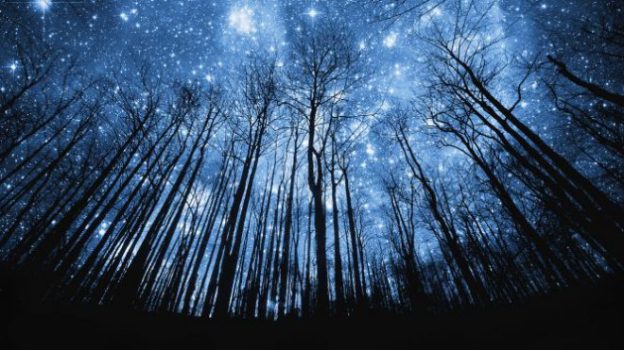
The Ring of Stars

The Ring of Stars

In order to make a star with five branches
Where six would have been the same
A circle must first be drawn
In order to make a star with five branches …

A ring!

One did not take so many precautions
In order to make a tree from many branches
Trees that hide the stars
Trees!
You, full of nests and song birds
Covered with branches and leaves
That you lift as far as the stars!

– Robert Desnos

(Tree Silhouette Against Starry Night Sky — Image by © Robert Llewellyn/Corbis)

Save

Rosmerta II: fate, fertility and sovereignty

In my first post on Rosmerta, I focused on her as a goddess in her own right. This time around, I want to examine the ideas put forth in Michael Enright’s thesis Lady with a mead-cup, which argues that the cult of Rosmerta and Mercury was the basis for the later cult of Odin and various prophetic, mead-serving goddesses (and others) associated with him.

Continue reading