The Cattle of Tethra

Who tells the ages of the moon, if not I?
Who shows the place where the sun goes to rest, if not I?
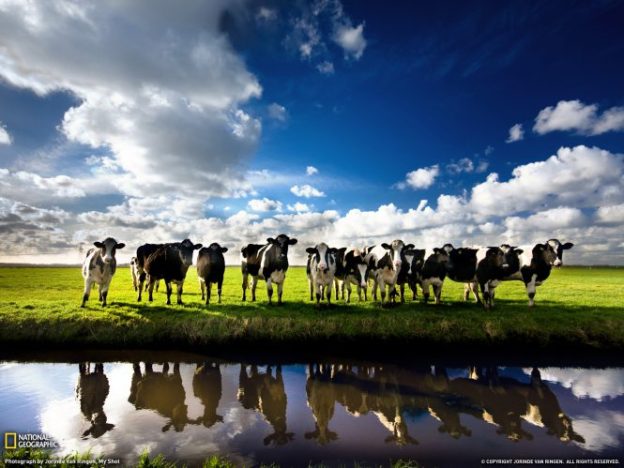
Who calls the cattle from the House of Tethra?
On whom do the cattle of Tethra smile?

This comes from the  Irish poem The Song of Amairgen. It was sung by the ollamh (poet) named Amairgen Glúingel as he first set foot on Irish soil. (He was one of the Milesians, who conquered Ireland after the Tuatha de Danann.) It is certainly an enigmatic verse, but I will just tackle one riddle in this post: what are the cattle of Tethra?

Continue reading

Heimdall v. Loki

In Skáldskaparmal Snorri gives a list of names for Loki. The last is “the wrangler with Heimdall and Skadi.” He also tells us that Loki and Heimdall will fight at Ragnarök, and kill each other.

As you can see from the picture above, Heimdall and Loki are enemies, opposed forces, order and chaos. I can see how Loki fits into this, but why Heimdall in particular? (Although considering what Loki gets up to in the Thor and Avengers movies, “mischief” seems a very mild description of his activities.)

Continue reading

Caliban upon Setebos

Setebos, Setebos, and Setebos!
‘Thinketh, He dwelleth i’ the cold o’ the moon.

‘Thinketh He made it, with the sun to match,
But not the stars; the stars came otherwise;
Only made clouds, winds, meteors, such as that:
Also this isle, what lives and grows thereon,
And snaky sea which rounds and ends the same.

Robert Browning.

If you like the image at the top, click here.

Save

Arianrhod, mermen, and sunken islands

“It was said that she lived a wanton life, mating with mermen on the beach near her castle and casting her magic inside its walls.”

When I was researching Arianrhod for a recent post, I kept turning up variants on the quote above. In fact, the sentence: “She enjoyed herself sexually, with a distinct preference for mermen,” cropped up frequently without any variation whatsoever. Obviously a lot of copying was going on, but what did the original say? Continue reading

Arianrhod: Silver Wheel

In an earlier post I talked about the goddess Matrona, or Mother. This time I want to look at a goddess who is totally unmaternal, Arianrhod. Her story comes from the fourth branch of the Mabinogion, a collection of Welsh early-medieval tales.

Continue reading

Honey from an Ash

When I was young, I imagined the manna that fell from heaven as being some sort of bread, possibly akin to communion wafers. It made sense to my young, Catholic, self.

Much later in life, I had to rethink the nature of manna, because of two books. One was the Poetic Edda, and the other was The Hive by Bee Wilson (a very appropriate name). Wilson’s book talks mainly about honey from the hive, but she does mention manna or meli, as the ancient Greeks called it, which falls from ash trees.

Continue reading

Apollo Soranus: the wolf, the sun, and the sacrifice

Apollo seems to have made a habit of swallowing up other gods. He took over (or was given, according to later mythology) the oracle of Delphi, which had belonged to his grandmother, Phoebe. He seems to have taken over the healing role of a very early Greek god, Paean, and also an Italian god named Soranus.

We don’t know a lot about Soranus, but he was worshipped at Mt. Soracte in Etruria, an area sacred to underworld gods like Dis Pater. Like most of the Italian gods, he had a partner, Feronia, whose sanctuary stood next to his. Although his cult may have involved the otherworld and the dead, his name is probably connected to that of the Etruscan god Suri, a god of purification and prophecy.

Continue reading

Regulus: the Lion’s Heart

The easiest way to spot the constellation Leo in the sky is to look for the Sickle, shaped like a backwards question mark. Regulus is the dot of the question mark. It is a bluish star, and it can be seen all around the globe. It is the 22nd brightest star, although the 21st, Alpha Centauri, is not much brighter than it is. Regulus is not a binary star for once, although there is a binary nearby, and possibly a white dwarf.

Continue reading

Blood-Brothers: Loki and Odin

In his fickleness and imagination he even gave pleasure to Odin, who with his well-sipping and auto-asphyxiation knew too much ever to be otherwise amused …the reason why Odin had taken the great, foredoomed step of making Loki his blood brother – for the pleasure, pure and simple, of his company. (Chabon: 53)

Odin and Loki are blood-brothers, and we have to wonder what each saw in the other that led to such an unusual partnership. After all, the two are on entirely different trajectories. Odin is trying to get as far as he can from his giant ancestry, to the extent of murdering his own grandfather to make the world. Loki, on the other hand, is constantly pulled back and forth, but usually ending up with the gods, until he chooses the giants for good.

Continue reading

Asteria: the Night Oracles

Asteria is another Greek star-goddess, but of a rather different type. She was associated with oracles of darkness, such as prophetic dreams, astrology, falling stars, and necromancy. (Her daughter Hecate, the witch’s goddess, would follow in her footsteps.) She was sometimes blended with the night-goddess Nyx, an alternate mother for Hecate.

Continue reading