2. Metaphorical Wolves: Werewolves, Warriors and Outlaws

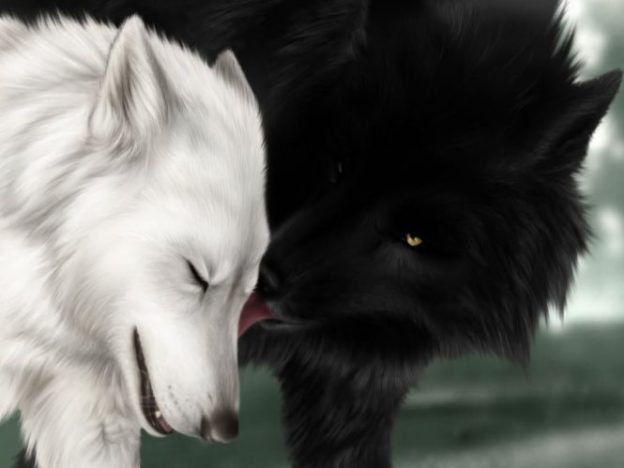
The ambiguity of wolves comes through again in the two groups of humans identified with them: warriors and outlaws. What both groups have in common is bloodshed; the difference is between legitimate and illegitimate violence. (The difference, so to speak, between Oðin’s pet wolves and Fenrir.)

Continue reading

1. Mythological Wolves: Garm, Fenrir, and Loki

Wolves occupied a very ambiguous place in Norse myth and thought. The best of dogs is said to be Garm, but everywhere else Garm is a wolf, and a dangerous one at that. Garm is the wolf that kills Tyr at Ragnarök, (Gylf. 51) and the similarly named Mánagarm devours the moon (and presumably Máni the moon-god):

Continue reading

Wolves in Norse Mythology: a three-part series (intro)

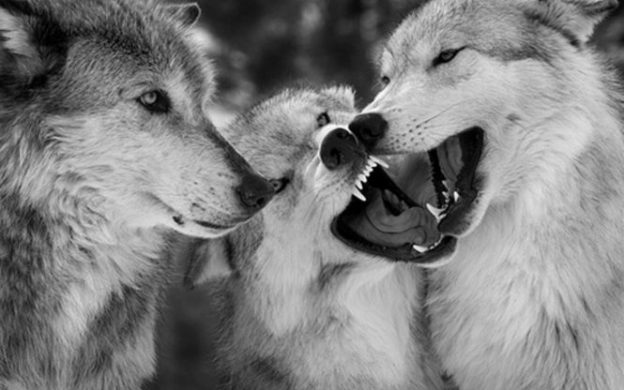
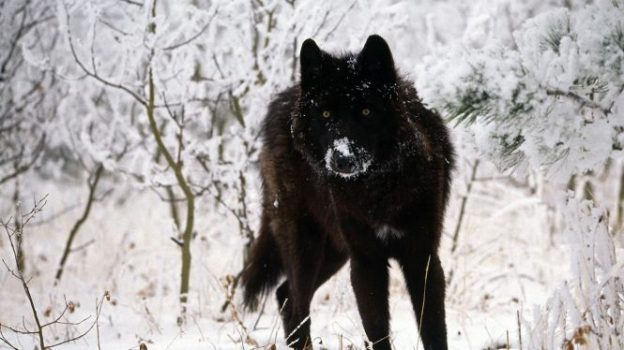
Wolves, as predatory animals and carrion-eaters, had a somewhat grim reputation among the Norse. There was the Fenris Wolf, who would devour Oðin at Ragnarok, and on a more human level, outlaws were called vargr, wolves.

At the same time, though, Oðin had two as pets, and in one Eddic poem he praises the killer wolf Garm as the “best of hounds”. Warriors gave themselves wolf-names, and in addition to the well-known berserker, Úlfhéðnar were men imbued with the ferocity of wolves.

In my next three posts, I will be taking a closer look at the ambivalent mythology surrounding wolves in Norse myth. In particular, I want to look at three aspects of the wolf-mythos:

  1. Mythological wolves, such as Fenrir and Garm, and their relation to Loki.
  2. Metaphorical wolves, such as outlaws and warriors.
  3. Magical wolves, associated with giantesses and witches.

The image of the wolf goes to the heart of the Eddic story of creation and eventual doom, and exposes some of the fractures at the heart of the society the Æsir created. I hope you will enjoy reading these posts. If you find them interesting, please feel free to comment or like them.

If you liked the image at the top, click here.

Save

Happy Birthday, Clyde Tombaugh!

Very fuzzy picture of Pluto and its moon, Charon.

Very fuzzy picture of Pluto and its moon, Charon.

The first images of Pluto and Charon from the New Horizons spacecraft were released Wednesday. Not coincidentally, Wednesday would have been Clyde Tombaugh‘s 100th birthday, and Tombaugh was the astronomer who first found Pluto.

Admittedly, these pictures are pretty fuzzy, but they’re really a rehearsal for July, when New Horizons will be much nearer the former ninth planet and will be able to get much better pictures. These first images were just to make sure that the spacecraft was pointed the right way.

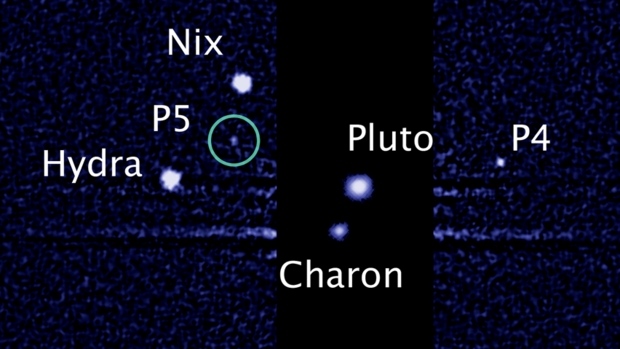
It’s tempting here to make a joke about the Hubble, which ended up wandering blindly, but it did send back pictures of Pluto and its moons, such as the following:

Pluto and its moons, courtesy of the Hubble Spacecraft.

Pluto and its moons, courtesy of the Hubble Spacecraft.

There are two cool things about this, first the fact that we have these pictures at all, and second that Pluto’s moons are apparently nested in their orbits like Russian dolls, which is very tidy-minded of them.

Pluto may be a demoted planet, but for all Scorpios and astronomy fans like myself, it still has a place in our hearts. Clearly there are a few of us, to judge by the fact that there’s a t-shirt available which proudly proclaims: “Back in my day we had nine planets!”

If you liked the image at the top, click here.

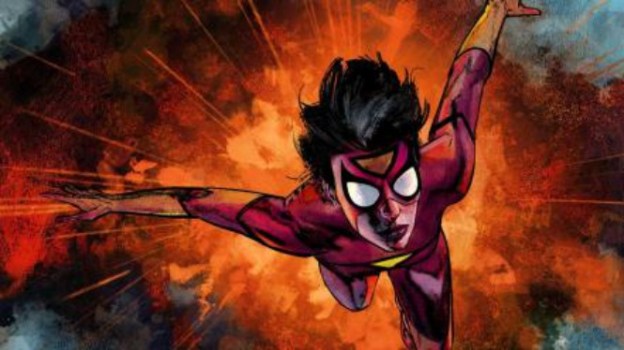
Spider-Woman: 130 pounds and a story of one’s own.

The problem with the new Spider-Woman comic is evident right on the splash page. These usually have a capsule version of the character’s origin, so newcomers can get caught up with the story. Only one-third of this one is about our heroine; the rest is about the Inheritors and their war on all things Spidery. It turns out that Spider-Woman #1 is part of an “event” story in the Spider-verse, with a lot of Spider-characters, and since the last time I read a Spider-Woman comic was back in the 1970s, I was confused.

Continue reading

cow wallpaper

Damona: Divine Cow of the Sacred Waters

Although the name Damona means something like “Divine/ Great Cow”, the only image we have of her is in human form, and it has only survived in fragments: a stone head, crowned with corn-ears, and a hand with a serpent’s coils around it. It turned up in a votive pit at Alise-Sainte-Reine, ancient Alesia, the centre of her cult. It was originally painted, Roman-style, with the body painted white, the hair red, with a green diadem and yellow grain.

Continue reading

Brigantia Resurfacing

I have been following the goddess Brigantia for some time now. I remember in 2009 a new inscription dedicated to Brigantia surfaced. (It had been previously mistranslated, but the new R.I.B. changed that.) It had been read as a dedication to the Terra Batavorum, but now it is read as Tutela Brigantia Augusta (Guardian Brigantia Augusta).

Now, however, we have a new image of the goddess, found in South Shields (near Newcastle). She still has traces of pink paint on her face, and red on her lips. So far all that has been found is her head, which is thought to date back to the second century CE (like the other dateable evidence for her cult).

1412766849251_Image_galleryImage_The_face_of_a_goddess_who

Head of Brigantia statuette. Photo from the Daily Mail.

Brigantia as guardian is apparent in both image and inscription, as the little head wears the mural crown, which indicated that a goddess was the protector of a city or territory. The famous image of Brigantia from Scotland also has a mural crown worn outside a Minerva-like helmet.

The new image of Brigantia was found at the old Roman fort of Arbeia, not too far from another altar discovered long ago. It will be exciting if they find the rest of the little image of Brigantia, but as this find and the dramatic find of Senua earlier show, the book on Roman Britain is still being written.

Gods in Dresses, Women in Armour

When you think of gender-bending in Norse myth, the trickster-god Loki springs to mind. Would you be surprised to know that Odin and Thor have also dragged up, albeit not very successfully in Thor’s case? (One of the areas they did not compete in during the flyting in Hárbarðsljóð; imagine how that would have gone.)

Continue reading

Idunn and Laufey: immortality vs. doom

I realize that Loki’s mother Laufey and the goddess Iðunn are not obviously connected, but there are parallels between them. These reveal the power and gender politics of Norse myth. In some ways Laufey is an inversion of Iðunn.

Continue reading