Category Archives: Gaulish

Horned goddesses

When I was writing about the Irish goddess Flidais, I said that I would be covering hunting goddesses and horned goddesses in another post. The post on hunting goddesses was duly written, but the horned goddesses slipped away.

This may be due in part to the fact that I thought of horned goddesses as a mainly modern phenomenon. The first inkling I ever had of them came from Chesca Potter’s artwork. Her image of the folkloric figure Elen (heroine of “The Dream of Macsen Wledig“,  in the Mabinogion) as a horned goddess caught my attention. However, I had no context for it, and it remained an interesting picture, and nothing more.
Continue reading

Dis Pater: Who was he?

Julius Caesar wrote that the Gauls believed they were descended from Dis Pater. In his writings, he did not give the local names for his deities, substituting ones his readers would recognize. (This was the interpretatio romana, giving foreign deities Roman names and attributes.)

Dis was originally the Roman god of wealth, fertile soil, and underground riches, who became equated to Pluto, Orcus, and Soranus. The question is, what Gaulish god reminded the Divine Julius of Dis?

Continue reading

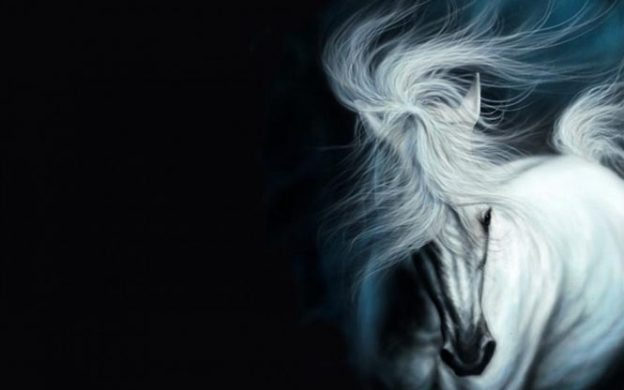
Epona: Divine Horse

We are used to the idea that the Celts took up Roman gods and equated them with their own. (Or that the invading Romans renamed them.) However, the process could just as easily go the other way.

The best-known instance of this is the Gaulish horse-goddess Epona, who became very popular first with the cavalry units of the Roman army, then with the Roman populace, who took her into their homes and stables. She was the only Celtic deity with a holiday in the Roman calendar: December 18th. The Romans don’t seem to have had an indigenous horse-deity (except perhaps Neptune, who had other things to attend to), but the Celts were horse-mad.

Continue reading

Divona: the Divine

Imagine living in a world in which clean drinking water could not be taken for granted. Even now, in many parts of the world, people have to walk miles to get it, and in the Western World we aren’t immune from boil orders and other disruptions.

So it isn’t surprising that many peoples had a deity of fresh, drinkable water. The Romans had the god Fons, among others, from whom we get the word fountain, and the Celts in what is now Bordeaux showed their sense of priorites by worshipping a goddess of clear, drinkable water. Her name was Divona, the Divine One.

Continue reading

Matrona: Mother Goddess

I have a tic; so many goddesses have been thrown into the “mother” category willy-nilly that I resist any description of a goddess as “mother”. (Also, I have noticed that people who lump goddesses together as “mothers” very often don’t consider the complexity of the title – Lotte Motz’ book The Faces of the Goddess discusses the many meanings of Mother.)

When a goddess’ name means Mother, however, you cannot deny it. It is derived from Mātr-on-ā, “Great Mother”, just like Sirona‘s and Damona‘s names mean the Great Star and the Great Cow. Inscriptions call her Dea Matrona, just to add insult to injury. There’s no way around this – she’s the Mother Goddess.

Continue reading

Sirona: healer goddess

My last post was about Sirona’s consorts and partners, but she did sometimes appear alone. We find her in inscriptions, and images, suggesting that her cult existed before the advent of the Romans.

Continue reading

Sirona: her consorts

Celtic goddesses went in for divine polyandry (multiple husbands) in a big way. For every Rosmerta or Nantosuelta who kept to one god, there were several  like Damona and Ancamna who doubled or tripled up with Gaulish, Roman, or “blended” gods like Apollo Grannus or Mars Smertios. (While it is true that the Roman gods Mercury, Mars and Apollo take on different names and partners, they are the ones who take on Celtic by-names, while the goddesses keep their own.)

Continue reading

Venus, from Wikimedia

Sirona: the star goddess

Like Belisama, Solimara and Sulis, Sirona’s cult centers on healing water, whether hot springs, baths or wells. Her name, however, means something like “Great Star”, which would make her a star-goddess, rather than a solar one. She is linked to several gods, including the Roman sun-god Apollo, as well as the gods Grannus and Atesmertius.

Continue reading

honeycomb bees

Nantosuelta: Domestic Goddess

Nantosuelta was a Gaulish goddess, although traces of her worship have turned up in Germany, Luxembourg and Britain. She can be identified by the little house that she often carries, which looks like a birdhouse on the end of a long pole.

No other deity carries it, so we always know it’s her when we see it. No one really knows what it is supposed to represent – perhaps she was a goddess of home and hearth?

Continue reading

dark sun

Bricta/Brixta: Dark Side of the Sun

Bricta is a complex goddess, whose name comes either from the same root as Brigit: “Highest”, or else from a Gaulish word for a spell or curse. Her cult centers on Luxeuil in France, which is rich in thermal and other springs. Several dedications to her, as well as many offerings, were found at the site of the Gallo-Roman thermal baths.

Continue reading