Odin and Freyja are the “stars” of the Norse pantheon. The most famous god of the warlike Aesir, and the (only) goddess of the Vanir, they are surprisingly alike. Both are magicians, both gather the slain, and both take an interest in mortals.
Odin and Freyja are the “stars” of the Norse pantheon. The most famous god of the warlike Aesir, and the (only) goddess of the Vanir, they are surprisingly alike. Both are magicians, both gather the slain, and both take an interest in mortals.

My first post on the Irish goddess Boand sparked a question on the Mythology Stack Exchange about cows as symbols of wisdom. There is a blog called The Wisdom of Cows, but I suspect that a mythological version wouldn’t run long.
However, Boand is the goddess of the river Boyne, and there are many examples of river-goddesses who give inspiration, wisdom and sometimes musical talent to their worshippers. Continue reading
One of the things everyone knows about Irish mythology is that the deities we all know (Brigit, the Dagda, Boand, Ogma, etc.) are all members of the Tuatha de Danann, the people or tribe of the goddess Danu.
However, none of the Irish sources mention this goddess, who was an important enough ancestor that her name identified all of her descendants. (Imagine if the Olympian gods of Greece were known as the Gaians, for example.) Some Celtic scholars have gone so far as to doubt the existence of any such deity. Why?
Books Reviewed: Pagan Portals: Brigit – Morgan Daimler, Brigid: History, Mystery, and Magick of the Celtic Goddess – Courtney Weber, Brigid: Goddess, Druidess and Saint –Brian Wright, Brigit: Sun of Womanhood – Patricia Monaghan and Michael McDermott, and The Rites of Brigid: Goddess & Saint – Seán Ó Duinn.
“A teacher of mine believes a whole spiritual tradition could be filled solely with Brigid devotees…” (Weber, Loc. 49) This is probably true, and you could certainly fill a bookshelf with volumes on Brigit, goddess and saint. For this post I wanted to review books that would be easily available, written for a popular audience, and likely to appeal to readers. I could easily have gone past five, but anyone who is that enthusiastic about Brigit will no doubt find more on their own.
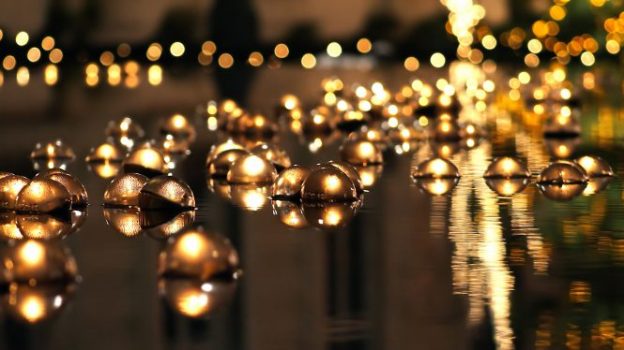
Before Christmas I wrote about Holda, Berchta and Perchta, who led the wild hunt and perhaps received children in the afterlife. For the new year, I want to look at another trio of goddesses, who oversaw birth, and the infant’s journey into the light of life.

The imagery of the Greek Gorgon can be traced back to Persian and Near Eastern art, but the myth of the beautiful Medusa seems to come from a different source. A story found in various forms in Greece, India, Ireland and Wales tells of a woman who either becomes a horse or has a strong equine connection, gives birth to twins and suffers greatly.
However, Demeter, Saranyu, Macha and Rhiannon are goddesses, while Medusa is considered a monster. Still, her story is so similar to these others that it obviously descends from the same Indo-European myth.
During my research for my post on Medusa and the Gorgon, I constantly ran into the idea that the Gorgon was a faint echo of an early Mycenean sun-goddess, depicted face-front with radiating (snaky) hair. I could see how that idea might arise, but Athena as sun-goddess struck me as a bit of a reach. After all, Athena wears the Gorgon on her breast as a symbol of the triumph of cunning (metis) over elemental powers. (Deacy: 47)
It must be tempting, though, to invert the Greek beliefs that shaped patriarchal culture, with its binary of sun/reason/male vs. night/emotion/female. Especially in the form of its most complicit goddess, Athena, who upheld father-right against the Furies’s desire to avenge a matricide. (Although kicking Bachofen and his followers comes about 150 years too late.) Feminizing the Greek sun, and connecting it to those elemental powers, may feel like sweet revenge.
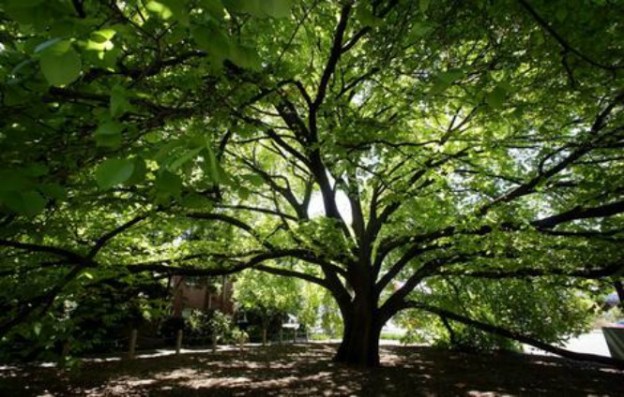
Back in the spring I was inspired by Adam Hyllested’s ideas about the Hyldemoer to write my own post about the Elder Mother. This led on to two other posts, on rowan and birch. I assumed that I had exhausted the subject of feminine powers associated with trees, but I was wrong.
A week ago Neorxnawang passed on a link to a paper on the mysterious goddess Ilmr. She appears in a list of goddesses and another of kennings for “woman” in the Prose Edda. Her name also appears in poetry, mostly as – you guessed it – part of a kenning for “woman”. The paper, by Joseph Hopkins, suggests that Ilmr may be an elm goddess, connecting her name to the word almr, elm.
My last post on Gefjun touched on the question of her status. She is counted among the goddesses, but so are Skadi, Gerdr and Jord, all of whom are giantesses by birth. John Lindow has argued that she was obviously a giant or other primal being, although others have seen her as an earth goddess. So is she a goddess, a giantess, or both?
Gefjun will be forever be famous as the goddess who gave Zealand to Denmark. The Danes immortalized her feat with a fountain in Copenhagen harbour, showing her and her oxen ploughing out the land.
She has many similiarities to Odin, as a goddess who travels between worlds, tricks mortals, and straddles moral and sexual boundaries. Far from being an earth and ploughing goddess, Gefjun is a magical and complex figure.
 We Are Star Stuff