Category Archives: Norse

Insulting Women: Flyting in Old Norse Literature

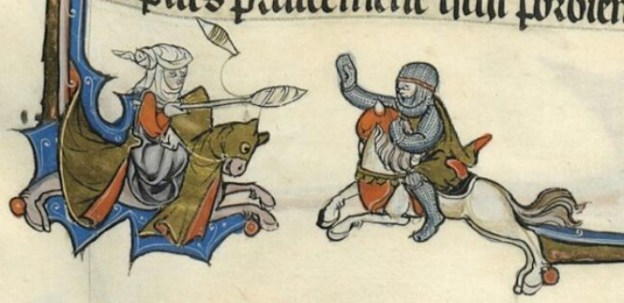
Verbal duelling is a major part of the sagas and Eddas, as a substitute for other kinds of violence. Mostly it happens between two men, who accuse each other of cowardice, effeminacy, and general unmanliness.

However, there are incidents of male – female flyting as well, with men and women trading insults, usually much the same insults. The two best-known examples of male – female flyting in the Eddas are the quarrel between Skadi and Loki in Lokasenna, a poem which is essentially Loki’s verbal duel with each god and goddess in turn, and the heroic poem Helgakviða Hjörvarðssonar, which features a bout between the hero and a giantess.
Continue reading

Link

li-vikings-2-20130607

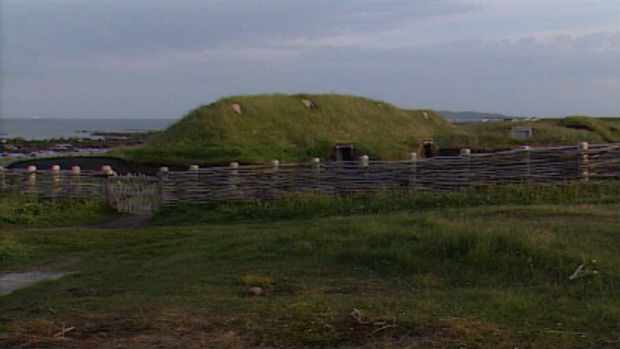
As part of a new documentary, a team of archeologists has found some evidence of a second Viking settlement in Newfoundland.

Source: Second potential Viking site found in Newfoundland – Newfoundland & Labrador – CBC News

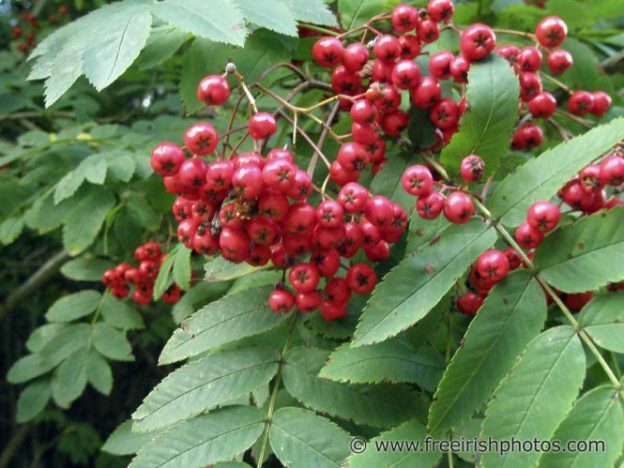
Thor’s Protection: the rowan

“The rowan is the salvation of Thor”, was a Icelandic proverb, and we have to wonder how this small tree could save a mighty god.

Continue reading

Mother-Goddesses and the juno: reproductive power

The Roman idea of a genius, the divine nature inherent in a person or place, can be traced back either to the word gens, tribe, or to the Latin word “begetter”, indicating a fertility spirit.

Women seem to have had their own form of genius, called a juno. (This is a contested idea: the Wikipedia article on Juno denies it completely, while the Brittanica site and the Dictionary of Roman Religion are for it.) However, enough scholars seem to accept the idea that I’m willing to see it as valid. I’m sure even in a society as patriarchal as ancient Rome women took pride in their children and their lineage, and those feelings found their own religious expression.

Continue reading

Link

Thumb-sized figurine discovered in Denmark by amateur archaeologist is the only 3D representation of a valkyrie ever found – and will arrive at British Museum in 2014

Source: Flight of the valkyrie: the Viking figurine that’s heading for Britain | Culture | The Guardian

Link

A story in The Guardian about how Icelanders’ belief in elves can hinder construction, and how surprisingly common it is.

Freyja: the Valkyrie Goddess?

The Norse goddess Freyja and the valkyries, choosers of the slain, seem to have a lot in common. Both can take bird-form, are associated with war, magic and death, and take mortal protegés and lovers. Add that to the fact that she and Odin took half of all slain warriors each, and many have concluded that Freyja was the leader of the valkyries, the valkyrie goddess if you will.

Continue reading

Skadi: the Sources

The goddess Skadi has one main myth, but it is a well-developed story, spanning three generations, and involving the feud between the gods and giants. The actual story is scattered around through a variety of sources, but its outline is clear.

Continue reading

Folkvangr and Freyja

Freyja’s home, Folkvangr, is one of the four owned by a goddess. She and Frigg were the preeminent goddesses of the Norse, so it isn’t surprising that each has a home of their own. (Since they share the god Odin as husband/lover, it may be just as well.)

Continue reading

http://background-download.com/nature/ice-mountains-hd-desktop-wallpaper-desktop-background

Thrymheim and Skadi

Only four Norse goddesses have homes of their own. Out of these, two are given to Frigg and Freyja, who are the preeminent goddesses of the pantheon and might be expected to own their own property. The other two are Saga and the giantess Skadi.

The latter is extremely interesting because we know that she inherited  her home, Thrymheim, from her father, the giant Thiazi. What little we are told about the Aesir’s homes suggest that they created them from scratch – that Skadi inherits hers tells us that the giants are older beings than the gods. This is why the giants were often shown as knowing the history and layout of the cosmos so well that Odin would come and quiz them about it.

Continue reading