Category Archives: Mythology

it could be argued… that any myth is a neutral structure that allows paradoxical meanings to be held in a charged tension. Indeed, we might argue that this is one of the defining characteristics of a myth, in cotnrast with other sorts of narriatves (such as novels): a myth is a narrative that is tramsparent to a variety of constructions of meaning.
(Wendy Doniger, The London Review of Books, 30: 7 (10 April 2008): 27-29)

Gullveig: the goddess who wouldn’t die

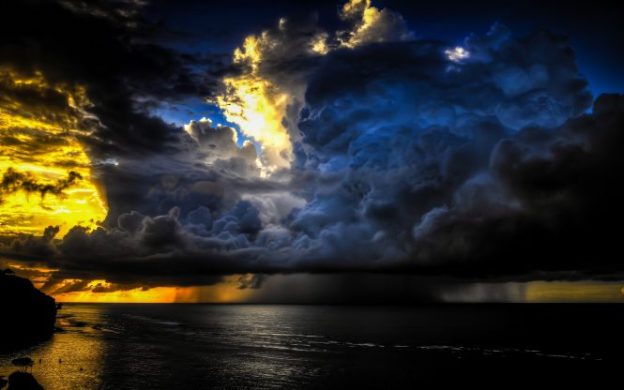
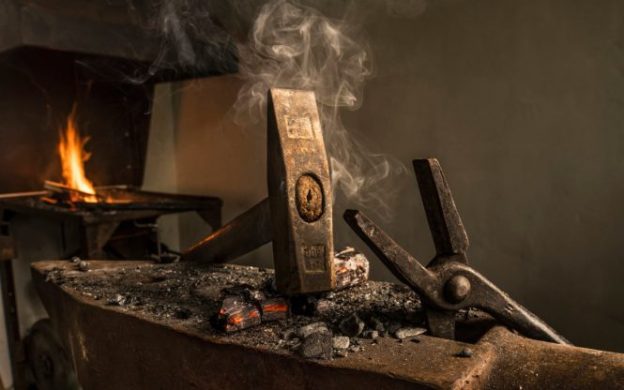
Considering that she may have started a cosmic war, we know very little about the Norse goddess Gullveig. Her story comes from the Eddic poem Völuspá, which tells how the Aesir riddled her with spears and then burned her three times but couldn’t kill her.

The next event in the poem is the war between the Aesir and Vanir, the two groups of Norse deities, so it’s always been assumed that somehow the attack on Gullveig started it.
Continue reading

Taranis: Celtic Thunder

It seems strange, if you look at Irish or Welsh mythology, that there doesn’t seem to be any thunder-god like Thor. However, among the Celtic peoples of continental Europe, we find the god Taranis, whose name means “thunder” and who sometimes wields a thunderbolt.1

Continue reading

Smith-gods: Goibniu, Gofannon and Cobannos

Humans have been working with metal for a long time: from the Copper Age (approx. 3500 – 1700 BCE) when the soft, malleable metal was the first to be smelted and used. So it’s not surprising that many cultures have smith-gods, and that in the Celtic world the smith-god and his name occur in Gaul, Wales, England and Ireland, making him one of the few pan-Celtic deities.1

And a very literal one – Goibniu, Gofannon and Cobannos all mean “Smith”.

Continue reading

The Useful Dangers of Fairy Tales

The makers of some of these tales were spinning long, long ago—thousands of years, in some cases. Life was hard, and short, and brutish, particularly so for women. And yet even this late in history, women and girls are still friendly with that darkness where fairy tales operate best.

via The Useful Dangers of Fairy Tales | Literary Hub

New Look

If you have visited this blog before, you will notice that the look has changed a lot. I decided that it needed more white space and a lighter look overall. I hope that you’ll like it. My only concern with the new theme, Twenty-Twelve, is that some of the text is in very small print. If this is a problem, let me know and I’ll figure out a fix.

Nymphs and bees

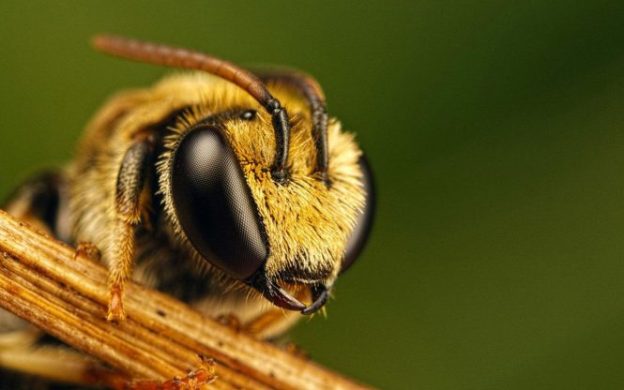
The nymphs, spirits of woods and wild places, are among the minor figures of Greek myth. They lived in caves or trees, where wild bees and honey were also to be found, so it’s no surprise that a lot of bee lore relates to them.

Continue reading

The Melissae: bees and the goddess

A tablet in Linear B from Knossos reads:

To all the gods, honey
To the mistress of the labyrinth, honey.

The civilization at Knossos, on the island of Crete, preceded that of the Greeks. While it is hard to say exactly how much of the later Greek culture reflects that of the Cretans, both considered honey a gift worthy of the gods.

Continue reading

Morpheus and the dream gods

Neil Gaiman fans already know this, but Morpheus and his family were the spirits of dream, who sent dreams to mortals from their home in Erebos. This was a place, but also their father. (Having a personification for a parent can be confusing.)

Continue reading

Cernunnos: God of Wealth, the Wild, and Big Gold Torcs

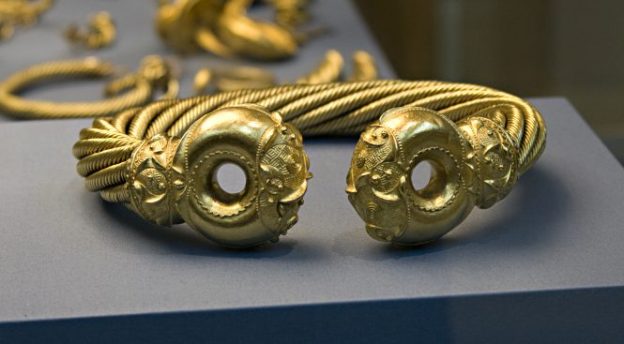
I was seriously tempted to call this piece “Cernunnos: God of Bling”. This may seem a wildly inappropriate way to describe a god revered by neo-Pagans and possibly the divine ancestor of the Gauls, but when so many images of him feature one or more torcs, which are simply enormous gold necklaces, how can you resist?

Continue reading