Category Archives: Mythology

it could be argued… that any myth is a neutral structure that allows paradoxical meanings to be held in a charged tension. Indeed, we might argue that this is one of the defining characteristics of a myth, in cotnrast with other sorts of narriatves (such as novels): a myth is a narrative that is tramsparent to a variety of constructions of meaning.
(Wendy Doniger, The London Review of Books, 30: 7 (10 April 2008): 27-29)

Thorgerd Holgabrudr

Thorgerd Holgabrudr and her sister Irpa were Norwegian goddesses. Some of the sagas relate tales of her rich temples and statues. Her followers gave her rich gifts, and expected her to intercede on their behalf. Her most influential follower was Haakon Sigurdsson, who was essentially the ruler of Norway in the last part of the 9th century.

Continue reading

Through the Fiery Wall: Menglod, Brynhild, and Gerdr

Norse myth tends to echo; one story calling to another. There are at least three stories in Norse myth about a young man passing through a wall of flames and other hazards to reach a woman. This would seem to be a straightforward story of a woman sought and won, except that in two of these stories the young man is a stand-in for another, and only one story has a happy ending.

Continue reading

Celtic Minerva

Searching out Minervas always feels like seeing through a scrim; when you look at the Roman goddess, you see her through the Greek and Etruscan influences that went into her making. Looking at the Celtic goddesses who were compared to Minerva, named for her, or depicted in her image, you see through yet another veil, trying to discern the Celtic form under the Roman covering.

Continue reading

Roman Minerva

Although it’s common in popular books on mythology to describe the Roman goddess Minerva as a simple copy of the Greek goddess Athena, Minerva evolved as a native Italian goddess, influenced by the Etruscan Menvra.

Continue reading

Celtic Victory

The Celtic peoples had many gods of war, if the number linked to Mars is anything to go by. They also had a lot of war-goddesses, whom we would expect to be associated with Minerva, Bellona or Victoria.

Surprisingly, goddesses paired with Victoria are pretty rare (I will look at Minerva in another post), although there are a few. There are also some native goddesses named “Victory”, all from modern France.

Continue reading

Hammer-Gods: Thor, Hercules and Sucellos

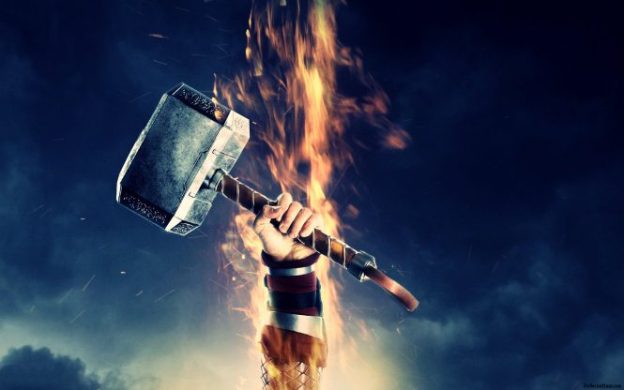
These three gods have a lot in common: they’re all brawny types whose worshippers were mainly working people, farmers, labourers, miners and even slaves. But what intrigued me about them was that their followers all wore their symbol – the hammer or club each god wielded.

Continue reading

The Rest of the Vanir: overlooked goddesses, waves, and women

After my last post, on Freyja and Odin, I had a response on Reddit that intrigued me. The poster was responding to my deliberately provocative description of Freyja as the only Vanir goddess, pointing out that there were other females associated with the Vanir or Vanaheim.

Unfortunately, the comment was lost or deleted, but they did have a point, so I decided to discuss their candidates for Vanir goddesses here.

Continue reading

Odin and Freyja: one’s grim, one’s golden, but they are a lot alike

Odin and Freyja are the “stars” of the Norse pantheon. The most famous god of the warlike Aesir, and the (only) goddess of the Vanir, they are surprisingly alike. Both are magicians, both gather the slain, and both take an interest in mortals.

Continue reading