Category Archives: Mythology

it could be argued… that any myth is a neutral structure that allows paradoxical meanings to be held in a charged tension. Indeed, we might argue that this is one of the defining characteristics of a myth, in cotnrast with other sorts of narriatves (such as novels): a myth is a narrative that is tramsparent to a variety of constructions of meaning.
(Wendy Doniger, The London Review of Books, 30: 7 (10 April 2008): 27-29)

Ilmr: Elm Goddess?

Back in the spring I was inspired by Adam Hyllested’s ideas about the Hyldemoer to write my own post about the Elder Mother. This led on to two other posts, on rowan and birch. I assumed that I had exhausted the subject of feminine powers associated with trees, but I was wrong.

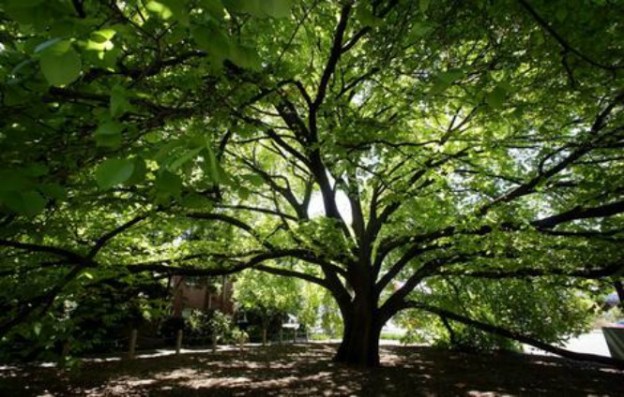
A week ago Neorxnawang passed on a link to a paper on the mysterious goddess Ilmr. She appears in a list of goddesses and another of kennings for “woman” in the Prose Edda. Her name also appears in poetry, mostly as – you guessed it – part of a kenning for “woman”. The paper, by Joseph Hopkins, suggests that Ilmr may be an elm goddess, connecting her name to the word almr, elm.
Continue reading

Gefjun: goddess or giant?

My last post on Gefjun touched on the question of her status. She is counted among the goddesses, but so are Skadi, Gerdr and Jord, all of whom are giantesses by birth. John Lindow has argued that she was obviously a giant or other primal being, although others have seen her as an earth goddess. So is she a goddess, a giantess, or both?

Continue reading

Gefjun: outside the boundaries

Gefjun will be forever be famous as the goddess who gave Zealand to Denmark. The Danes immortalized her feat with a fountain in Copenhagen harbour, showing her and her oxen ploughing out the land.

She has many similiarities to Odin, as a goddess who travels between worlds, tricks mortals, and straddles moral and sexual boundaries. Far from being an earth and ploughing goddess, Gefjun is a magical and complex figure.

Continue reading

Odin and the Morrigan

This week’s post could easily have been called “fearsome deities“: Odin, whose name means “fury”, and the Morrigan, who steps out of the fairy realm to stir up war and slaughter. It’s not hard to see what they have in common.

Continue reading

Milk and Blood: Brigit and the Morrigan

Back in 1977 Patrick Ford published a paper called “Celtic Women: the Opposing Sex”. It could have been tailor-made for the Morrigan, a fearsome goddess who spends most of the Tain trying to destroy the hero Cúchulainn. By contrast, Brigid seems to be the “good girl” of Irish myth.

Continue reading

Link

Remarkable new archaeological discoveries are beginning to suggest that Stonehenge was built at a time of particularly intense religious and political rivalry. Just two miles north-east of the World Heritage site, at an important archaeological complex known as Durrington Walls, archaeologists have just discovered what appears to have been a vast 500-metre diameter circle of giant timber posts. The find is of international significance.

Source: Remarkable ancient structure found just two miles from Stonehenge

Disposing of the Body: Kvasir, Mimir and Ymir

We’re all familiar with nose-to-tail eating, the idea that you should use all of an animal once it’s been slaughtered. Thanks to the taboo on cannibalism and various laws about indignity to dead bodies, we tend not to put human bodies to post-death use. Gods, however, are not so squeamish. The Norse gods in particular show thrift and ingenuity, as well as a strong stomach, in their use of their dead compatriots.

I should point out that the Norse gods could, on occasion, lay on a proper funeral: Baldr was buried with full honours. But the dead bodies of one giant and two gods were clearly too valuable to be left lying around.

Continue reading

Link

Volunteer archaeologists have unearthed a miniature bronze figure of a Roman goddess from Arbeia Roman Fort in South Shields. Helpers from the WallQuest community archaeology project and the Earthwatch Institute dug up the figure of the goddess Ceres which is thought to be a mount from a larger piece of furniture. Ceres was the goddess of agriculture, grain and fertility. Arbeia was a supply base where thousands of tons of grain were stored in granaries to feed the army stationed along Hadrian’s Wall. This is the second goddess that the WallQuest project has found at Arbeia in two years. In 2014, a local volunteer found a carved stone head of a protective goddess, or tutela.

Source: Mini figure of Roman goddess uncovered at Arbeia | Tyne Tees – ITV News

Divine Ancestors

While it’s part of Norse myth that the gods and giants are enemies, it seems that the giantesses were a different story. Odin clearly never met one he didn’t like, and he was far from being the only one to have a fling with one. Even Thor the giant-smasher had an affair with Jarnsaxa. These romances usually resulted in the second-generation gods, such as Thor’s son Magni.

Sometimes, however, the sons of these unions were mortals, or demi-mortals anyway. The Swedish ruling dynasty called the Ynglings and the Norwegian earls of Hladir traced themselves back to the giantesses/goddesses Gerdr and Skadi, respectively.

Continue reading

Koios: famous for being obscure

I have a tag I use from time to time: “obscure deities”. The Titan Koios (or Coeus) was famous for being obscure. In the Metamorphoses, the ill-fated Niobe says of him and his daughter Leto:

Now, ask what the reason is for my pride, and then dare to prefer Latona to me, that Titaness, daughter of Coeus, whoever he is. Latona, whom the wide earth once refused even a little piece of ground to give birth on.

(Latona is the Roman name for Leto.) Even in her great access of hubris, the only thing Niobe could say of Coeus/Koios was that no one knew who he was. A quick look at online guides to Greek myth shows that Koios is by no means famous now, but there seems to be a desire to fill out his dossier.

Continue reading