Category Archives: Mythology

it could be argued… that any myth is a neutral structure that allows paradoxical meanings to be held in a charged tension. Indeed, we might argue that this is one of the defining characteristics of a myth, in cotnrast with other sorts of narriatves (such as novels): a myth is a narrative that is tramsparent to a variety of constructions of meaning.
(Wendy Doniger, The London Review of Books, 30: 7 (10 April 2008): 27-29)

Dis Pater: Who was he?

Julius Caesar wrote that the Gauls believed they were descended from Dis Pater. In his writings, he did not give the local names for his deities, substituting ones his readers would recognize. (This was the interpretatio romana, giving foreign deities Roman names and attributes.)

Dis was originally the Roman god of wealth, fertile soil, and underground riches, who became equated to Pluto, Orcus, and Soranus. The question is, what Gaulish god reminded the Divine Julius of Dis?

Continue reading

blue sky light

Theia, Phoebe, Helia

The family of the sun-god Helios features many minor goddesses of sun and light. Helios is the main god of the sun; his name, and his resemblance to many Indo-European sun-gods and goddesses puts that out of doubt, but it is interesting how solar females cluster around him.

Some of these goddesses may well have had their own solar cults long ago, but it’s impossible to verify now.  Two of them were his mother and aunt, the other was his daughter. (Helios’s lineage also includes the witches Circe and Medea, as well as Hecate, a grand-daughter in some versions of her family tree.)

Continue reading

Epona: Divine Horse

We are used to the idea that the Celts took up Roman gods and equated them with their own. (Or that the invading Romans renamed them.) However, the process could just as easily go the other way.

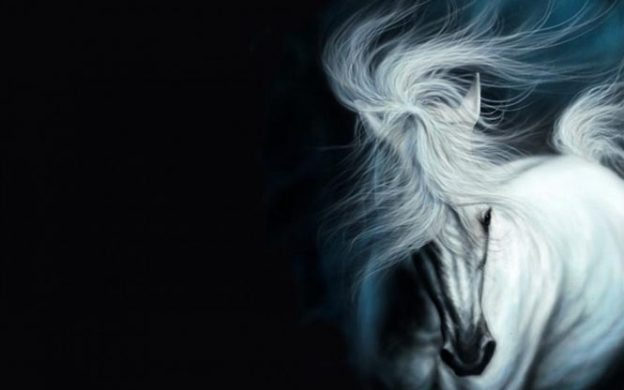
The best-known instance of this is the Gaulish horse-goddess Epona, who became very popular first with the cavalry units of the Roman army, then with the Roman populace, who took her into their homes and stables. She was the only Celtic deity with a holiday in the Roman calendar: December 18th. The Romans don’t seem to have had an indigenous horse-deity (except perhaps Neptune, who had other things to attend to), but the Celts were horse-mad.

Continue reading

Odin’s Eyes: Sun and Moon?

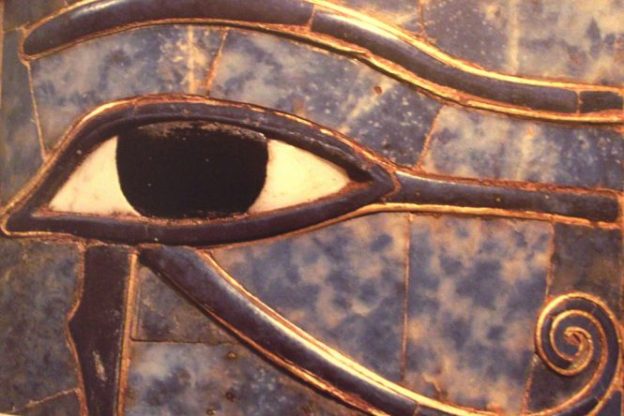
What do the Egyptian god Horus and the Norse god Odin have in common? Both of them are said to have the sun and moon as their eyes. The difference is that this belief about Horus dates back to very early Egyptian religion. As far as I can tell, the same statement about Odin comes from some 19th and 20th century writers.

Continue reading

Arcturus: Bear-Guard

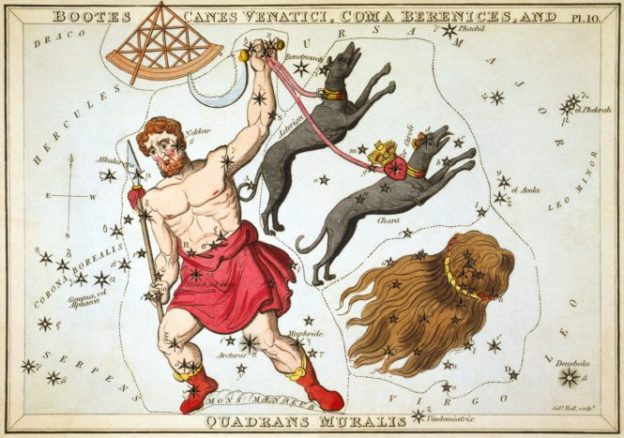
Arcturus is an orange giant, and the fourth brightest star in the sky. Its moment of earthly fame came during the Chicago World Fair of 1934. There had been a World Fair in Chicago in 1893, and they calculated that light leaving Arcturus then would arrive in time for the new Fair.*

Continue reading

Apollo: the swan-god

The philosopher Plato recorded the last words of his mentor, Socrates, in a dialogue called the Phaedo. According to him, Socrates tried to console his followers by contrasting the nightingale and the swan. In myth the nightingale sang for sorrow, while swans only sang once, at their death. Socrates argued that swans sang because, as Apollo’s birds, they could foresee the joys of the afterworld.

Continue reading

Divona: the Divine

Imagine living in a world in which clean drinking water could not be taken for granted. Even now, in many parts of the world, people have to walk miles to get it, and in the Western World we aren’t immune from boil orders and other disruptions.

So it isn’t surprising that many peoples had a deity of fresh, drinkable water. The Romans had the god Fons, among others, from whom we get the word fountain, and the Celts in what is now Bordeaux showed their sense of priorites by worshipping a goddess of clear, drinkable water. Her name was Divona, the Divine One.

Continue reading

What exactly is Brisingamen?

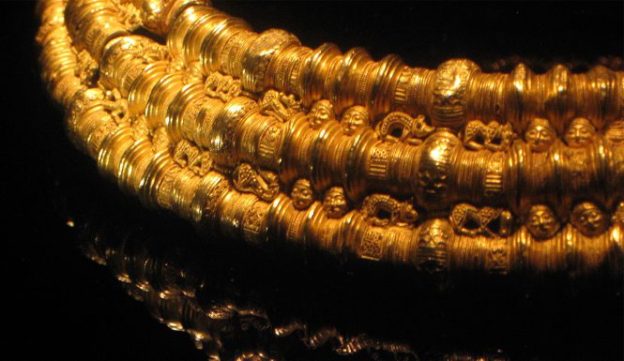
This is one of those questions with a short and a long answer. The short answer is that it is the Norse goddess Freyja’s necklace. The longer answer is that the necklace, and its owner, were intimately linked. The jewel and the goddess were linked in the same way as Thor and his hammer: an attribute that could both symbolize the deity and embody their power.

Continue reading

Arianrhod and Gwydion: the contest

The fourth branch of the Mabinogion is shaped by exchanges between Arianrhod and Gwydion. From the moment he brings her into the story by suggesting her as Math’s footholder (which seems such an innoncent idea: let’s get my sister, your niece, to do it!) the two are at odds. For the two men subject Arianrhod to a chastity test, since Math’s footholder must be a virgin, a magical condition laid down for his kingship.

Arianrhod fails the test in grand style, giving birth to not one but two boys. Math has one of them baptized and names him Dylan, but this son opts out of the family quarrels and goes to live in the sea. The rest of the story follows the career of the other son, Lleu, as Gwydion tries to get around the curse that Arianrhod has laid on her son.

Continue reading