Celtic Minerva

Searching out Minervas always feels like seeing through a scrim; when you look at the Roman goddess, you see her through the Greek and Etruscan influences that went into her making. Looking at the Celtic goddesses who were compared to Minerva, named for her, or depicted in her image, you see through yet another veil, trying to discern the Celtic form under the Roman covering.

Continue reading

Roman Minerva

Although it’s common in popular books on mythology to describe the Roman goddess Minerva as a simple copy of the Greek goddess Athena, Minerva evolved as a native Italian goddess, influenced by the Etruscan Menvra.

Continue reading

Celtic Victory

The Celtic peoples had many gods of war, if the number linked to Mars is anything to go by. They also had a lot of war-goddesses, whom we would expect to be associated with Minerva, Bellona or Victoria.

Surprisingly, goddesses paired with Victoria are pretty rare (I will look at Minerva in another post), although there are a few. There are also some native goddesses named “Victory”, all from modern France.

Continue reading

Hammer-Gods: Thor, Hercules and Sucellos

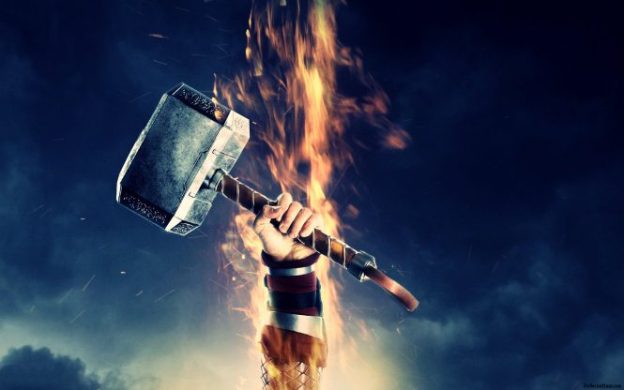
These three gods have a lot in common: they’re all brawny types whose worshippers were mainly working people, farmers, labourers, miners and even slaves. But what intrigued me about them was that their followers all wore their symbol – the hammer or club each god wielded.

Continue reading

The Rest of the Vanir: overlooked goddesses, waves, and women

After my last post, on Freyja and Odin, I had a response on Reddit that intrigued me. The poster was responding to my deliberately provocative description of Freyja as the only Vanir goddess, pointing out that there were other females associated with the Vanir or Vanaheim.

Unfortunately, the comment was lost or deleted, but they did have a point, so I decided to discuss their candidates for Vanir goddesses here.

Continue reading

Odin and Freyja: one’s grim, one’s golden, but they are a lot alike

Odin and Freyja are the “stars” of the Norse pantheon. The most famous god of the warlike Aesir, and the (only) goddess of the Vanir, they are surprisingly alike. Both are magicians, both gather the slain, and both take an interest in mortals.

Continue reading

Carolyne Larrington’s The Norse Myths – review

The Norse Myths: a Guide to the Gods and Heroes, by Carolyne Larrington, Thames and Hudson, 2017.

As the title suggests, this book is intended as an introduction to Norse myths, aimed at readers with little or no knowledge of the subject. The author, Carolyne Larrington, is an academic who has written several popular books, including a translation of the Poetic Edda. She has also written books on the green man and the women in Arthurian myth, and co-edited The Feminist Companion to Mythology.

Continue reading

Boand, Anahita and Saraswati

My first post on the Irish goddess Boand sparked a question on the Mythology Stack Exchange about cows as symbols of wisdom. There is a blog called The Wisdom of Cows, but I suspect that a mythological version wouldn’t run long.

However, Boand is the goddess of the river Boyne, and there are many examples of river-goddesses who give inspiration, wisdom and sometimes musical talent to their worshippers. Continue reading