
The Epic Stars

(This infrared image from NASA’s Spitzer Space Telescope shows the Helix nebula, a cosmic starlet often photographed by amateur astronomers for its vivid colors and eerie resemblance to a giant eye.)

The heroic stars spending themselves,
Coining their very flesh into bullets for the lost battle,
They must burn out at length like used candles;
And Mother Night will weep in her triumph, taking home her heroes.
There is the stuff for an epic poem-
This magnificent raid at the heart of darkness, this lost battle-
We don’t know enough, we’ll never know.
Oh happy Homer, taking the stars and the Gods for granted.

Robinson Jeffers

Save

Sheila vs. Patrick: March 18th and Sheila’s Brush

Sheila’s Brush is a Newfoundland term for a storm on or about the 18th of March. Because Sheila’s storm comes just after St. Patrick’s Day, Sheila is often described as the saint’s wife or mother. You would think that this would be an Irish tradition as well, carried to the new world by immigrants, but it appears to be a local invention.

Continue reading

Brigantia: tribal goddess

This is an extremely condensed look at the goddess Brigantia. For a much more detailed study, see my book Brigantia: Goddess of the North.

The Brigantian federation stretched over most of northern England, and their queen, Cartimandua, is one of the few female rulers known to history. But the fame of their goddess, Brigantia, comes from a Roman statue.

Continue reading

The Plea of the Midsummer Fairies

From The Plea of the Midsummer Fairies

The pastoral cowslips are our little pets,
And daisy stars, whose firmament is green;
Pansies, and those veil’d nuns, meek violets,
Sighing to that warm world from which they screen;
And golden daffodils, pluck’d for May’s Queen;
And lonely harebells, quaking on the heath;
And Hyacinth, long since a fair youth seen,
Whose tuneful voice, turn’d fragrance in his breath,
Kiss’d by sad Zephyr, guilty of his death.’

Save

Thor’s Protection: the rowan

“The rowan is the salvation of Thor”, was a Icelandic proverb, and we have to wonder how this small tree could save a mighty god.

Continue reading

Ballad of the Northern Lights

They rolled around with a soundless sound
Like softly bruised silk;
They poured into the bowl of the sky
With the gentle flow of milk.

In eager, pulsing violet
Their wheeling chariots came,
Or they poised above the Polar rim
Like a coronal of flame.

From depths of darkness fathomless
Their lancing rays were hurled,
Like the all-combining search-lights of
The navies of the world.

There on the roof-pole of the world
As one bewitched I gazed,
And howled and grovelled like a beast
As the awful splendors blazed.

(This is an excerpt from a much longer poem)

Robert Service

The image at the top can be found here.

Save

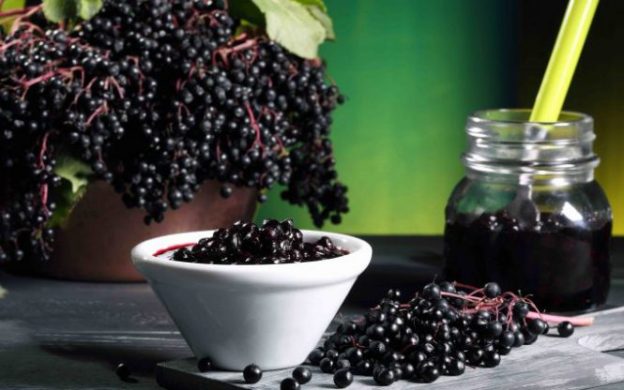
The Elder Mother, a mystery

There are elder trees all over Europe and Asia, but no one has been able to trace a root word common to the Indo-European languages for it. Considering that other widespread trees like birch and oak do have names that are clearly related across the whole language family, it seems strange that a useful tree like the elder should be overlooked. (Hyllested: 119) Or was there a reason behind this refusal to name the tree?

Continue reading

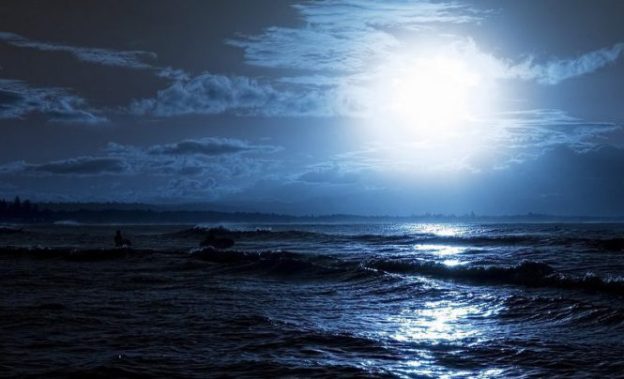
Sonnet of the Moon

Look how the pale Queen of the silent night
doth cause the ocean to attend upon her,
and he, as long as she is in sight,
with his full tide is ready here to honor;

But when the silver waggon of the Moon
is mounted up so high he cannot follow,
the sea calls home his crystal waves to morn,
and with low ebb doth manifest his sorrow.

So you that are sovereign of my heart
have all my joys attending on your will,
when you return, their tide my heart doth fill.
So as you come and as you depart,
joys ebb and flow within my tender heart.

Charles Best 1608

(For the image at the top, click here.)

Save

Mother-Goddesses and the juno: reproductive power

The Roman idea of a genius, the divine nature inherent in a person or place, can be traced back either to the word gens, tribe, or to the Latin word “begetter”, indicating a fertility spirit.

Women seem to have had their own form of genius, called a juno. (This is a contested idea: the Wikipedia article on Juno denies it completely, while the Brittanica site and the Dictionary of Roman Religion are for it.) However, enough scholars seem to accept the idea that I’m willing to see it as valid. I’m sure even in a society as patriarchal as ancient Rome women took pride in their children and their lineage, and those feelings found their own religious expression.

Continue reading

Link

Thumb-sized figurine discovered in Denmark by amateur archaeologist is the only 3D representation of a valkyrie ever found – and will arrive at British Museum in 2014

Source: Flight of the valkyrie: the Viking figurine that’s heading for Britain | Culture | The Guardian