Dione, whose name means Divine or Goddess, is mainly known as Aphrodite’s mother, but she had her own cult, centred around the oracle at Dodona. She was probably a Mycenean goddess, but her origin is somewhat mysterious.
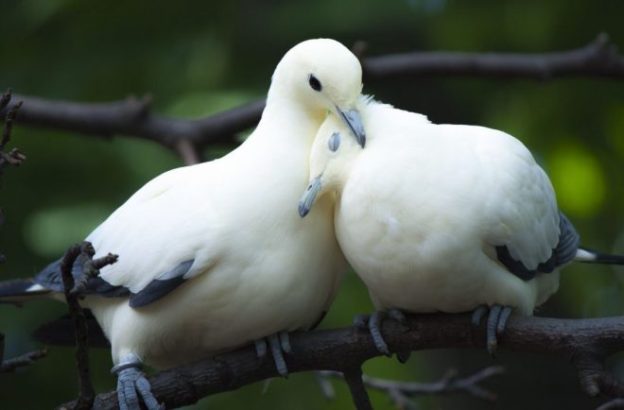

Dione, whose name means Divine or Goddess, is mainly known as Aphrodite’s mother, but she had her own cult, centred around the oracle at Dodona. She was probably a Mycenean goddess, but her origin is somewhat mysterious.

Going to Newfoundland. The image above is of the bird rock at Cape St. Mary’s, and the photograph is by Magi Nams from her blog Hiking in Canada. Check it out for many more great pictures.
The god who is willing to play a high price for justice, for the protection of his tribe, is found in many Indo-European religions. In the Irish pantheon we find Nuadhu, often known as Nuadhu Airgetlam (Silver Hand or Arm)…
via Catching Wisdom: Nuadhu, Nechtan, Nodens – Finnchuill’s Mast

The Irish god Nuada is known for three things: his magical sword, his sliver arm, and losing the kingship twice. HIs losses, however, define him in ways that show his quality.
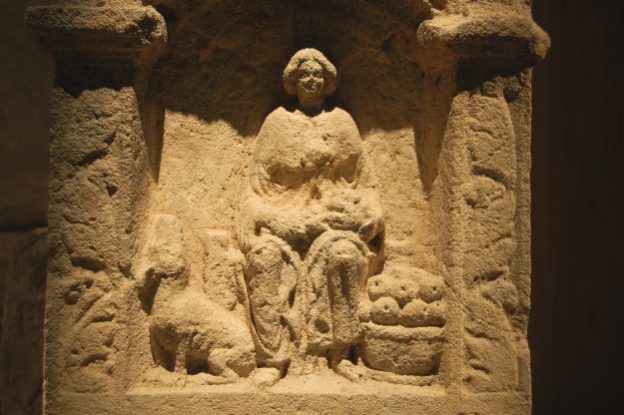
Nehalennia is known from more than 160 votive altars, which were almost all discovered in the Dutch province of Zeeland. (Two altars were discovered in Cologne, the capital of Germania Inferior.) All of them can be dated to the second and early third centuries CE.

It may seem strange that in Roman times the British god Nodens, famous for his healing shrine, was associated with Mars, a god more likely to do damage than to cure it. However, other Celtic “Mars” gods such as Lenus and Ocelus were healers, and not just to soldiers or men, but women and children.



The god Toutatis occupies a interesting place in the Gallic pantheon. His name, which means “of the tribe,” could equall well be a title, perhaps hiding another name. Against this, however, we have many artifacts, espeically rings, with his name on them, suggesting it was the commonly-used name for this god.
He is best-known from the Roman writer Lucan, who counts Taranis, Esus and Toutatis as notable for their desire for blood. (And presumably because they were major Gaulish gods.) Although it’s tempting to see them as a Gaulish answer to the Roman Jupiter, Mars and Quirinus, there’s no evidence to back this.
Leena Naidoo interviewed me for her blog, the InBetweener:
 We Are Star Stuff