Category Archives: Celtic

Dis Pater: Who was he?

Julius Caesar wrote that the Gauls believed they were descended from Dis Pater. In his writings, he did not give the local names for his deities, substituting ones his readers would recognize. (This was the interpretatio romana, giving foreign deities Roman names and attributes.)

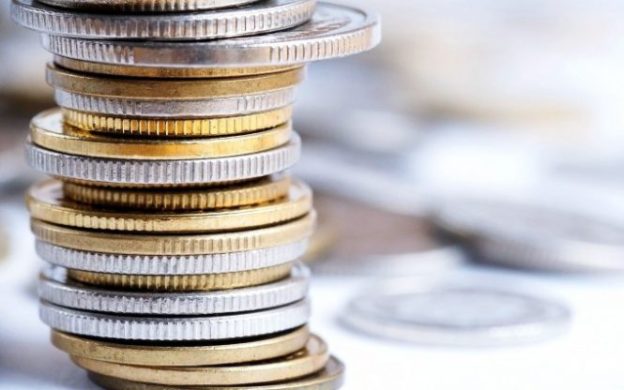
Dis was originally the Roman god of wealth, fertile soil, and underground riches, who became equated to Pluto, Orcus, and Soranus. The question is, what Gaulish god reminded the Divine Julius of Dis?

Continue reading

Epona: Divine Horse

We are used to the idea that the Celts took up Roman gods and equated them with their own. (Or that the invading Romans renamed them.) However, the process could just as easily go the other way.

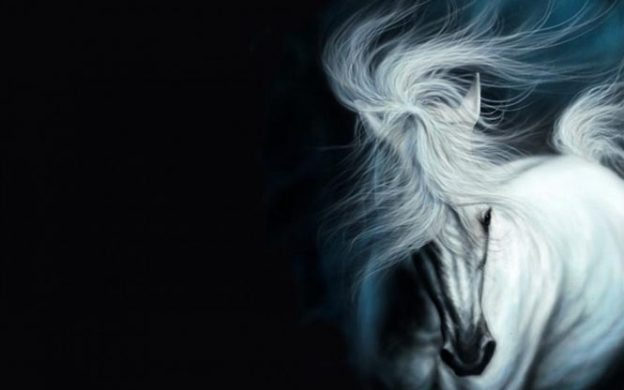
The best-known instance of this is the Gaulish horse-goddess Epona, who became very popular first with the cavalry units of the Roman army, then with the Roman populace, who took her into their homes and stables. She was the only Celtic deity with a holiday in the Roman calendar: December 18th. The Romans don’t seem to have had an indigenous horse-deity (except perhaps Neptune, who had other things to attend to), but the Celts were horse-mad.

Continue reading

Divona: the Divine

Imagine living in a world in which clean drinking water could not be taken for granted. Even now, in many parts of the world, people have to walk miles to get it, and in the Western World we aren’t immune from boil orders and other disruptions.

So it isn’t surprising that many peoples had a deity of fresh, drinkable water. The Romans had the god Fons, among others, from whom we get the word fountain, and the Celts in what is now Bordeaux showed their sense of priorites by worshipping a goddess of clear, drinkable water. Her name was Divona, the Divine One.

Continue reading

Arianrhod and Gwydion: the contest

The fourth branch of the Mabinogion is shaped by exchanges between Arianrhod and Gwydion. From the moment he brings her into the story by suggesting her as Math’s footholder (which seems such an innoncent idea: let’s get my sister, your niece, to do it!) the two are at odds. For the two men subject Arianrhod to a chastity test, since Math’s footholder must be a virgin, a magical condition laid down for his kingship.

Arianrhod fails the test in grand style, giving birth to not one but two boys. Math has one of them baptized and names him Dylan, but this son opts out of the family quarrels and goes to live in the sea. The rest of the story follows the career of the other son, Lleu, as Gwydion tries to get around the curse that Arianrhod has laid on her son.

Continue reading

The Cattle of Tethra

Who tells the ages of the moon, if not I?
Who shows the place where the sun goes to rest, if not I?
Who calls the cattle from the House of Tethra?
On whom do the cattle of Tethra smile?

This comes from the  Irish poem The Song of Amairgen. It was sung by the ollamh (poet) named Amairgen Glúingel as he first set foot on Irish soil. (He was one of the Milesians, who conquered Ireland after the Tuatha de Danann.) It is certainly an enigmatic verse, but I will just tackle one riddle in this post: what are the cattle of Tethra?

Continue reading

Arianrhod, mermen, and sunken islands

“It was said that she lived a wanton life, mating with mermen on the beach near her castle and casting her magic inside its walls.”

When I was researching Arianrhod for a recent post, I kept turning up variants on the quote above. In fact, the sentence: “She enjoyed herself sexually, with a distinct preference for mermen,” cropped up frequently without any variation whatsoever. Obviously a lot of copying was going on, but what did the original say? Continue reading

Arianrhod: Silver Wheel

In an earlier post I talked about the goddess Matrona, or Mother. This time I want to look at a goddess who is totally unmaternal, Arianrhod. Her story comes from the fourth branch of the Mabinogion, a collection of Welsh early-medieval tales.

Continue reading

Apollo, Odin and Lugh

These Greek, Nordic and Celtic gods may not seem to have much in common at first glance, but they resemble each other in several ways, all of which illuminate aspects of their characters. All three are intellectual, associated with the arts, and have magical or oracular powers in addition to an unforgiving nature.

Continue reading

Matrona: Mother Goddess

I have a tic; so many goddesses have been thrown into the “mother” category willy-nilly that I resist any description of a goddess as “mother”. (Also, I have noticed that people who lump goddesses together as “mothers” very often don’t consider the complexity of the title – Lotte Motz’ book The Faces of the Goddess discusses the many meanings of Mother.)

When a goddess’ name means Mother, however, you cannot deny it. It is derived from Mātr-on-ā, “Great Mother”, just like Sirona‘s and Damona‘s names mean the Great Star and the Great Cow. Inscriptions call her Dea Matrona, just to add insult to injury. There’s no way around this – she’s the Mother Goddess.

Continue reading

Procyon: Torch Bearer

Procyon suffers from an inferiority complex – even its name points to a more important star. Procyon means “before the dog”, meaning Sirius, the dog-star. (Fun fact: the racoon genus is called Procyon, because it used to be thought that raccoons evolved before dogs.)

Continue reading