Category Archives: Mythology

it could be argued… that any myth is a neutral structure that allows paradoxical meanings to be held in a charged tension. Indeed, we might argue that this is one of the defining characteristics of a myth, in cotnrast with other sorts of narriatves (such as novels): a myth is a narrative that is tramsparent to a variety of constructions of meaning.
(Wendy Doniger, The London Review of Books, 30: 7 (10 April 2008): 27-29)

Carvonia: Doe-Goddess

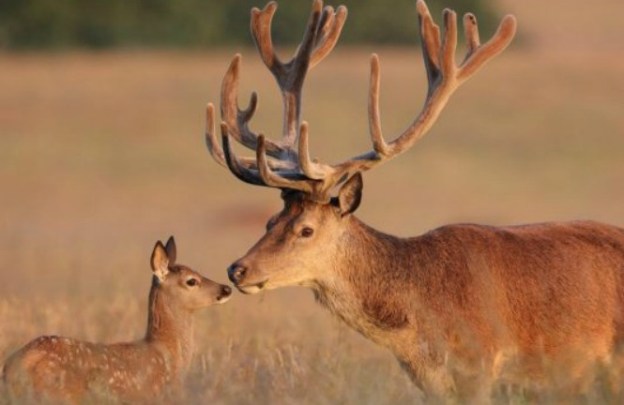
I thought I was done with deer-goddesses, after the posts on Flidias, hunting goddesses and horned goddesses. Sometimes, however, you’re only done with a subject when it’s done with you. I couldn’t leave this topic without mentioning Carvonia, a Celtic goddess from Central Europe.

Continue reading

Horned goddesses

When I was writing about the Irish goddess Flidais, I said that I would be covering hunting goddesses and horned goddesses in another post. The post on hunting goddesses was duly written, but the horned goddesses slipped away.

This may be due in part to the fact that I thought of horned goddesses as a mainly modern phenomenon. The first inkling I ever had of them came from Chesca Potter’s artwork. Her image of the folkloric figure Elen (heroine of “The Dream of Macsen Wledig“,  in the Mabinogion) as a horned goddess caught my attention. However, I had no context for it, and it remained an interesting picture, and nothing more.

Continue reading

Dr. Fate

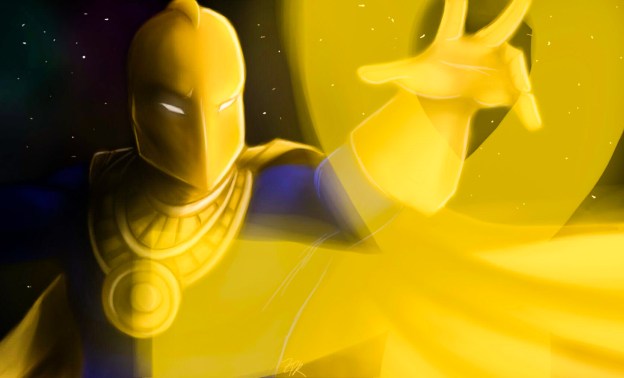
In the 1940s comics that first featured Dr. Fate, his parents were a Swedish archaeologist and his spiritualist wife. In a larger, pop culture sense, however, he was the child of Helena Blavatsky and Howard Carter.

Like all the early heroes, he distilled elements that were floating around in the culture already. Both archaeology and spiritualism had their roots in the mid-1800s. Archaeology grew out of the attempt to trace the history of Biblical events, and to establish just how much of the actual narratives could be confirmed by outside evidence.

Continue reading

Freyja: the Valkyrie Goddess?

The Norse goddess Freyja and the valkyries, choosers of the slain, seem to have a lot in common. Both can take bird-form, are associated with war, magic and death, and take mortal protegés and lovers. Add that to the fact that she and Odin took half of all slain warriors each, and many have concluded that Freyja was the leader of the valkyries, the valkyrie goddess if you will.

Continue reading

Skadi: the Sources

The goddess Skadi has one main myth, but it is a well-developed story, spanning three generations, and involving the feud between the gods and giants. The actual story is scattered around through a variety of sources, but its outline is clear.

Continue reading

Folkvangr and Freyja

Freyja’s home, Folkvangr, is one of the four owned by a goddess. She and Frigg were the preeminent goddesses of the Norse, so it isn’t surprising that each has a home of their own. (Since they share the god Odin as husband/lover, it may be just as well.)

Continue reading

http://background-download.com/nature/ice-mountains-hd-desktop-wallpaper-desktop-background

Thrymheim and Skadi

Only four Norse goddesses have homes of their own. Out of these, two are given to Frigg and Freyja, who are the preeminent goddesses of the pantheon and might be expected to own their own property. The other two are Saga and the giantess Skadi.

The latter is extremely interesting because we know that she inherited  her home, Thrymheim, from her father, the giant Thiazi. What little we are told about the Aesir’s homes suggest that they created them from scratch – that Skadi inherits hers tells us that the giants are older beings than the gods. This is why the giants were often shown as knowing the history and layout of the cosmos so well that Odin would come and quiz them about it.

Continue reading

Pluto: Hidden Riches

Although most of us think of Pluto as the Roman equivalent of the Greek god Hades, it is one of the Greek god’s titles, usually given as Pluton, Wealthy. This referred both to the earth’s fertility and the mineral riches that could be mined from it.

Continue reading

Sol, Beiwe and Saule: Northern Sun-Goddesses

The Norse sun-goddess is not alone in her splendour – among her neighbours are the Finnish and Baltic sun-goddesses, Beiwe and Saule. Last week I wrote a post comparing Sol with two major Indo-European sun-gods, Helios of the Greeks and Surya of the Indians, but this time I want to see how much the three goddesses have in common.

Comparing her to other sun-goddesses brings out more feminine aspects of her character; for example, spinning was the ultimate in women’s work, so it’s no surprise that the sun-goddesses have to spin their sunbeams. Their daughters, the sun-maidens, do not escape without their share of the work. And all three are nurturing figures, who provide food for animals and people.

Continue reading

Descent from the Giants: the sons of Fornjotr

One advantage of being a pagan king is that you could trace your family tree back to some pagan god or other. In Sweden, the Ynglings claimed descent from the god Freyr, and several other Scandinavian ruling families traced themselves back to Odin. Both the Ynglings and the Norwegian earls of Hlaðir claimed descent from a god and a giantess: Freyr and Gerdr, and the Hlaðir Odin and the giantess Skadi, perhaps wishing to join the strength of the giants to their line.

The earls of Orkney went one better than the Hlaðir, however, and combined the power of the giant with the authority of a male ancestor, claiming to be descended from a male giant named Fornjótr. (No mention of a mate – perhaps he generated his children alone, the way the primal giant Ymir did.)

Continue reading