Category Archives: Mythology

it could be argued… that any myth is a neutral structure that allows paradoxical meanings to be held in a charged tension. Indeed, we might argue that this is one of the defining characteristics of a myth, in cotnrast with other sorts of narriatves (such as novels): a myth is a narrative that is tramsparent to a variety of constructions of meaning.
(Wendy Doniger, The London Review of Books, 30: 7 (10 April 2008): 27-29)

Kvasir

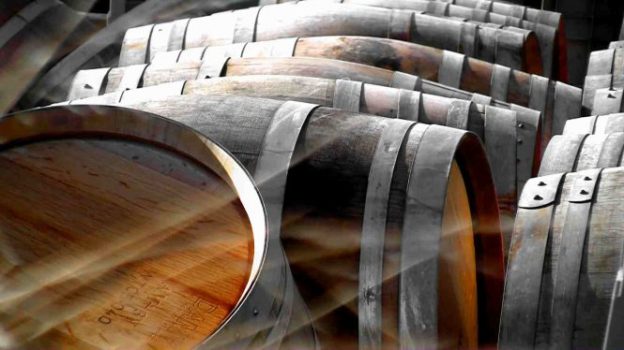
Kvasir was the Norse god whose blood became the first mead, a drink that made a poet out of those who imbibed it. This drink, blood fermented with honey, was the motive for several murders, and wound up in the hands of the god of poets and inspired ecstasy, Odin.

The story of Kvasir is one level another John Barleycorn story – he dies to make mead, just as Barleycorn did to make beer. But there’s clearly more to the story, given that mead bestowed wisdom, just as Kvasir had while alive. He shared freely with all he met, and died for it.

Continue reading

Alauna and Boudina: nurturer and warrior

The title of this post might seem a bit catchall, but it was inspired by the goddess Alauna and Boudina, who appear together on a couple of altars in Romanized Germany, while the similarly-named Alounae seem to be mother-goddesses from modern Austria.

As with Dea Vecana and Meduna, another pair of Germanic goddesses, one is warlike, while the other is more peaceful. The name Boudina comes from the Celtic root boudi-, victory, while Alauna means either nourisher or wanderer.

Continue reading

Hera: the goddess alone

It’s very hard for us now to reconcile the widespread worship of Hera in ancient Greece with her character as it comes down to us; she seems like the archetypal shrew. If you look her up, the entries focus on her persecution of Hercules and the women Zeus seduced or raped. These stories are well-known, so I want to focus on Hera’s actual cult in this post.

Continue reading

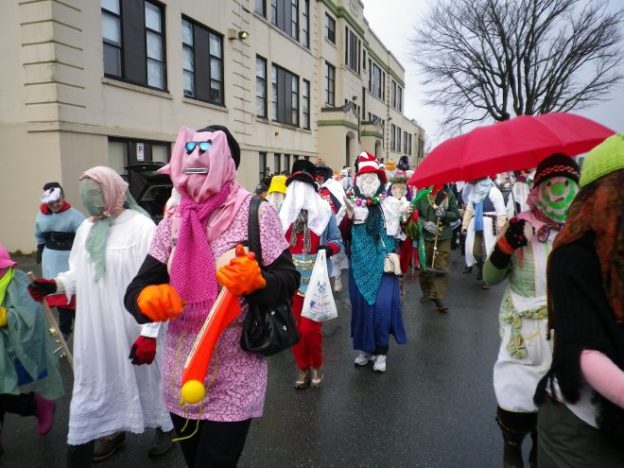
It isn’t Christmas without Mummers!

The Mummers’ Festival Page
CBC Coverage of this year’s parade
And a travel blogger’s reaction to the parade

The image at the top comes from the CBC blog. Click here to see more.

Sunna and the elves

Two Norse deities can be connected to the álfar, or elves, of Norse myth. One is Freyr, who had Alfheim as a tooth-gift, and was ruler of the álfar. The other is the sun-goddess, whose connection with the álfar runs much deeper than her by-name Álfroðull, or Elfin Beam.

Continue reading

Thor vs. Odin

Celebrity feuds are the meat and drink of modern gossip columns. But what do you do when it’s two gods duking it out? The Greeks had plenty of god feuds, as you might expect, including Poseidon vs. Zeus, and Hera vs. Hercules. And the Norse had a god feud of their own, involving their two most important gods: Odin and Thor.

Continue reading

The Smith and the Mountain: Ucuetis and Bergusia

Gaulish Alesia, the home of Ucuetis and Bergusia, was nearly lost to history entirely. After Julius Caesar’s military successes in Gaul, the Celtic tribes formed an alliance to push the Romans back, led by the Arverni chieftain Vercingetorix. At first the Gauls scored several victories against the Romans, but at Alesia the Roman army settled down to a seige which only ended when Vercingetorix surrendered.

After that Alesia became a Roman oppidum, and seems to have prospered, becoming famous for its metalworking. In the 5th century, after the Western Empire collapsed, the Gauls  abandoned the town. Alesia’s location became a mystery, solved only in 1838 when an inscription, IN ALISIIA, was uncovered. Napoleon III ordered archaeologists to excavate around Mt. Auxois, confirming that Alise-sur-Reine, near Dijon, was Alesia.

Continue reading

Thor: ride the lightning

We’re always taught that Odin was head of the Norse gods, and father of most of them. But when the Christians in Scandinavia began to press the pagans to give up their religion, the sign of resistance was Thor’s hammer, not Odin’s spear or valknut.

This may come as a surprise to us, who mostly think of Thor as big and strong and a bit dim, out of his depth when it comes to anything more complicated than smashing giants. But Thor was a very popular deity in the Viking Age, as place-names and personal names show, perhaps because of his closeness to the humans he defended.

Continue reading

The Avenging Furies

The Erinyes, to give them their Greek name, were avengers, who punished murders and other serious crimes, especially crimes against the family. Blood, both in the sense of blood spilled and kinship, was their concern.

Continue reading