Category Archives: Celtic

Finn: the judge, the poet, and the king

There are many figures in Irish myth and legend whose names are Finn or Find, or some variation, such as Fintan. Many of these are associated with inspiration and wisdom, and some also tap in the archetypes of the divine child and poet. The name means “fair, bright, white, lustrous, light-hued”, which connects it to Welsh Gwyn and the Gaulish god Vindonnus.
Continue reading

Vindos: Theoretical God

In Irish finn means “fair, bright, white, lustrous, light-hued” (MacKillop: 226), and the Welsh gwyn is similar in meaning, with overtones of sacredness. Similarly, the Gaulish god, Vindonnus, gets his name from a root meaning either “clear light” (Green: 32) or “white, blessed” (Deo Mercurio). Coming at it from another direction, Daithai O hOgain has linked Finn/Vind with the Germanic find and Latin vid, words connected to sight and discovery (208).

From this it has been a short step to assuming a god, *Vindos, lying behind these various figures. However, like the “theoretical goddess” Rigantona, the names is a linguistic construct, and we have no evidence of a cult of Vindos.

Continue reading

Donn of the Dead

There are many different ways to become god of the dead. You can win the job by chance (Hades/ Pluto), you can be cast into the underworld by other gods (Hel), marry into the job (Nergal), or you can be the first person to die.

Donn was one of the invaders known as the Milesians, after their father Mil. He was the warlike one, while his brother Armaigen was the poet/judge. They eventually did take Ireland, but not easily, and Donn never got to enjoy their victory.

Continue reading

Fury and Intoxication: Dea Vercana and Meduna

In my post on a possible birch goddess, I mentioned Dea Vercana. Since this goddess and her companion, Meduna, are so neglected, it seems mean not to pass on what I’ve learned about her.

Unfortunately, that’s not much. While it seems likely that she had a cult, even if only locally, all we know about her comes from the fountain bowl and altar inscribed with her name. The altar also mentions Meduna, who is as little-known as her companion.

Continue reading

Sheila vs. Patrick: March 18th and Sheila’s Brush

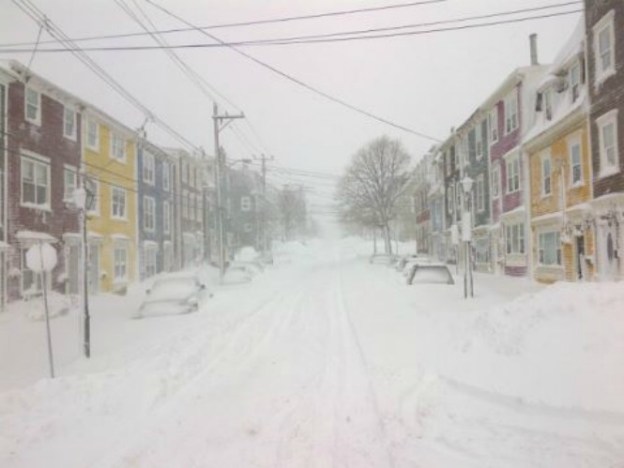
Sheila’s Brush is a Newfoundland term for a storm on or about the 18th of March. Because Sheila’s storm comes just after St. Patrick’s Day, Sheila is often described as the saint’s wife or mother. You would think that this would be an Irish tradition as well, carried to the new world by immigrants, but it appears to be a local invention.

Continue reading

Brigantia: tribal goddess

This is an extremely condensed look at the goddess Brigantia. For a much more detailed study, see my book Brigantia: Goddess of the North.

The Brigantian federation stretched over most of northern England, and their queen, Cartimandua, is one of the few female rulers known to history. But the fame of their goddess, Brigantia, comes from a Roman statue.

Continue reading

Link

As curator of the Celts exhibition, I got to spend a lot of time showing people wonderful Iron Age treasures. Some of my favourites were the big metal neck rings called torcs that were worn across much of Europe (and beyond) around 2000 years ago. One of the things I was asked most often is, ‘But how did you put them on?!’ It’s a very good question, seeing as they often look like solid metal rings with nowhere near enough space to squeeze your neck through.

Read more here.

Vindonnus: Healing God

Sometimes studying mythology leads you into areas of human frailty and vulnerability that bring you very close to the past. Any study of healing deities stirs the emotions, partly because we all know the fear that sickness brings, and because so many of the things they suffered from are unknown to us (at least in the prosperous world).*

The many offerings of ex-votos, often body parts, found at healing shrines testify to the various illnesses of ancient times. These were not always rich offerings, either. At the shrine of Apollo Vindonnus archaeologists found many votives carved from oak wood or stone. Many were of body parts, but others were of hands holding offerings. (You wonder if they somehow stood for the offering itself, or promised one in return for a cure.)

Continue reading

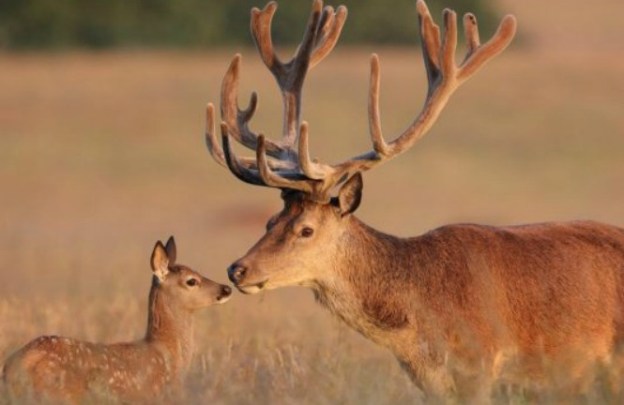
Carvonia: Doe-Goddess

I thought I was done with deer-goddesses, after the posts on Flidias, hunting goddesses and horned goddesses. Sometimes, however, you’re only done with a subject when it’s done with you. I couldn’t leave this topic without mentioning Carvonia, a Celtic goddess from Central Europe.

Continue reading

Horned goddesses

When I was writing about the Irish goddess Flidais, I said that I would be covering hunting goddesses and horned goddesses in another post. The post on hunting goddesses was duly written, but the horned goddesses slipped away.

This may be due in part to the fact that I thought of horned goddesses as a mainly modern phenomenon. The first inkling I ever had of them came from Chesca Potter’s artwork. Her image of the folkloric figure Elen (heroine of “The Dream of Macsen Wledig“,  in the Mabinogion) as a horned goddess caught my attention. However, I had no context for it, and it remained an interesting picture, and nothing more.

Continue reading