Category Archives: Mythology

it could be argued… that any myth is a neutral structure that allows paradoxical meanings to be held in a charged tension. Indeed, we might argue that this is one of the defining characteristics of a myth, in cotnrast with other sorts of narriatves (such as novels): a myth is a narrative that is tramsparent to a variety of constructions of meaning.
(Wendy Doniger, The London Review of Books, 30: 7 (10 April 2008): 27-29)

Vindos: Theoretical God

In Irish finn means “fair, bright, white, lustrous, light-hued” (MacKillop: 226), and the Welsh gwyn is similar in meaning, with overtones of sacredness. Similarly, the Gaulish god, Vindonnus, gets his name from a root meaning either “clear light” (Green: 32) or “white, blessed” (Deo Mercurio). Coming at it from another direction, Daithai O hOgain has linked Finn/Vind with the Germanic find and Latin vid, words connected to sight and discovery (208).

From this it has been a short step to assuming a god, *Vindos, lying behind these various figures. However, like the “theoretical goddess” Rigantona, the names is a linguistic construct, and we have no evidence of a cult of Vindos.

Continue reading

Donn of the Dead

There are many different ways to become god of the dead. You can win the job by chance (Hades/ Pluto), you can be cast into the underworld by other gods (Hel), marry into the job (Nergal), or you can be the first person to die.

Donn was one of the invaders known as the Milesians, after their father Mil. He was the warlike one, while his brother Armaigen was the poet/judge. They eventually did take Ireland, but not easily, and Donn never got to enjoy their victory.

Continue reading

Aldebaran: the Bull’s Eye

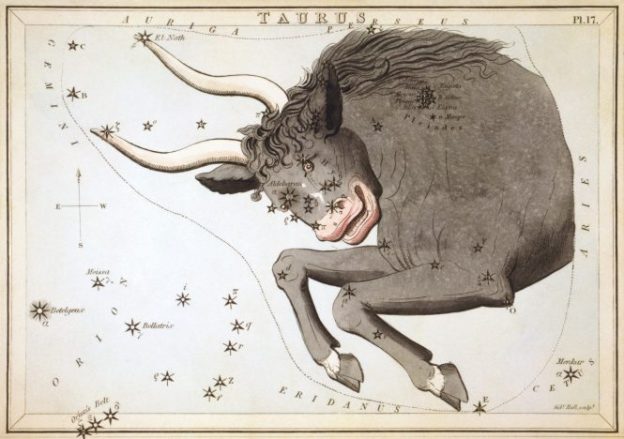
As you can see from the picture above, Aldebaran is the bull’s left eye, and the brightest star in Taurus. It appears ruddy through a telescope, suggesting that Taurus is an angry bull. The V-shape of the bull’s face, known as the Hyades, makes it easy to find.

The Arabic name reflects its position: the Follower, since it rises after the Pleiades, the stars that make up the bull’s shoulder. It is primarily a winter star, and by now will be visible in the sky around dawn.

Continue reading

Mimir and Volsi: what were those herbs? 

There are two stories in Norse myth where part of a dead body is transformed by being rubbed with herbs. One of these is the mystical, cosmological story of Mimir’s head, which Odin revived by smearing with herbs and chanting over it. The other is a conversion narrative, in which a preserved horse’s penis is part of a house cult that St. Olaf brings to an end.

So these stories could not be more unalike. But the penis grows and “becomes lively” after the woman of the house covers it in herbs and wraps it in linen. So what herbs do you use to enliven a horse’s penis and a god’s head?

Continue reading

Weeping Tears of Amber

Stories from around the world tell how even the messy things that deities produce are valuable and important. In Shinto myth the god Izanagi has two deities come out of his eyes and another from his nose. The ancient Egyptian deities Shu and Tefnut were born from Atum’s masturbation.

So it’s no surprise that a goddess’ tears would take the form of amber or gold. In fact, three different stories tell how valuable a weeping goddess could be.

Continue reading

Woman vs. Woman: More Insults

There are many stories in which a heroic character penetrates the otherworld and is challenged by some sort of ogre or other strange being. This challenger may question the hero’s worthiness or ability.

Norse myth has two examples of a female quester who faces a challenge to her fitness and an attempt to thwart her in her aims. In Hyndluljod Freyja has to convince the far-from-agreeable Hyndla to help her protegé win a lawsuit, while in the poem Helreid Brynhildar Brynhild is challenged on her way to Hel by a giantess who questions her ethics and actions.

Continue reading

Insulting Women: Flyting in Old Norse Literature

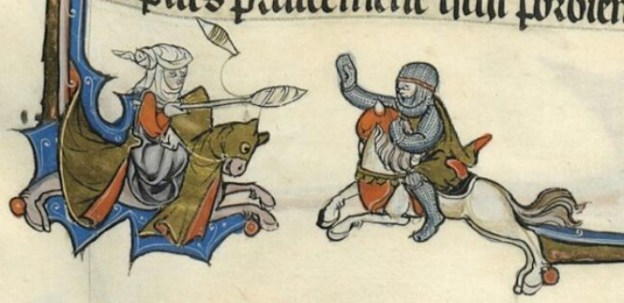
Verbal duelling is a major part of the sagas and Eddas, as a substitute for other kinds of violence. Mostly it happens between two men, who accuse each other of cowardice, effeminacy, and general unmanliness.

However, there are incidents of male – female flyting as well, with men and women trading insults, usually much the same insults. The two best-known examples of male – female flyting in the Eddas are the quarrel between Skadi and Loki in Lokasenna, a poem which is essentially Loki’s verbal duel with each god and goddess in turn, and the heroic poem Helgakviða Hjörvarðssonar, which features a bout between the hero and a giantess.

Continue reading

Link

li-vikings-2-20130607

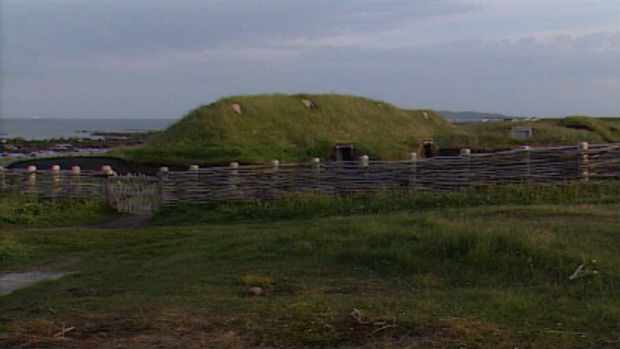
As part of a new documentary, a team of archeologists has found some evidence of a second Viking settlement in Newfoundland.

Source: Second potential Viking site found in Newfoundland – Newfoundland & Labrador – CBC News

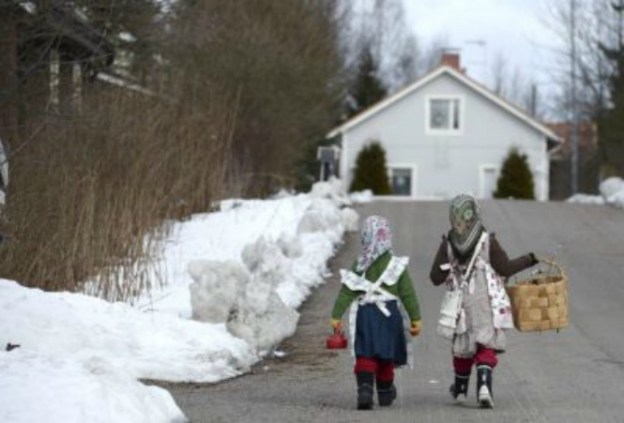
Little witches in Finland cast good spells before Easter | Daily Mail Online

Source: Little witches in Finland cast good spells before Easter | Daily Mail Online

Save

Fury and Intoxication: Dea Vercana and Meduna

In my post on a possible birch goddess, I mentioned Dea Vercana. Since this goddess and her companion, Meduna, are so neglected, it seems mean not to pass on what I’ve learned about her.

Unfortunately, that’s not much. While it seems likely that she had a cult, even if only locally, all we know about her comes from the fountain bowl and altar inscribed with her name. The altar also mentions Meduna, who is as little-known as her companion.

Continue reading