Hyperborea, and the Hyperboreans, seem to have had an enduring life among the ancient Greeks and Romans, even if they couldn’t always agree on where it was. It first intrigued me because of the story that Apollo went there every winter.
Hyperborea, and the Hyperboreans, seem to have had an enduring life among the ancient Greeks and Romans, even if they couldn’t always agree on where it was. It first intrigued me because of the story that Apollo went there every winter.

In my first post on Rosmerta, I focused on her as a goddess in her own right. This time around, I want to examine the ideas put forth in Michael Enright’s thesis Lady with a mead-cup, which argues that the cult of Rosmerta and Mercury was the basis for the later cult of Odin and various prophetic, mead-serving goddesses (and others) associated with him.
I don’t normally like “list posts”. Those neat lists of deities and powers are certainly easy to remember, and good for beginners, but I find that now I want more context and explanation. (Or it could be a warning sign of old age. Who knows.)
Just this once, however, I have broken down and made a list of Irish sea-gods. When I was writing my posts on Donn and Tethra, I took a lot of notes trying to get all these gods straight in my head. This post is for anyone who shared my confusion.
Besides Flidais, there are many Celtic goddesses of the hunt and the wild. I have listed several continentsl ones below, as well as the evidence for the cult of Diana in Britain.
The individula goddesses are easier to read, because they appear under their own names, while the name Diana may or may not be hiding a native goddess. (The god Silvanus presents the same problem.) We know of at least two of these hybrids: Diana Mattica and Abnoba.
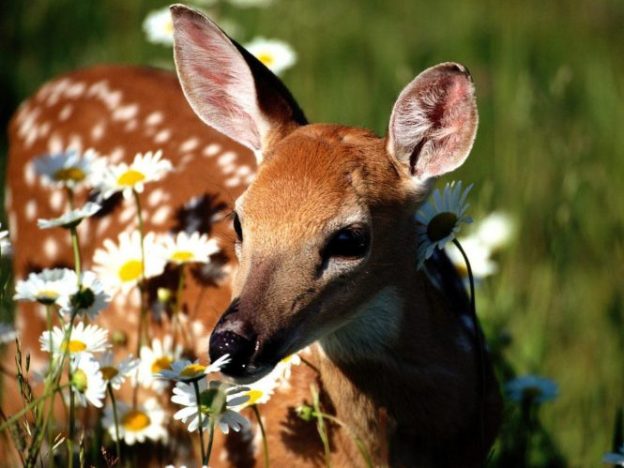
Where did the idea that Flidais rode in a chariot drawn by deer come from? It’s not in her main legend, the Táin Bó Flidais, nor in the follow-on story, the Táin Bó Cúailnge. It’s an attractive image, bringing to mind the Middle Eastern goddesses with their lion-drawn chariots, Freyja with her cats, and Nerthus in her wagon drawn by heifers.
The Táin Bó Flidhais, or The Book of the Driving of Flidais’ Cattle, is the main source of information about the goddess Flidais. This story has been preserved in two versions, a shorter version in the Book of Leinster, and a longer one in the Yellow Book of Lecan.
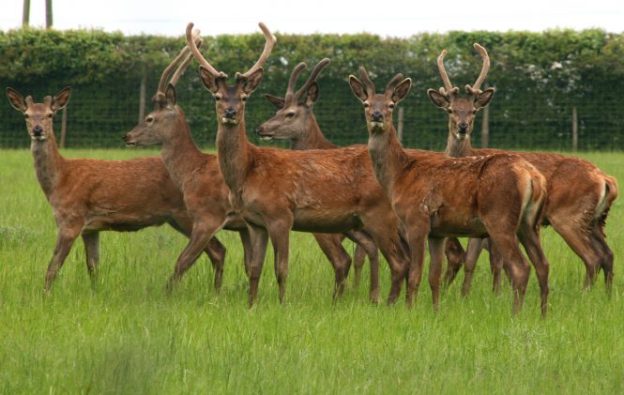
Flidais was a figure of Irish mythology, surnamed Foltcháin, “beautiful (or soft) hair”. She had a magical cow, the Maol, as well as herds of cattle and of deer. She is usually considered a goddess of abundance (cows were wealth), sovereignty, feasting, magic, hunting and sexuality. Her dual nature, exemplified in the cows and deer, mingles the domesticated with the wild. Continue reading
Manannán is in many ways like a more benign version of Oðin. Like the Norse god, he is the patron of many heroes, is skilled in both battle and magic, moves easily between the worlds and has many lovers as well as a wife. On a more fantastic level, both have horses that can travel over land and sea, and a boar or pigs that renew themselves after being eaten.
He seems to have been one of the old gods, rather than the Tuatha de Danann. Unlike them, however, he seems to have made his peace with the new order, as he appears in their adventures. (He was close enough to them to be foster-father to the young god Lugh.) When the Milesians (humans) came, and the TDD went into the hollow hills, Manannán divided up the otherworld into parts for each.
The Irish goddess Brigit and the god Lugh have a great deal in common. Both have a triple form, both are powerful at every level of society, and both have a major calendar holiday associated with them. In the myths of the war between the two groups of gods, they have family on both sides.

The other day I was browsing Tumblr and I turned up a post on Irish werewolves. I knew Irish mythology and folklore had lots of shapeshifters, but I had never heard of werewolves. Better still, it turned out that not only does Ireland have werewolves, but also its own form of Úlfhéðnar, the berserker-like wolf-warriors of Scandinavian legend.
There are no real wolves in Ireland any more, but they were once a very real menace, which would explain the large number of stories about them.
 We Are Star Stuff