Magpies (and Skadi)

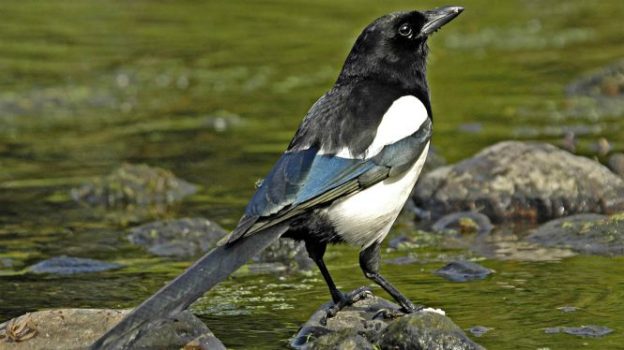
I have been intrigued for some time by a bit of lore that I’ve run across on several websites, without any credit given. It connects the Norse goddess Skadi and magpies, and makes several rather large claims about a “magpie clan” and a priestesshood, and it usually runs something like this:
Continue reading

Astraea: Star Goddess of the Golden Age

During the Golden Age, Greek mythology tells us, the immortals and humans lived together on Earth. As time passed, and the Bronze and Iron Ages came, humans became less moral, and finally during the Iron Age (according to Ovid) Astraea, the only Immortal who still lived on Earth, fled to the heavens:

Continue reading

Apollo, Odin and Lugh

These Greek, Nordic and Celtic gods may not seem to have much in common at first glance, but they resemble each other in several ways, all of which illuminate aspects of their characters. All three are intellectual, associated with the arts, and have magical or oracular powers in addition to an unforgiving nature.

Continue reading

Helios: He Who Gladdens Mortals

Helios, the Greek sun-god, doesn’t get much press. Compared to the oracle-god and plague-sender Apollo, he gets hardly any. I remember once watching Jeopardy with friends and being unable to convince anyone that Helios was the sun-god, not Apollo. (I was a bit disappointed in Alex Trebeck.)

The problem that Helios faces is that he is the sun; his name means “sun” and his role in Greek myth is to rise, shine and set every day. Unlike Apollo, he is too predictable to need buying-off. In the Odyssey, when his cattle are stolen Helios has to convince Zeus to raise a storm to punish the thieves. Apollo would’ve shot ’em full of arrows.

Continue reading

Stars Wheel in Purple

Stars wheel in purple, yours is not so rare
as Hesperus, nor yet so great a star
as bright Aldebaran or Sirius,
nor yet the stained and brilliant one of War;

stars turn in purple, glorious to the sight;
yours is not gracious as the Pleiads are
nor as Orion’s sapphires, luminous;

yet disenchanted, cold, imperious face,
when all the others blighted, reel and fall,
your star, steel-set, keeps lone and frigid tryst
to freighted ships, baffled in wind and blast.

H.D. (Hilda Doolittle)

If you like the image at the top, click here.

blacksmith sparks

Idavoll (and Idunn?)

The name Iðavöll appears twice in Völuspá, just after major cosmic events. The first, in stanza 7, follows the meeting of the Æsir where they portion out time, naming the parts of day, and the year. Stanza 6 tells us that the Æsir met at “the thrones of fate”, while 7 starts with them meeting at Iðavöll Plain, and unlike stanza 6, they physically create things, rather than just naming them.

Continue reading

Betelgeuse and Bellatrix: Orion’s Shoulders

Orion is a large, striking constellation, with many bright stars. I have already written about Rigel, its brightest star. Of its other bright stars, Betelgeuse is 12th brightest in the sky, while Bellatrix is down there at 27th.

Continue reading

Lucretia to Batgirl: Taking Back the Narrative, Escaping the Refrigerator

Long ago, at the very beginning of Roman civilization, there were kings. One king, Tarquin Superbus, took the royal prerogative a bit too far and blackmailed a noble matron named Lucretia into sleeping with him. (He tells her that he will kill her and his slave, then tell her husband he found them in flagrante.)

She, to take back her honour, and keep Tarquin from blackening her name, sent word to her husband of what had happened, and killed herself. A dissident noble named Brutus used her death to start a civil war and depose Tarquin, thus beginning the Roman republic.

Continue reading

Matrona: Mother Goddess

I have a tic; so many goddesses have been thrown into the “mother” category willy-nilly that I resist any description of a goddess as “mother”. (Also, I have noticed that people who lump goddesses together as “mothers” very often don’t consider the complexity of the title – Lotte Motz’ book The Faces of the Goddess discusses the many meanings of Mother.)

When a goddess’ name means Mother, however, you cannot deny it. It is derived from Mātr-on-ā, “Great Mother”, just like Sirona‘s and Damona‘s names mean the Great Star and the Great Cow. Inscriptions call her Dea Matrona, just to add insult to injury. There’s no way around this – she’s the Mother Goddess.

Continue reading