Category Archives: Irish

Medusa, Rhiannon, Macha: the horse-goddess and her twins

The imagery of the Greek Gorgon can be traced back to Persian and Near Eastern art, but the myth of the beautiful Medusa seems to come from a different source. A story found in various forms in Greece, India, Ireland and Wales tells of a woman who either becomes a horse or has a strong equine connection, gives birth to twins and suffers greatly.

However, Demeter, Saranyu, Macha and Rhiannon are goddesses, while Medusa is considered a monster. Still, her story is so similar to these others that it obviously descends from the same Indo-European myth.

Continue reading

Odin and the Morrigan

This week’s post could easily have been called “fearsome deities“: Odin, whose name means “fury”, and the Morrigan, who steps out of the fairy realm to stir up war and slaughter. It’s not hard to see what they have in common.

Continue reading

Milk and Blood: Brigit and the Morrigan

Back in 1977 Patrick Ford published a paper called “Celtic Women: the Opposing Sex”. It could have been tailor-made for the Morrigan, a fearsome goddess who spends most of the Tain trying to destroy the hero Cúchulainn. By contrast, Brigid seems to be the “good girl” of Irish myth.

Continue reading

The Salmon of Wisdom

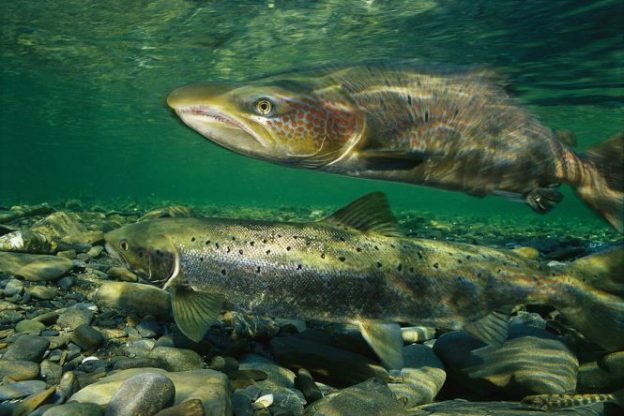
You might wonder, why are salmon wise? Their ability to return to their birthplace to spawn may have given rise to the idea that they had special knowledge. Their travelling between salt and fresh water shows an adaptability most fish don’t have, and their jumping (immortalized in the Celtic warrior’s salmon leap) is impressive, and gives them their English name (from Latin salire, to jump).

Continue reading

Finn: the judge, the poet, and the king

There are many figures in Irish myth and legend whose names are Finn or Find, or some variation, such as Fintan. Many of these are associated with inspiration and wisdom, and some also tap in the archetypes of the divine child and poet. The name means “fair, bright, white, lustrous, light-hued”, which connects it to Welsh Gwyn and the Gaulish god Vindonnus.

Continue reading

Vindos: Theoretical God

In Irish finn means “fair, bright, white, lustrous, light-hued” (MacKillop: 226), and the Welsh gwyn is similar in meaning, with overtones of sacredness. Similarly, the Gaulish god, Vindonnus, gets his name from a root meaning either “clear light” (Green: 32) or “white, blessed” (Deo Mercurio). Coming at it from another direction, Daithai O hOgain has linked Finn/Vind with the Germanic find and Latin vid, words connected to sight and discovery (208).

From this it has been a short step to assuming a god, *Vindos, lying behind these various figures. However, like the “theoretical goddess” Rigantona, the names is a linguistic construct, and we have no evidence of a cult of Vindos.

Continue reading

Donn of the Dead

There are many different ways to become god of the dead. You can win the job by chance (Hades/ Pluto), you can be cast into the underworld by other gods (Hel), marry into the job (Nergal), or you can be the first person to die.

Donn was one of the invaders known as the Milesians, after their father Mil. He was the warlike one, while his brother Armaigen was the poet/judge. They eventually did take Ireland, but not easily, and Donn never got to enjoy their victory.

Continue reading

Sheila vs. Patrick: March 18th and Sheila’s Brush

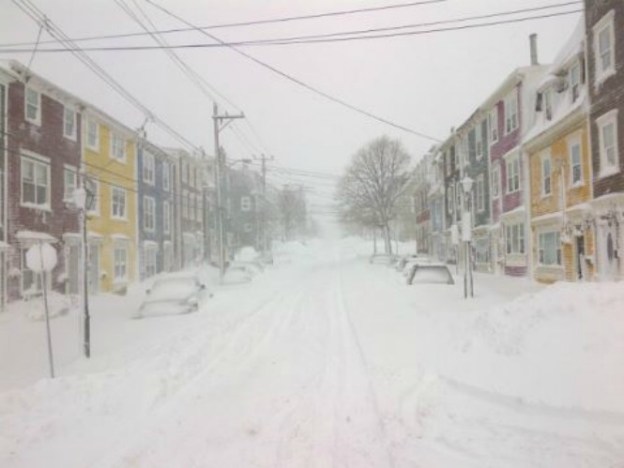
Sheila’s Brush is a Newfoundland term for a storm on or about the 18th of March. Because Sheila’s storm comes just after St. Patrick’s Day, Sheila is often described as the saint’s wife or mother. You would think that this would be an Irish tradition as well, carried to the new world by immigrants, but it appears to be a local invention.

Continue reading

Irish Sea-Gods

I don’t normally like “list posts”. Those neat lists of deities and powers are certainly easy to remember, and good for beginners, but I find that now I want more context and explanation. (Or it could be a warning sign of old age. Who knows.)

Just this once, however, I have broken down and made a list of Irish sea-gods. When I was writing my posts on Donn and Tethra, I took a lot of notes trying to get all these gods straight in my head. This post is for anyone who shared my confusion.

Continue reading

Flidais: A Chariot Drawn By Deer

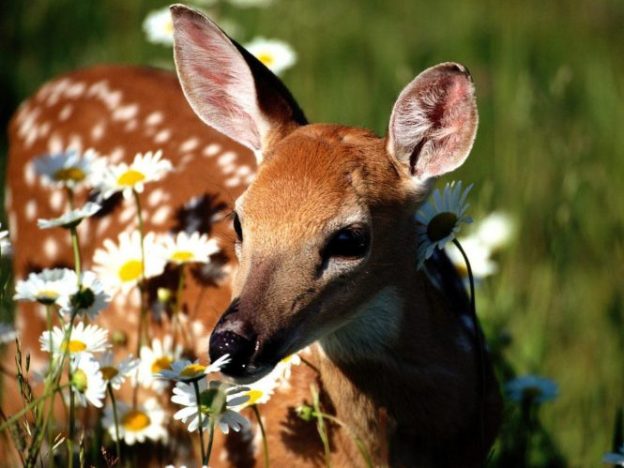
Where did the idea that Flidais rode in a chariot drawn by deer come from? It’s not in her main legend, the Táin Bó Flidais, nor in the follow-on story, the Táin Bó Cúailnge. It’s an attractive image, bringing to mind the Middle Eastern goddesses with their lion-drawn chariots,  Freyja with her cats, and Nerthus in her wagon drawn by heifers.

Continue reading